


The short answer: yes. At 200 ppm with 60 seconds of contact time, hypochlorous acid inactivates norovirus on hard, non-porous surfaces — and the published research backs it up. Two important caveats before we get into the detail: concentration matters more than volume, and no surface solution replaces handwashing with soap and water. Those two points will do more for you than anything else in this guide.
Norovirus is responsible for roughly 685 million cases of acute gastroenteritis globally each year. It spreads easily, survives on surfaces longer than most people expect, and is largely resistant to alcohol-based hand sanitizers — the ones that have been winning wellness awards since 2020 are, unfortunately, not the right tool for this particular virus. HOCl is one of the few options that takes norovirus seriously at the molecular level.
Here's what the research says, what concentration you actually need, how to use it correctly, and — equally important — what it won't do.
The short version
Hypochlorous acid (HOCl) at 200 ppm inactivates norovirus on hard, non-porous surfaces in approximately 60 seconds. It works by disrupting the viral protein coat that protects norovirus RNA — the same mechanism that makes it effective against non-enveloped viruses that resist alcohol-based products. For best results: remove visible contamination first, apply at 200+ ppm, allow 60 seconds of wet contact. And wash hands with soap and water — HOCl spray is a surface tool, not a hand hygiene product.
In this guide
- What is norovirus and why is it so hard to eliminate
- How HOCl works against norovirus at the molecular level
- The concentration question — 200 ppm and why it matters
- HOCl vs bleach for norovirus
- How to use HOCl against norovirus, surface by surface
- When not to rely on HOCl for norovirus
- Straight answers (FAQ)
What is norovirus and why is it so hard to eliminate
Norovirus is the most common cause of acute gastroenteritis in the United States — the CDC estimates 19–21 million cases annually. It's what most people call "the stomach flu," even though it has nothing to do with influenza. The naming is one of medicine's great contributions to public confusion. Symptoms arrive fast: nausea, vomiting, and diarrhea within 12–48 hours of exposure. Most people recover within 1–3 days. Then they touch a light switch, and the cycle begins for the next person.
The reason norovirus is difficult to eliminate comes down to structure. Most viruses we deal with — influenza, SARS-CoV-2 — have a lipid (fatty) envelope. Alcohol-based sanitizers and many common cleaners work primarily by dissolving those envelopes. Norovirus doesn't have one. It's a non-enveloped virus, which means the viral RNA is protected by a tough protein coat called a capsid. The alcohol that makes quick work of enveloped viruses barely affects it.
The numbers around norovirus persistence are also worth knowing. Studies have documented it remaining infectious on hard surfaces for up to two weeks under ordinary indoor conditions. It's infectious at very low doses — as few as 18 viral particles can cause illness in a susceptible person. When someone vomits, aerosolized particles can land on surfaces several feet away. The virus shed in stool can remain in the environment even after symptoms resolve.
Eliminating norovirus from surfaces requires something that attacks the protein capsid directly — not the lipid envelope that isn't there.
How HOCl works against norovirus at the molecular level

HOCl is an oxidizing molecule — the same one your white blood cells produce naturally when your immune system responds to a pathogen. When it contacts a virus on a surface, it attacks the protein structures the virus needs to function: the capsid proteins protecting the viral RNA, and the receptor-binding proteins the virus uses to attach to and enter host cells.
Disrupting either of those is enough to render the virus non-infectious. HOCl disrupts both.
Research published in Food Microbiology (Sánchez et al., 2016) found that HOCl at 200 ppm achieved greater than 4-log reduction of murine norovirus — a well-established surrogate for human norovirus — on fresh produce surfaces within 60 seconds. A 4-log reduction is a 99.99% decrease in infectious particles. A separate study published in Applied and Environmental Microbiology (Predmore et al., 2015) confirmed HOCl's effectiveness against multiple norovirus surrogates across different surface types.
One note on research methodology: human norovirus is notoriously difficult to culture in laboratory conditions, so most published research uses animal or plant-based surrogates. Murine norovirus (MNV) and Tulane virus are the most widely validated. Their behavior in response to disinfectants is considered predictive of human norovirus — which is why regulatory bodies and researchers rely on them.
The mechanism is different from what many people assume. HOCl works through targeted oxidation at a low pH (5–6). It doesn't damage surfaces by brute chemical force. For non-enveloped viruses like norovirus, this oxidative attack on the capsid is precisely what's needed — and it's why HOCl outperforms alcohol in this context.
Related: HOCl for skin: what it does, how to use it, and whether it's worth it
The concentration question — 200 ppm and why it matters
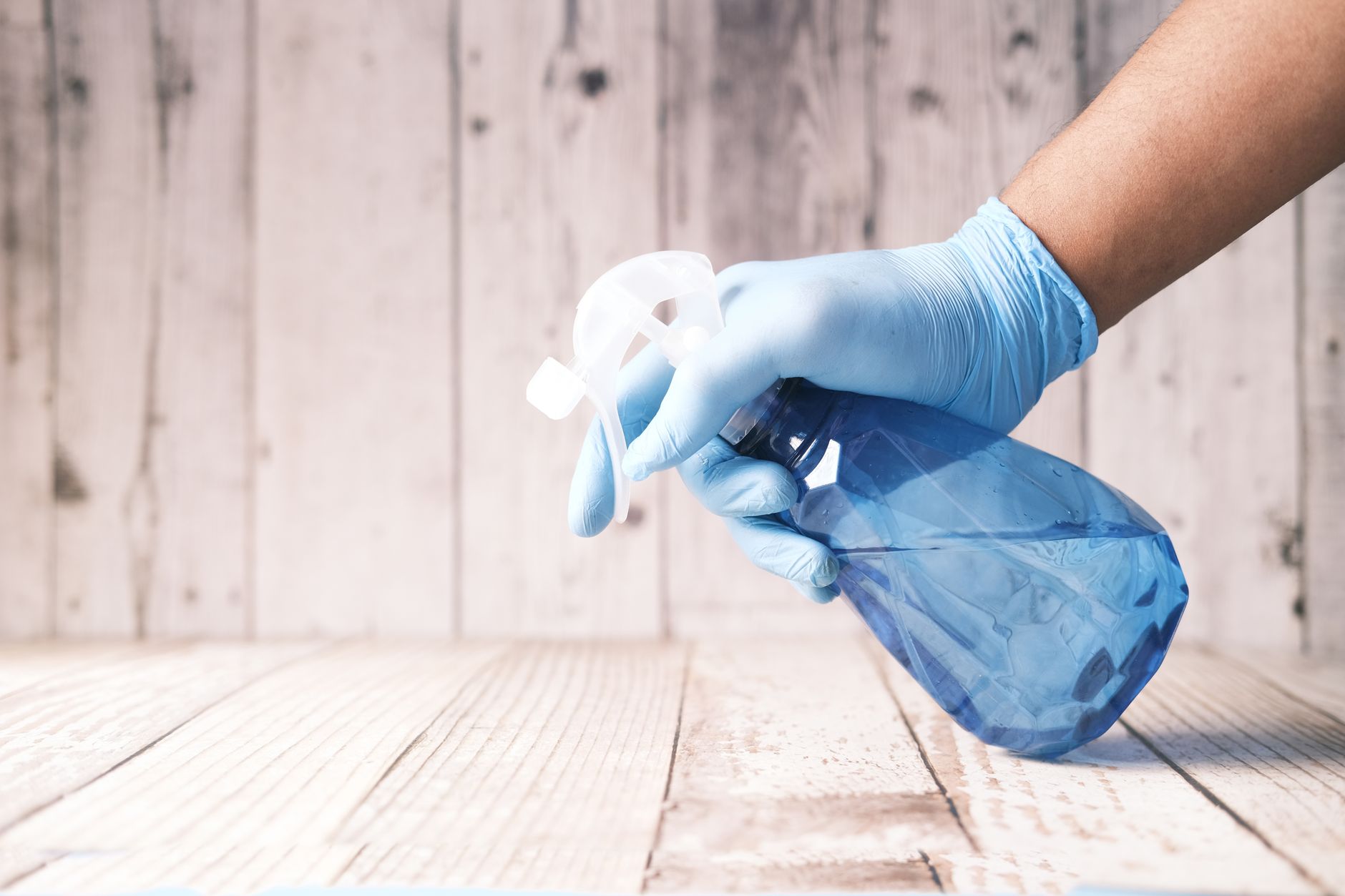
Not all HOCl concentrations perform equally against norovirus. This is the variable most guides gloss over.
At 200 ppm, published research shows consistent inactivation of norovirus surrogates within 60 seconds of wet contact on hard, non-porous surfaces. Below 100 ppm, efficacy data becomes inconsistent — some studies show adequate results with longer contact time, others do not. The general recommendation for norovirus environments — healthcare settings, food service, household outbreak cleanup — is 200 ppm as the working minimum.
Above 400 ppm, HOCl solutions degrade faster and don't proportionally improve efficacy against viruses. The 200–300 ppm range is the practical target: effective against norovirus, stable enough for home use, and safe for food contact surfaces when allowed to air dry. Higher concentrations also increase the chance of irritation for people with sensitive airways.
Contact time is the variable most people shortcut. Spraying a surface and immediately wiping it down is not disinfection — it's just getting a surface wet. The solution needs to remain visibly wet on the surface for the full contact time. At 200 ppm for norovirus, that's 60 seconds. Set a timer the first few times you do this. Sixty seconds is considerably longer than it feels when you're standing in a contaminated kitchen.
HOCl vs bleach for norovirus — and when each one makes sense
Both work. The difference is what comes along with them.
Bleach (sodium hypochlorite) at a 1:10 dilution — roughly 5,000 ppm — is an established option against norovirus and remains the standard recommendation in many healthcare settings. At that concentration, it reliably inactivates norovirus with 1 minute of contact. It is also caustic: pH of 11–13, it can discolor surfaces and fabrics, produces chlorine fumes, and leaves residue that requires rinsing on food contact surfaces. At the dilutions needed for norovirus, bleach is hard on repeated use surfaces and hard on the people applying it.
HOCl at 200–300 ppm achieves comparable results — in some studies, faster results — at a pH of 5–6. That's close to neutral water. It doesn't bleach fabrics or damage surfaces at working concentrations, produces no chlorine fumes, and breaks down to water and salt rather than leaving chlorine residue. On food contact surfaces, it requires no rinse at recommended concentrations. For regular household use — a sick family member, a kitchen cleanup, high-touch surfaces during illness season — HOCl is the less punishing option.
The one scenario where bleach has a practical edge: very heavy contamination with significant organic material. HOCl reacts with organic matter — blood, vomit, fecal contamination — and that reaction partially consumes the oxidizing capacity before it reaches the virus. Bleach, at its much higher concentration, has more oxidizing reserve in heavily soiled situations.
The lesson is the same either way: physically remove the bulk contamination first, then apply your surface treatment. HOCl after a thorough clean is highly effective. HOCl applied directly onto a vomit event without prior cleanup will underperform the lab data — not because HOCl is weak, but because the organic matter is consuming it before it reaches the virus.
How to use HOCl against norovirus, surface by surface
A norovirus situation — whether it's an active outbreak or a precautionary deep clean after a sick household member — calls for a specific approach. Here's the step-by-step.
-
Put on gloves before touching anything.
Norovirus transfers on contact. Limit your own exposure before you start cleaning. -
Remove visible contamination using paper towels. Bag and discard.
Do not use a reusable cloth — it becomes a contamination vector. Any organic material on the surface will reduce HOCl effectiveness, so this step is not optional. -
Prepare a fresh HOCl solution at 200 ppm.
Use solution made within the last 7 days. HOCl degrades over time, and concentration is the variable — degraded solution at unknown concentration is not reliable for norovirus. -
Apply generously to hard, non-porous surfaces.
Countertops, faucet handles, light switches, door handles, toilet seat and handle, sink basin. These are the high-touch transfer points where norovirus persists and spreads. -
Allow the surface to remain wet for 60 seconds.
If the surface dries before 60 seconds, apply again. Contact time is the whole game — a surface that dried at 30 seconds has not met the requirement. -
Wipe clean or allow to air dry.
On food contact surfaces, wipe down with a clean cloth after the 60-second contact time. HOCl leaves no harmful residue — it breaks down to water and salt. -
Repeat on high-touch surfaces daily throughout the illness period.
A person with norovirus can shed the virus in stool for up to two weeks after symptoms resolve. Daily attention to handles, switches, and taps matters throughout that window.
Surface-by-surface breakdown
Best-case performance. HOCl at 200 ppm with 60 seconds of contact time consistently achieves 4-log+ reduction in research settings. These are the surfaces to prioritize.
HOCl can be applied but penetration is limited. The virus can be embedded below the surface where HOCl cannot reach. Physical cleaning matters even more here — steam cleaning is more effective on these surfaces than any liquid disinfectant.
HOCl is approved for use on food contact surfaces at recommended concentrations and requires no rinse when used as directed. The research on fresh produce decontamination is particularly strong for HOCl vs norovirus.
Wash contaminated items immediately on the hottest cycle the fabric tolerates. The mechanical action of the washing machine does most of the work. Adding HOCl to the wash cycle is optional — the priority is heat and mechanical agitation.
When not to rely on HOCl for norovirus
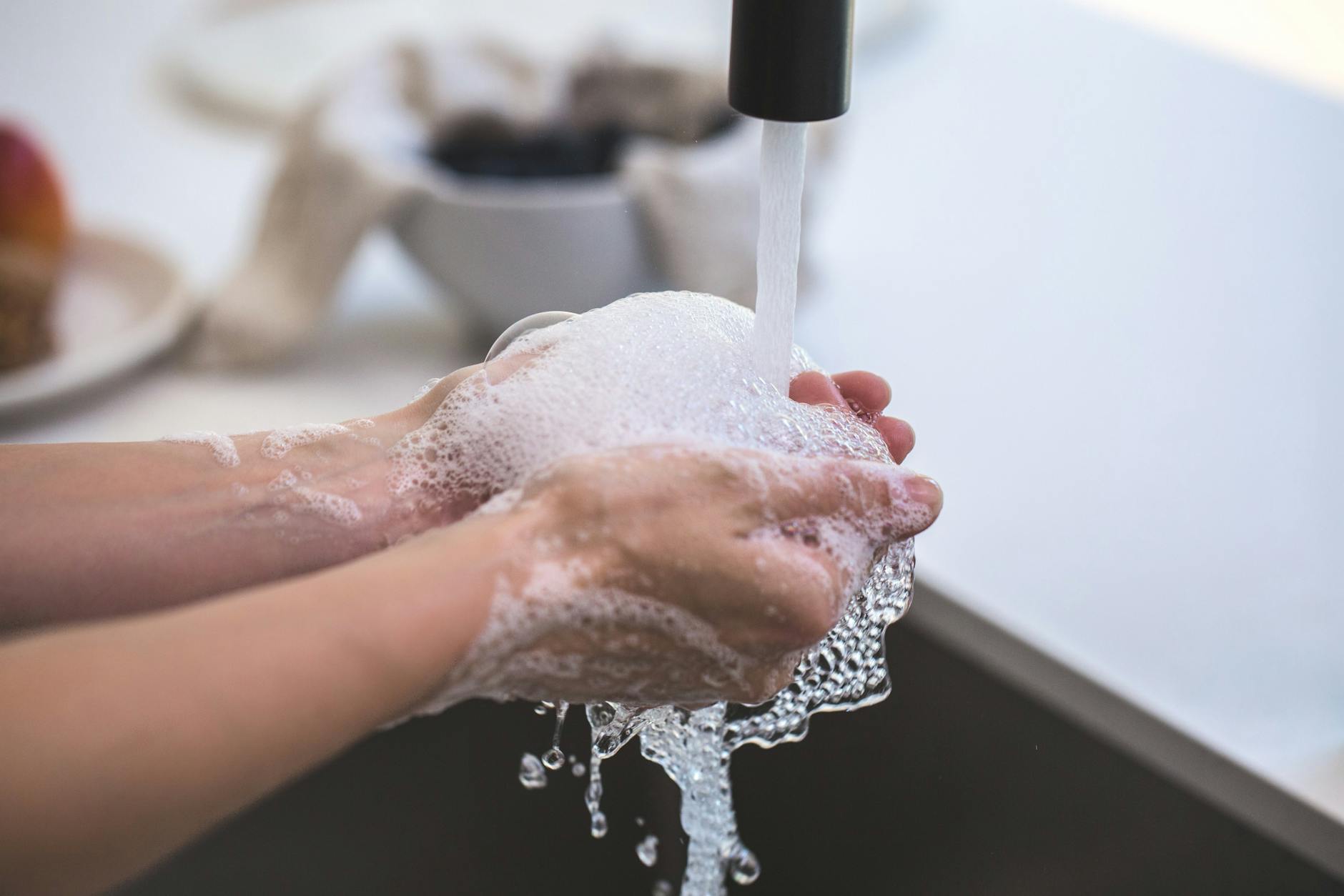
HOCl is a surface tool. Here's where it doesn't help — and where assuming it does can actually make things worse.
The CDC's guidance on norovirus is clear: wash hands with soap and water. Soap and water mechanically removes viral particles from the skin surface — a process that no spray, including HOCl, replicates. Alcohol-based hand sanitizers are also not reliably effective against norovirus. After handling contaminated laundry, after caring for someone sick, before preparing food — soap and water for 20 seconds, every time. There is no shortcut here that actually works.
Norovirus is a gastrointestinal infection. Once the virus is in your system, surface hygiene products are irrelevant. The treatment is fluids, rest, and time. HOCl is about breaking the transmission chain at the surface level — before exposure, or between people in a household. It's a before-and-after tool, not a during one.
HOCl reacts with organic material and that reaction consumes oxidizing capacity before it reaches the virus. If there is visible contamination on a surface, removing it physically is step one — HOCl (or any surface disinfectant) comes after. Spraying over the top of contamination and walking away is not cleaning.
We tell people this because the alternative — overselling what any product can do — creates false confidence. The highest-value action during a norovirus outbreak is still washing your hands with soap and water. HOCl handles the surfaces. Soap handles the hands.
Straight answers
How long does HOCl take to inactivate norovirus?
At 200 ppm on hard, non-porous surfaces, published research shows inactivation of norovirus surrogates in approximately 60 seconds. The surface must remain visibly wet for the full contact time. If the surface dries before 60 seconds, apply again.
What concentration of HOCl is needed to inactivate norovirus?
200 ppm is the working minimum recommended for norovirus environments. Below 100 ppm, efficacy data is inconsistent. The 200–300 ppm range is the practical target — effective against norovirus, stable enough for home use, and safe for food contact surfaces. Above 400 ppm provides no proportional benefit and degrades faster.
Is HOCl safe to use on food contact surfaces for norovirus?
Yes. HOCl is approved for use on food contact surfaces at recommended concentrations and does not require rinsing when used as directed. Research on fresh produce decontamination using HOCl and norovirus surrogates shows strong results — it was specifically studied in food handling contexts.
How long does norovirus survive on surfaces?
Studies have documented norovirus remaining infectious on hard surfaces for up to two weeks under ordinary indoor conditions. It can also persist in an infected person's stool for up to two weeks after symptoms resolve, meaning surfaces they touch during that window can still be a transmission source.
Can alcohol hand sanitizer replace HOCl for norovirus surface cleaning?
No. Alcohol-based hand sanitizers are not reliably effective against norovirus, because norovirus is a non-enveloped virus and alcohol primarily works by dissolving lipid envelopes. For hands, soap and water is the correct tool. For surfaces, HOCl at 200 ppm is more appropriate than alcohol-based products.
Does HOCl lose effectiveness over time?
Yes. HOCl degrades when exposed to light, heat, and air. Pre-mixed solutions should be used within 7 days for best results. A faint, clean scent indicates the solution is still active. No scent usually means it has broken down to water and salt — harmless, but no longer effective. Concentration at the time of use matters, which is why fresh solution is important in a norovirus context.
Is HOCl safe around children and pets during norovirus cleaning?
Yes, at 200–300 ppm. HOCl at working concentrations is non-toxic, pH-balanced, and breaks down into water and salt. Keep children and pets out of the immediate area during application and allow surfaces to dry before they return — the same common-sense precaution you'd take with any cleaning product. HOCl produces no fumes at working concentrations.
Does HOCl work on soft surfaces like carpet and upholstery for norovirus?
HOCl can be applied to soft surfaces, but its effectiveness is limited. Norovirus can be embedded below the surface where liquid cannot penetrate and achieve adequate contact time. Steam cleaning is more effective on carpets and upholstered furniture. For hard surfaces, HOCl performs as the research shows — for soft surfaces, physical cleaning and heat are the primary tools.
The practical summary
HOCl at 200 ppm, applied with 60 seconds of contact time to hard non-porous surfaces, is one of the more effective options available for norovirus surface decontamination — safer than bleach for regular use, more effective than alcohol against non-enveloped viruses, and gentle enough for food contact surfaces and homes with children and pets.
The caveats are real: physical cleaning first, fresh solution, full contact time, and soap and water for your hands. None of those are complicated. They just require doing the steps in order.
If you want a reliable HOCl solution on hand for household surface cleaning during illness season, Gentle Sen tablets dissolve in water and give you a fresh 200 ppm solution on demand — no pre-mixed bottle losing potency on the shelf.
- PMC / Applied and Environmental Microbiology — Evaluation of Hypochlorous Acid Solution for Surface Inactivation of Human Norovirus
- CDC — Norovirus: Overview, Prevention, and Symptoms
- FDA — Safe Food Handling and Norovirus Prevention
Images from Pexels photo library under the Pexels License. This post is for informational purposes only and is not medical advice. Gentle Sen HOCl tablets are a multi-purpose cleaner and deodorizer. This product is not intended to diagnose, treat, cure, or prevent any disease. Always consult a healthcare professional for medical concerns.
0 comments