


Eczema is a barrier problem. The outer layer of skin that's supposed to hold moisture in and keep irritants out isn't functioning correctly — which is why eczema skin feels dry, itchy, and reactive, often to things that don't seem to bother anyone else. There's no permanent cure for atopic eczema, but that's not the same as no options. Most people manage it well with a consistent routine built on two things: repairing the skin barrier and reducing the specific triggers that keep it inflamed.
This guide covers the treatments with the strongest clinical evidence — from daily moisturizing to bathing additives to trigger identification — plus a section on knowing when the pattern you're managing might not be ordinary eczema. If you're navigating topical steroid withdrawal alongside eczema, that condition has its own logic and its own guide.
The short version
The most evidence-backed eczema treatments are also the least glamorous: consistent moisturizing immediately after bathing, soak-and-seal routines, and identifying the specific triggers that extend your flares. Colloidal oatmeal and coconut oil have real science behind them for some people. Prescription options exist for moderate to severe cases. If your skin tends to flare harder when you stop a steroid cream rather than better, that pattern is worth understanding separately before adding more cream.
In this guide
- What eczema is and why the barrier is the target
- Moisturizing — the most effective daily habit
- Bathing routines and additives that help
- Triggers that extend flares — and how to reduce them
- Skincare ingredients worth knowing
- When the pattern looks like topical steroid withdrawal
- Straight answers (FAQ)
What eczema is — and why the barrier is the target
Atopic eczema (atopic dermatitis) is the most common form of eczema. The "atopic" part means the immune system is predisposed toward hypersensitivity — the same tendency behind asthma and hay fever. In the skin, that hypersensitivity produces chronic inflammation that cycles between flares and calmer periods, often for years.
The skin barrier in atopic eczema is structurally different from healthy skin. A protein called filaggrin — which binds skin cells together and contributes to the outer waterproofing layer — is often lower or less functional in people with eczema. Without it working correctly, the skin loses moisture faster, absorbs irritants more readily, and recovers from inflammation more slowly.
This is why every evidence-based eczema treatment targets the barrier: keeping it moisturized, protecting it from irritants, and reducing the inflammatory load that prevents it from healing. Which specific products and routines work best varies between people. The underlying logic is consistent.
One thing worth knowing early: moderate to severe eczema that isn't responding to home care is a reason to see a dermatologist, not a signal to try harder with what you have. Prescription options — topical calcineurin inhibitors, dupilumab for moderate-to-severe atopic dermatitis, and others — exist and work through different mechanisms than anything available without a prescription. There is no home remedy equivalent for a severe flare that covers significant body surface area.
Moisturizing — the most effective daily habit
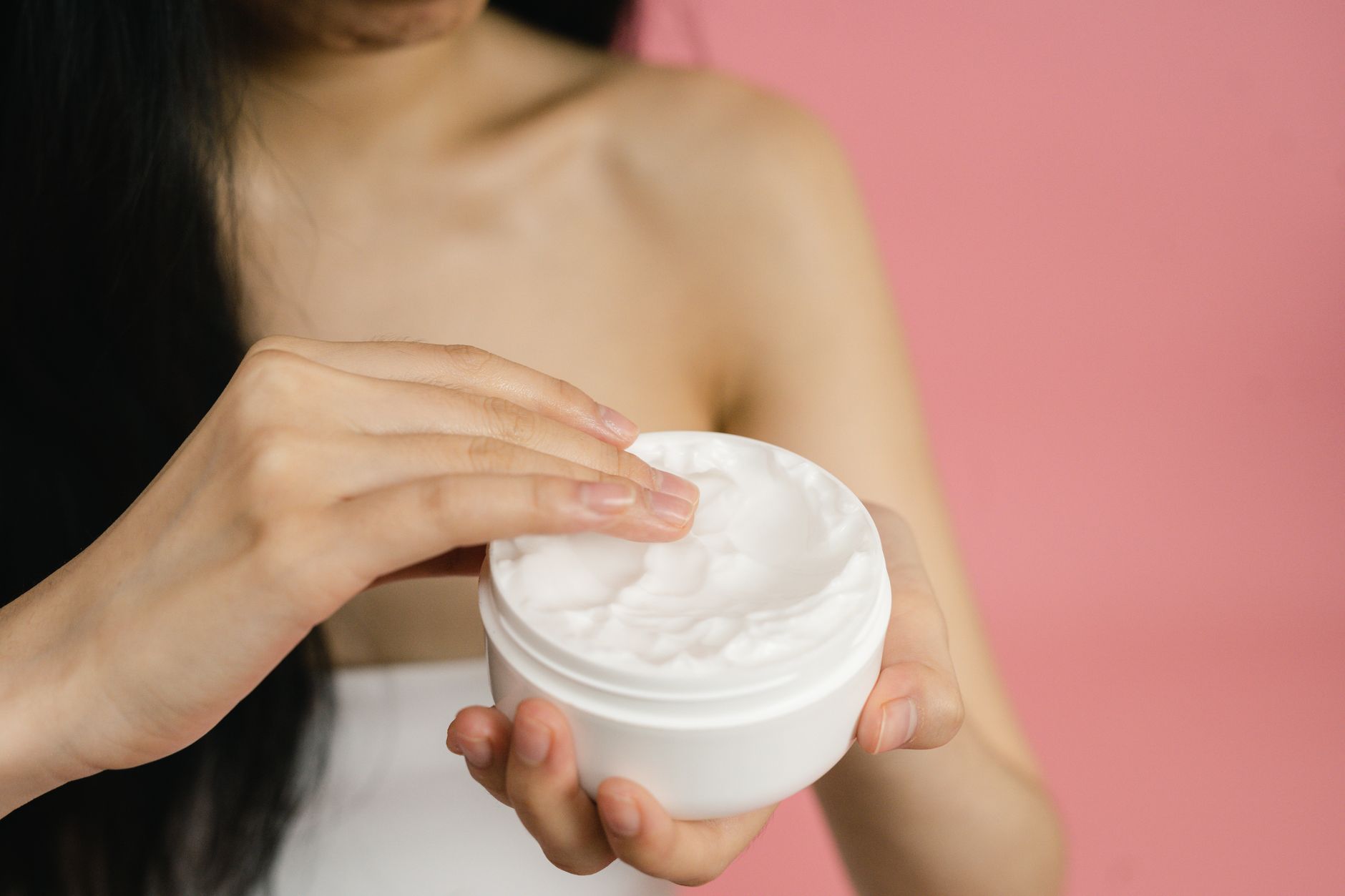
Applying moisturizer immediately after bathing — within three minutes, while the skin is still damp — is one of the few eczema interventions supported by consistent clinical evidence across multiple study formats. The mechanism is straightforward: wet skin absorbs moisturizer more readily, and sealing that moisture in reduces transepidermal water loss, which is the rate at which the skin dries out from the inside.
For eczema, the best moisturizers are the thickest ones. Ointments (like plain petroleum jelly) outperform creams, which outperform lotions, in clinical head-to-head comparisons. Ointments form the strongest barrier but feel greasy; thick creams are a middle ground most people tolerate better for daily use.
Look for fragrance-free and dye-free formulations. Fragrances are among the most common eczema triggers, and they appear in unexpected places — including products labeled "natural" or "unscented," which sometimes means the fragrance is masked rather than absent.
Twice daily, minimum — morning and evening. On a bad flare, more often. This is the advice that sounds too simple to be the most important item on the list. (Your skin has heard this before and rolled its eyes. Do it anyway.)
Bathing routines and additives that help
The standard bathing guidance for eczema: warm, not hot water — 10 to 15 minutes — once daily — using a gentle, fragrance-free cleanser only on areas that need it. Hot water strips more oil from the skin than warm water does. Longer baths dry the skin out further. Soap-based body washes are a common trigger. The brief, warm, gentle bath causes the least additional damage while still doing its job.
After bathing: pat dry — don't rub — and apply moisturizer within three minutes. This "soak and seal" sequence is the single most effective home care routine for eczema, and it costs nothing beyond the time and the moisturizer.
Three bathing additives have clinical evidence behind them:
-
Colloidal oatmeal. Finely ground oatmeal has FDA approval as a skin protectant ingredient. It forms a mild film on the skin surface, reduces water loss, and has documented anti-inflammatory and anti-itch properties. A 15-minute soak using a commercial colloidal oatmeal product in lukewarm water reliably reduces itching and redness for many people. It's one of the few things on the "natural remedies" list that has actual clinical data behind it rather than anecdote.
-
Dilute bleach bath. Roughly half a teaspoon of unscented household bleach per gallon of water — producing a concentration around 0.005–0.01%, comparable to a treated swimming pool — reduces the surface bacterial load associated with eczema flares. This sounds alarming and isn't, provided the dilution is correct. Pat dry and apply moisturizer immediately afterward.
-
Apple cider vinegar bath. Eczema skin tends toward a higher pH than healthy skin, and vinegar can help reduce it. The evidence is mixed — some people find it helpful; others find it irritating. If you try it, dilute heavily (one tablespoon per cup of water) and keep the soak brief. It is not a first-line recommendation, but it's not harmful at appropriate dilutions.
Triggers that extend flares — and how to reduce them
Eczema doesn't flare at random. It flares in response to specific inputs — and identifying those inputs is half the treatment, because removing a trigger costs nothing and often does more than adding a new product.
The catch is that triggers vary significantly between people, and a single person's triggers can shift over time. Your skin is essentially running a very strict guest list. Synthetic fragrances almost never make the cut. Everything else requires some testing to know.
Dry air. Low humidity draws moisture out of skin that's already struggling to retain it. A bedroom humidifier — particularly in winter or in air-conditioned environments — helps more than most people expect from something so simple to set up.
Harsh cleansers. Soap-based body washes, bubble bath, and contact with dishwashing detergent strip the barrier faster than eczema skin can repair it. Switching to a fragrance-free, pH-balanced cleanser removes one of the most common daily irritants without requiring any guesswork.
Fabric friction. Wool and rough synthetic fabrics against eczema skin are reliably provocative. Soft cotton and bamboo fabrics reduce friction and allow airflow. Tight-fitting clothing traps sweat, which is a separate trigger on its own — particularly in warm weather or during exercise.
Fragrance. In laundry detergent, cleaning sprays, candles, skincare with parfum listed. Fragrance sensitivity in eczema is common enough that eliminating it entirely — from both skin products and household products — is worth treating as a default rather than a maybe.
Stress. Cortisol has a direct effect on skin inflammation, and sustained stress — poor sleep, prolonged anxiety, physical depletion — reliably worsens eczema for most people who have it. The itch-sleep disruption-cortisol loop is real and hard to break from either end. Managing stress isn't glamorous either, but it is part of the picture.
Food. More relevant in children with severe eczema than in adults, but real for some. Egg, dairy, wheat, and nuts are the most frequently reported. A structured elimination approach with a dietitian or allergist gives cleaner information than self-elimination, which is slow and often inconclusive.
The most practical way to identify personal triggers: keep a simple log for two to four weeks, noting what changed in the 24 to 48 hours before each flare. Patterns emerge faster than you'd expect.
Skincare ingredients worth knowing
When choosing skincare products for eczema, what's absent from the label matters as much as what's present. The list of potential irritants is longer than most people realize; the list of ingredients with genuine barrier-supporting evidence is shorter.
Ingredients with evidence for barrier support:
- Ceramides — lipid molecules that make up a significant part of the skin's barrier layer. Eczema skin tends to be ceramide-depleted; ceramide-containing moisturizers have demonstrated benefit in multiple clinical trials.
- Colloidal oatmeal — effective both as a bath additive and as a moisturizer ingredient.
- Niacinamide (vitamin B3) — anti-inflammatory, barrier-supporting, and generally well-tolerated by sensitive skin. Found in increasing numbers of fragrance-free formulations.
- Shea butter and sunflower seed oil — both have evidence for reducing itch and improving barrier function. Published research on sunflower seed oil specifically shows improved barrier recovery compared to olive oil in people with eczema-prone skin.
- Hyaluronic acid — draws water into the skin. Most effective when applied to slightly damp skin, immediately after bathing.
Ingredients worth avoiding:
- Fragrance / parfum — appears under various names, including "natural fragrance." It is not safer for eczema skin simply because it's derived from plants.
- Alcohol denat / SD alcohol — drying, barrier-stripping, and irritating to compromised skin. Appears in many toners, astringents, and some "lightweight" moisturizers.
- Methylisothiazolinone (MI) — a preservative with high sensitization rates in people with eczema. Found frequently in rinse-off and leave-on products. The EU has restricted its use in leave-on products due to sensitization rates; it remains common in US formulations and is often buried low in the INCI list.
A note on gentle cleansing
We created Gentle Sen because our founder's son went through severe eczema and topical steroid withdrawal in 2024. We wanted a skin-safe cleaner that didn't add to the irritant load during recovery. Our HOCl tablets dissolve in water to make a fresh, fragrance-free, non-toxic solution — pH-balanced and gentle enough for sensitive skin. Gentle Sen is not a treatment for eczema, and we won't suggest otherwise. If you're having a severe flare, that's a conversation for a dermatologist. But if you're looking for a gentle, skin-safe cleaner that doesn't strip the barrier while your skin works on recovering, it may be worth exploring.
See how Gentle Sen works →When the pattern looks like topical steroid withdrawal
If you've been using topical steroid creams to manage eczema and notice this pattern — needing more cream more often to stay comfortable, a flare that seems harder than expected when you stop, burning rather than surface itch, redness that spreads beyond the original area — you may be dealing with topical steroid withdrawal (TSW) rather than ordinary eczema progression.
TSW is a documented condition that develops after prolonged or high-potency steroid use. It can look similar to an eczema flare but follows its own trajectory: typically worse in the first weeks after steroid reduction, with slow improvement over months rather than days.
This matters for treatment because applying more steroid cream to TSW extends the underlying problem rather than addressing it. If the pattern above sounds familiar, we'd encourage reading our guides on how topical steroid withdrawal happens and how to taper topical steroids safely before adjusting your steroid routine independently.
Worth noting: not all skin that worsens when steroids are stopped is TSW — some is ordinary rebound eczema. A dermatologist familiar with both conditions can help distinguish them. The treatment path differs enough that the distinction is worth making.
Straight answers (FAQ)
Is eczema contagious?
No. Eczema is a skin barrier and immune system condition — not an infection. You can't catch it from another person, and physical contact with someone who has eczema carries no transmission risk. The skin can look alarming during a severe flare, but it is not infectious in any form.
What's the fastest way to relieve eczema itch?
A cool, damp compress held against the affected area for a few minutes provides immediate relief without stimulating more inflammation. Scratching briefly reduces itch and then worsens it — the nerve fibers involved in itch and in mild pain are the same, and scratching creates a feedback loop. A cold compress interrupts that loop without the skin damage that scratching causes. Antihistamines help some people sleep through nighttime itch, though they have limited effect on the itch itself.
Can stress cause an eczema flare?
Yes. Cortisol — the primary stress hormone — has a direct relationship with skin inflammation, and sustained stress reliably worsens eczema for most people who have it. The cycle is self-reinforcing: itch disrupts sleep, poor sleep increases cortisol, cortisol extends the flare. Managing the stress side of this loop is harder than switching laundry detergent, but it's a real part of the treatment picture.
How is eczema different from psoriasis?
Both cause red, inflamed patches, but they have distinct characteristics. Psoriasis produces thicker, silver-scaled plaques typically on extensor surfaces — elbows, knees, scalp, and lower back. Eczema produces thinner, weeping or crusting patches with intense itch, more commonly in skin folds (inner elbows, behind knees, neck). Age of onset also differs: atopic eczema commonly begins in early childhood; psoriasis peaks in young adulthood and again in middle age. A dermatologist can distinguish them on clinical examination, which matters because the treatments differ significantly.
What are the natural remedies for dyshidrotic eczema?
Dyshidrotic eczema (pompholyx) produces small, intensely itchy fluid-filled blisters on the hands, fingers, and feet. Triggers include stress and contact allergens — nickel and rubber are the most common — more so than with atopic eczema generally. The home management approach is similar: keep the affected skin moisturized, avoid identified irritants, and reduce contact with known allergens. Cold compresses help with acute itch during active blistering. Wet wrap therapy applied to the hands can help during severe flares. Prescription-strength topical steroids are often the most effective short-term intervention for dyshidrotic eczema specifically.
Does diet affect eczema?
For some people — particularly children with severe atopic eczema — food allergens play a role. Egg, dairy, wheat, and nuts are the most frequently identified. In adults, the connection is less common but not absent. A structured elimination approach guided by a dietitian or allergist gives clearer information than self-directed elimination, which is time-consuming and often produces inconclusive results. Eliminating entire food groups without clinical guidance can introduce nutritional problems of its own.
Can children outgrow eczema?
Many do. Roughly half to two-thirds of children with early-childhood atopic eczema see significant improvement by adolescence or adulthood, according to the National Eczema Association. It doesn't always disappear entirely — some adults experience recurring flares under stress or during seasonal shifts — but the severity often decreases substantially with age. Consistent barrier care during childhood appears to reduce the likelihood of severe adult eczema.
When should I see a dermatologist instead of managing eczema at home?
See a dermatologist if: eczema covers a significant portion of your body or is affecting sleep and daily function; a consistent home care routine hasn't produced meaningful improvement over four to six weeks; you notice signs of skin infection (warmth, yellow or honey-colored discharge, rapidly spreading redness); or if you're not certain the condition you're managing is eczema. If your skin flares significantly when you reduce or stop a topical steroid cream — worse than you'd expect from the original condition — that pattern is worth raising with a dermatologist before continuing independently.
What eczema management actually looks like
Eczema management is less dramatic than most people hope. There is no single product that repairs the barrier and no supplement that prevents flares. What works is the daily routine: moisturizing consistently, reducing irritants, sleeping enough, managing stress where possible, and noticing specifically what makes your skin worse. The treatments with the most clinical evidence are also the most unglamorous. Your skin, to its credit, has very high standards. It simply hasn't figured out how to communicate them politely.
If you found this helpful, our guide to topical steroid withdrawal on the feet and hands covers the related condition that often intersects with long-term eczema management.
Sources
- National Eczema Association — Understanding Eczema
- American Academy of Dermatology — Eczema Resource Center
- Verallo-Rowell et al. — "Novel antibacterial and emollient effects of coconut and virgin olive oils in adult atopic dermatitis." National Library of Medicine, 2008.
This article is for informational purposes only and does not constitute medical advice. Gentle Sen products are multi-purpose cleaners, not treatments for any medical condition. Consult a licensed dermatologist for diagnosis and treatment of eczema or any skin condition.
0 comments