


How your home environment affects your skin rarely comes up in an eczema or TSW conversation. Most advice stops at what goes onto the skin — a new moisturizer, a gentler cleanser, a stronger prescription. Almost none of it addresses what's already touching that skin for hours at a time: dust mites in the mattress, mineral content in the shower water, fragrance sitting in yesterday's laundry.
If flares keep returning despite a solid skincare routine, the environment is worth checking before the routine takes the blame. We learned this the hard way in our own house, and it's the part almost every other guide skips.
Here's what actually matters in the air, the water, the laundry, and the bedroom — and a weekend-sized plan for checking all of it without redoing your entire home.
The short version
Dust mites, humidity outside the 30–60% range, hard water, indoor air quality, and fragranced fabrics and cleaners are the environmental factors most consistently linked to eczema and TSW flares. None of them show up in a skincare routine, which is why they get missed. Washing bedding weekly at 60°C (140°F) or higher, switching to fragrance-free laundry products, and swapping harsh surface cleaners for something non-toxic covers most of it — no home overhaul required.
In this guide
- Why the environment gets left out of the conversation
- The five environmental factors doing the most damage
- What's hiding in the room you sleep in for eight hours
- Laundry and cleaning products: where "clean" backfires
- A weekend environment audit you can actually finish
- When the environment isn't the answer
- Straight answers (FAQ)
Why the Environment Gets Left Out of the Conversation
Skincare aisles sell products, not audits. A dermatologist appointment is short, and it's built around diagnosing and treating what's already on the skin, not walking through a home room by room. Neither setup is designed to catch the fact that a pillowcase, a laundry detergent, or a humidity level might be undoing the work of the products doing everything right.
Research backs this gap up. A study published by the National Institutes of Health describes atopic eczema as fundamentally an environmental disease — meaning outside factors interact directly with a compromised skin barrier to produce visible symptoms, not just internal genetics or diet. That framing matters, because it means the environment isn't a minor detail. For skin that's already reactive, it's often doing as much work as anything applied topically.
This is personal for us. Gentle Sen was founded after our son went through Topical Steroid Withdrawal (TSW) and severe eczema in 2024. We spent months chasing products before we started paying attention to the room he slept in, the water he bathed in, and the detergent his sheets were washed in. Some of the biggest improvements came from changes that had nothing to do with what touched his skin directly — they were about what was already sitting on it.
Related: How does Topical Steroid Withdrawal actually happen?
The Five Environmental Factors Doing the Most Damage

Dust mites
Dust mites feed on shed skin cells and thrive in warm, humid fabric — mattresses, pillows, upholstery, carpet. Their waste particles are one of the most consistently cited household allergens in eczema research. Even a spotless-looking home can carry a significant dust mite population, because they live inside fabric, not on visible surfaces.
Humidity and temperature
Both extremes cause problems. Air that's too dry pulls moisture straight out of a compromised skin barrier. Air that's too humid encourages the dust mites and mold mentioned above. The National Eczema Society recommends keeping indoor humidity between 30 and 60 percent, with a room temperature around 18°C (64°F) — noticeably cooler than most people keep their homes.
Hard water
Hard water carries a higher mineral load, mainly calcium and magnesium. That mineral content can leave a residue on skin and make it harder to rinse soap and product off completely, which leaves both behind on the skin's surface. It's rarely the single biggest trigger in a household, but it's worth ruling out if nothing else explains a stubborn flare.
Indoor air quality
Smoke, off-gassing from new furniture or paint, and airborne residue from aerosol cleaning sprays all settle onto skin the same way they settle onto every other surface in a room. Cracking a window, running an air purifier, and avoiding aerosol products in living spaces are the three lowest-effort changes with the most consistent payoff.
Fabrics and materials
Wool and synthetic blends trap heat and can feel rough against already-irritated skin. Breathable, natural fibers like cotton are the standard recommendation across nearly every dermatology resource we found, for both clothing and bedding.
What's Hiding in the Room You Sleep in for Eight Hours

Of everywhere in a home, the bedroom concentrates the most direct skin contact by a wide margin. A mattress and pillow are in near-constant contact with skin for roughly a third of every day, which makes bedding the single most important place to start an environmental check.
The National Eczema Society recommends washing bedding weekly at 60°C (140°F) or higher. Cooler washes don't reliably reduce dust mite populations even if the sheets come out looking and smelling clean. Allergy-proof mattress and pillow covers add another layer of protection between skin and the dust mite population living inside the mattress itself. Choosing 100% cotton sheets and a lighter-weight duvet also helps prevent the overheating that makes both sweating and dust mites worse.
Rule of thumb: if you only fix one room in the house, fix the bedroom first. It's where skin spends the most uninterrupted time in contact with fabric, dust, and whatever's in the air.
Related: Can mold in your home cause eczema flares?
Laundry and Cleaning Products: Where "Clean" Backfires
This is the part that catches people off guard. The products used to keep a home clean are frequently the same products triggering the reaction they're trying to prevent.
Fabric softeners and dryer sheets are designed to leave a residue on fabric for softness and scent — and that residue sits directly against skin for hours. Fragranced laundry detergent works the same way. There's no strong evidence that the enzymes in biological detergents specifically worsen eczema, according to the National Eczema Society, but many households still find non-biological, fragrance-free formulas more comfortable for reactive skin.
Surface cleaners cause a version of the same problem. Someone doesn't have to touch a countertop directly for chemical residue or fumes to settle onto nearby skin, bedding, or the air being breathed. Harsh, heavily fragranced cleaners are common irritant contact dermatitis triggers — a separate but related issue to eczema itself.
Related: A full guide to non-toxic cleaning products for sensitive homes
A Weekend Environment Audit You Can Actually Finish
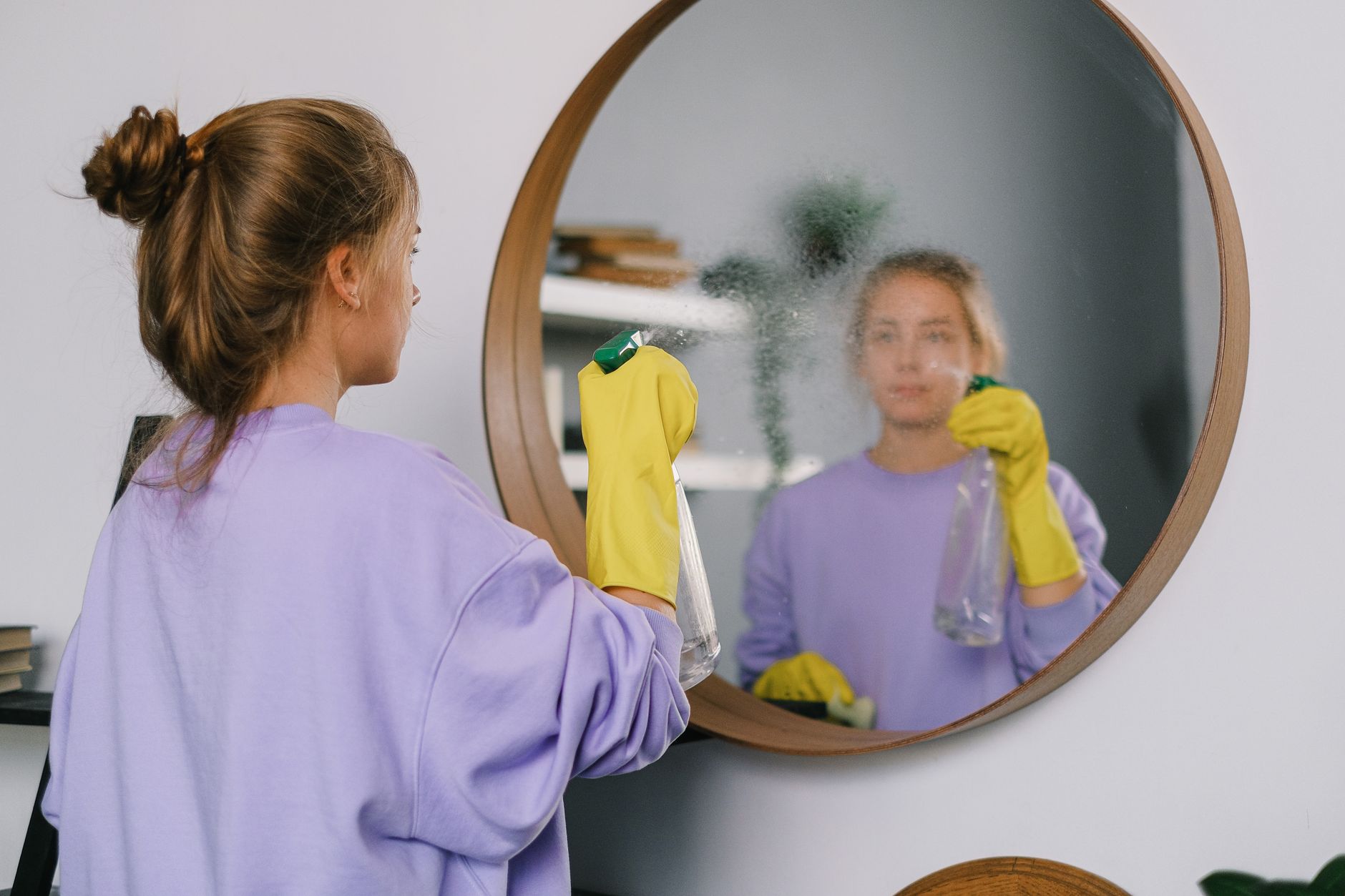
No need to redo an entire home in one weekend. This covers the highest-impact changes in the order that gives you the fastest feedback.
-
Wash all bedding at 60°C (140°F) or higher.
Sheets, pillowcases, and any washable duvet cover. Repeat weekly going forward. -
Check the bedroom's humidity with a cheap hygrometer.
Aim for 30–60%. Under that range, a humidifier helps. Over it, a dehumidifier or better ventilation does. -
Switch to a fragrance-free detergent and skip the fabric softener.
This one change addresses two of the biggest offenders at once. -
Vacuum the mattress and damp-dust soft furnishings.
Damp dusting picks up particles instead of scattering them the way dry dusting does. -
Swap one harsh surface cleaner for a gentler option.
Start with whatever's used most often — usually the bathroom or kitchen spray. -
Note the water — is it hard where you live?
A quick search of your local water utility's report tells you. If it's high, a shower filter is worth testing.
When the Environment Isn't the Answer
Here's the part most guides in this space won't tell you: environmental changes help, but they're not a cure, and chasing every possible trigger can become its own source of stress. The American Academy of Dermatology's own pediatric atopic dermatitis guidelines note insufficient evidence that broad dietary or environmental overhauls change outcomes on their own — targeted changes matter more than sweeping ones.
Don't do this: replace every product in the house, buy a second dehumidifier, and re-source your entire wardrobe in one week. If a flare doesn't improve after two to three weeks of the changes above, the environment probably isn't the main driver — and it's time to talk to a dermatologist about what else might be going on, rather than adding a seventh product to the routine.
Food, genetics, and immune factors all play a role too, and none of them get fixed by a laundry swap. The environment is one lever, not the only one — treat it as the first, cheapest thing to check, not the last word.
See How Gentle Sen Fits a Skin-Safe Home
Straight Answers
Can your home environment really cause an eczema or TSW flare?
Yes. Research published by the National Institutes of Health describes atopic eczema as fundamentally an environmental disease, meaning outside factors interact with a compromised skin barrier to trigger visible symptoms. Dust mites, hard water, low humidity, and fragranced products are among the most commonly cited household triggers.
What humidity level is best for eczema-prone or TSW-affected skin?
Aim for somewhere between 30 and 60 percent, with a room temperature around 18°C (64°F), according to the National Eczema Society. Air that's too dry pulls moisture out of a compromised skin barrier; air that's too humid encourages the dust mites and mold that trigger their own reactions.
Does hard water make eczema or sensitive skin worse?
It can. Hard water carries a higher mineral load, mostly calcium and magnesium, which can leave a residue on skin and make it harder to rinse products off completely. It's not the top trigger in most households, but worth ruling out if nothing else explains a stubborn flare.
How often should you wash bedding if someone in the house has eczema?
Weekly, at 60°C (140°F) or higher, is the standard recommendation from the National Eczema Society for reducing dust mite populations in bedding. Cooler washes don't reliably reduce dust mites even if the sheets look and smell clean.
Do fabric softeners and dryer sheets trigger eczema flares?
They're one of the more common culprits. Both are designed to leave a residue on fabric for softness and scent, and that residue sits directly against skin for hours. Switching to fragrance-free detergent and skipping the fabric softener is one of the simplest changes to test first.
Can cleaning products cause skin reactions without direct contact?
Yes, especially from airborne residue and fumes from sprays used on nearby surfaces. Someone doesn't have to touch a countertop cleaner for the residue or fumes to settle on skin, bedding, or the air they're breathing.
Is dust mite exposure connected to TSW specifically, not just eczema?
The research base is more established for eczema specifically, but TSW-affected skin is already dealing with a severely compromised barrier, which tends to make it more reactive to the same irritants that trigger eczema — dust, hard water, synthetic fabrics, and fragranced products included.
What's the one environmental change worth making first?
Switching to fragrance-free laundry products and washing bedding weekly at a high temperature addresses two of the biggest offenders at once, without new equipment or a full home overhaul.
The routine isn't always the problem
A good skincare routine can only do so much against a mattress full of dust mites or a pillowcase washed in scented detergent. Checking the environment costs nothing but a weekend, and it's often the missing piece for flares that don't respond to product changes alone.
We built Gentle Sen around exactly this gap — a non-toxic way to keep the surfaces around reactive skin as gentle as the products on it.
Shop Gentle Sen HOCl Tablets- National Eczema Society — Household Irritants and Eczema
- National Institutes of Health — Atopic Eczema Is an Environmental Disease
- American Academy of Dermatology — Atopic Dermatitis Causes
Images from Pexels photo library under the Pexels License. This post is for informational purposes only and is not medical advice. Gentle Sen HOCl tablets are a multi-purpose cleaner and deodorizer. This product is not intended to diagnose, treat, cure, or prevent any disease. Consult a healthcare professional for medical concerns.
0 comments