


Hypochlorous acid turns up in wound care, skincare, and contact lens solutions. Add plant care to that list. HOCl is used by commercial growers, hydroponic operations, and organic farmers for the same reason it works everywhere else: it's effective at near-neutral pH, leaves no harmful residue, and breaks down into water and salt when it's done. Whether you're managing a hydroponic reservoir or fighting powdery mildew on your kitchen-window herbs, hypochlorous acid for plants is worth understanding properly.
One caveat before we get into it: HOCl cannot fix overwatering. Nothing can. We say this from experience, not judgement.
The short version
HOCl is safe for plants at the right concentration — 50–200 ppm for foliar spray, lower for seedlings and sensitive species. It's widely used in hydroponics to manage biofilm and by organic growers to address fungal disease pressure like powdery mildew. Apply in early morning or evening. Don't apply to soil-based systems where you've established specific beneficial microbial populations. It's not a fertilizer, not a registered pesticide, and not a replacement for good growing practice.
In this guide
What is HOCl and why does it matter to growers?
Hypochlorous acid is a weak acid that forms when chlorine dissolves in water at a near-neutral pH. At pH 5.5–6.5, the majority of available chlorine exists as HOCl rather than hypochlorite ions. That distinction matters because HOCl is far more active per ppm than hypochlorite — which is why a properly pH-adjusted HOCl solution outperforms bleach at much lower concentrations.
Your own white blood cells produce HOCl as part of your immune response. The same chemistry that makes it useful in your body applies in a growing environment: it creates conditions hostile to the microorganisms that cause plant disease, it doesn't accumulate in your growing medium, and it degrades into salt and water. In soil, in a reservoir, in a compost pile — it doesn't linger.
The USDA National Organic Program has clarified that HOCl is appropriate for organic production and handling, and that it can be used as a no-rinse cleaner on harvested fruit and vegetables. It's also the active compound in several EPA-registered surface cleaners used in food-processing environments. For a molecule that breaks down into salt water, it has a solid regulatory track record.
Related: Using hypochlorous acid as a non-toxic household cleaner — what it does and how to use it
What HOCl is used for in plant care
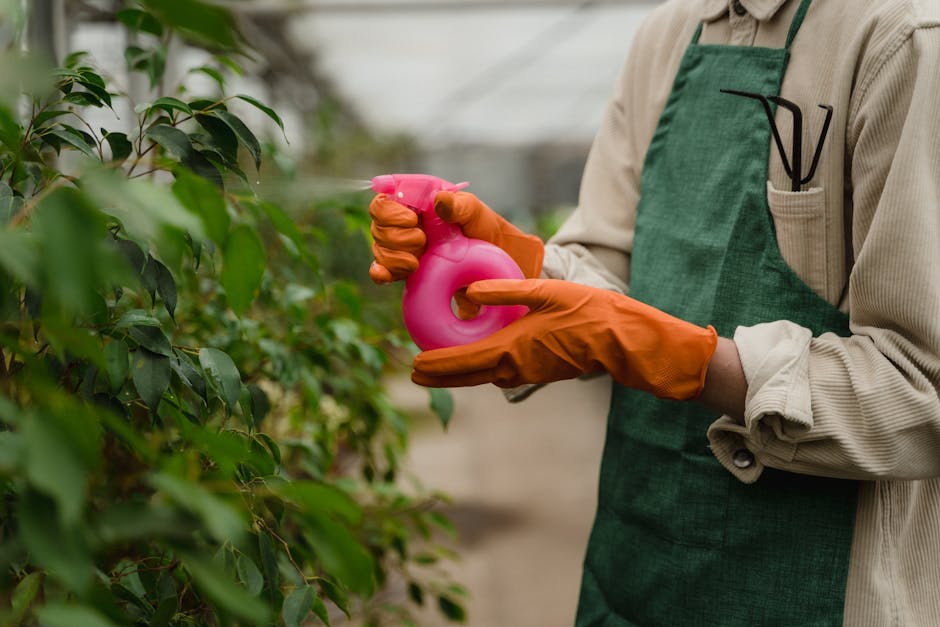
Foliar spray for disease management
Applied directly to plant leaves, HOCl helps create a surface environment less hospitable to fungal growth. Powdery mildew is the most common application — that white powdery coating that appears on leaves when humidity is high and airflow is poor. Working concentration for foliar spray is 50–200 ppm, applied in the morning or evening when leaves can dry naturally. For active infections, every 2–3 days. For prevention, once per week is typical.
Tool and surface cleaning
Contaminated pruning shears and propagation trays are a standard disease vector that most home growers underestimate. A wipe-down or short soak in diluted HOCl solution creates a cleaner working environment without leaving residue that might affect cuttings or seedlings. Standard practice: wipe, let air dry for 60 seconds, then use. No rinse required at typical cleaning concentrations.
Produce rinse before storage
If you're growing food, the USDA approval for HOCl as a no-rinse produce cleaner is worth knowing about. A brief rinse at 50–80 ppm before storage reduces surface contamination on homegrown vegetables without adding any detectable taste, odor, or residue. Pre-made produce washes often contain surfactants and fragrance — HOCl is just water with useful chemistry.
HOCl in hydroponic systems

Biofilm is a persistent problem in hydroponic systems — less dramatic than it sounds, which is impressive because it already sounds fairly dull. It's a coating of microorganisms (algae, bacteria, fungi) that accumulates on reservoir walls, pipes, and growing surfaces. It restricts flow, competes for nutrients, and creates conditions that favor root pathogens.
HOCl at low maintenance concentrations is used by hydroponic growers to manage this buildup. It works without the harshness of bleach and doesn't require the extended contact times or aggressive rinsing protocols that sodium hypochlorite does. Rough working range: 1–2 mL per gallon of reservoir volume for ongoing maintenance, though this varies depending on the concentration of your HOCl source — check the product guidance.
A note on sourcing HOCl for home growing
Most pre-made HOCl sprays have a 3–6 month shelf life and degrade quickly once opened — which matters if you're making small batches for foliar use. Gentle Sen HOCl tablets take a different approach: dissolve a tablet in 20 fl. oz. of water when you need it, and your solution is always fresh. No generator, no bulk jug, no shipping water across the country. Same molecule growers rely on — ready in two minutes.
Common mistakes growers make with HOCl
Using too high a concentration
Above 200 ppm on sensitive foliage — seedlings, plants with thin cuticles, certain leafy greens — HOCl can cause marginal leaf burn. The chemistry that makes it effective is the same chemistry that can cause damage if overdone. Start at 50–100 ppm for anything delicate, and do a spot test on one leaf before treating the whole plant.
Applying in direct midday sun
HOCl degrades in UV light — and, to be fair, so do most of us in June. More practically: wet leaves under strong sun invite leaf burn regardless of what's in the spray. Apply early morning or late evening when leaves can dry slowly and UV exposure is lower.
Mixing HOCl with other chemicals
HOCl is not compatible with ammonia-based products, hydrogen peroxide, or highly alkaline solutions. Mix it only with water. Don't store solutions in metal containers — chlorine compounds corrode metal, and the reaction changes your actual concentration unpredictably.
Treating HOCl as a pesticide substitute
HOCl helps create a cleaner growing environment. It's not a registered pesticide and shouldn't be used as one. For established pest infestations — spider mites, aphids, scale — you need a separate integrated pest management strategy. HOCl is a maintenance and disease-management tool, and works best when it's part of a clean-growing routine rather than a reactive fix.
How to use HOCl for plants — dilution and application

Dilution targets vary by use. These are the working ranges documented in grower literature:
- Foliar spray — established plants: 100–200 ppm
- Foliar spray — seedlings or sensitive foliage: 50–100 ppm
- Hydroponic system maintenance: 1–2 mL per gallon (varies by HOCl source concentration — check product guidance)
- Tool soak / surface cleaning: 150–200 ppm, 5–10 minutes contact time
- Produce rinse: 50–80 ppm, no rinse required
-
Mix fresh, in small batches.
HOCl degrades with UV exposure and time. Make what you need and use it within 7 days. Store in a sealed, dark container. -
Apply in early morning or evening.
Lower UV, slower evaporation. Wet leaves in strong midday sun create burn risk regardless of what's in the spray. -
Spray to light coverage — not dripping.
Top and underside of leaves. You're coating the surface, not drenching it. Pooling liquid on leaves overnight invites fungal problems regardless of what's in the spray. -
Adjust frequency to disease pressure.
Active infection: every 2–3 days until under control. Prevention: once per week. There's no benefit to daily applications once disease pressure is low.
When NOT to use HOCl on plants
The part most plant-care guides skip.
Straight answers (FAQ)
Is hypochlorous acid safe for all plants?
For most common houseplants, garden vegetables, and herbs — yes, at the right concentration and with correct timing. The standard working range of 50–200 ppm applied in low UV conditions is well tolerated by the majority of plant species. Exceptions include some chlorine-sensitive varieties like certain ferns and carnivorous plants. Always start with a spot test on one leaf before treating the whole plant.
What concentration should I use for foliar spray?
100–200 ppm for established plants with normal foliage. 50–100 ppm for seedlings, delicate leafy greens, or plants with thin cuticles. Above 200 ppm on sensitive foliage, you risk marginal leaf burn. When in doubt, go lower — it's more effective than nothing and easier on the plant.
Can I use HOCl in my hydroponic reservoir?
Yes, for inert-media systems — rockwool, coco coir, clay pebbles. It's a well-established tool for managing biofilm in reservoirs and irrigation lines at low maintenance concentrations. For living soil or biologically inoculated systems, restrict use to foliage and tool cleaning. HOCl at standard concentrations will affect the beneficial microbial populations in those systems.
Does HOCl harm beneficial soil microbes?
At foliar spray concentrations, HOCl that reaches the soil surface is typically dilute enough that impact on the root zone is minimal. Direct soil drench at cleaning concentrations is a different story — that will affect soil biology, including inoculated mycorrhizal networks and beneficial bacteria. If soil biology matters in your system, keep HOCl applications above the soil line.
How long does HOCl solution stay active once mixed?
Up to 7 days when stored in a sealed, dark container away from heat. HOCl degrades with UV exposure, heat, and contact with air. Pre-made commercial solutions typically last 3–6 months unopened and 30–60 days once opened. Solutions made fresh from a concentrated source will always outperform stored solutions — which is one reason tablet-based HOCl makes sense for growers doing small batches.
Is HOCl the same as bleach for plants?
No. Bleach (sodium hypochlorite) has a pH of 11–13 and releases chlorine primarily as hypochlorite ions — far more alkaline and less biologically active per ppm than HOCl. Bleach also contains stabilizers and additives you don't want near edible plants or seedlings. HOCl at pH 5.5–6.5 is a genuinely different compound: same general chemistry, significantly different profile in practice.
Can HOCl help with powdery mildew?
Powdery mildew is one of the most common applications for foliar HOCl. Applied at 50–200 ppm in early morning or evening — covering the top and underside of affected leaves — it helps create a surface environment less hospitable to the fungal growth. Treat every 2–3 days during active infection, once per week as a preventative. Address the underlying conditions (humidity, airflow) alongside treatment for best results.
Can I rinse homegrown vegetables with HOCl before eating?
Yes. The USDA National Organic Program has specifically clarified that HOCl is appropriate for organic production and can be used as a no-rinse cleaner on harvested fruit and vegetables. A light rinse at 50–80 ppm leaves no detectable taste, odor, or residue. This is the same standard used by commercial organic operations for produce washing.
The short version
HOCl is a genuinely useful addition to a clean-growing routine. It's not a magic fix — it won't save a plant that's drowning from the roots or replace the airflow and humidity management that fungal diseases need you to get right. But as a tool for disease prevention, surface hygiene, and hydroponic system maintenance, it has solid grounding in both research and real-world grower practice.
For home growers who want fresh HOCl in small batches without a generator or bulk jug, Gentle Sen tablets dissolve in 20 fl. oz. of water in about two minutes. Made when needed. Always fresh.
If your plants could talk, they'd probably thank you for not using bleach. They'd also have some notes about the watering schedule — but that's a conversation between you and them.
Sources & further reading
- USDA National Organic Program — organic substance approvals and handling guidelines
- Rani et al., "Electrolyzed Oxidizing Water Application in Agriculture" — PubMed Central
- National Pesticide Information Center — Chlorine-based compounds in agriculture
This article is for informational purposes only. Gentle Sen HOCl tablets are a multi-purpose household cleaner and are not sold or labeled as a pesticide, fungicide, or registered agricultural input. Consult local regulations and product labeling for specific agricultural applications. This content does not constitute medical or agronomic advice.
0 comments