


Non-toxic pans are cookware made without PFAS, PFOA, or synthetic coatings that break down under heat. The materials that qualify are straightforward: stainless steel, cast iron, enameled cast iron, carbon steel, and pure ceramic. Everything else deserves a closer look at the label before it goes on your stove.
The question of which non-toxic pans are worth using — and how to actually use them well — is a bit more involved than a label swap. Ceramic non-stick isn't a direct stand-in for PTFE non-stick. Stainless steel rewards patience in a way a coated pan doesn't. Cast iron is effectively indestructible but it isn't the right tool for every job. Getting this right is less about buying the most expensive set and more about understanding what each material actually does.
This guide covers all of it: what makes cookware toxic, which materials are genuinely safe, where each one excels and falls short, and how to clean them in a way that doesn't undo the whole exercise. We've spent the past two years thinking carefully about what comes into our home — not just what we put on our skin, but what we cook in. This is what we've learned.
The short version
The safest cookware materials are stainless steel (304 / 18/10 grade), cast iron, enameled cast iron, carbon steel, and pure ceramic. Avoid traditional non-stick pans that use PTFE coatings — especially if they're scratched, chipped, or old enough to have been manufactured with PFOA. PFAS and PFOA have been linked to health and environmental concerns serious enough that the EPA has issued formal guidance on them. Replacing your old non-stick set is easier than it sounds, and the alternatives are genuinely good.
In this guide
- What makes cookware toxic in the first place?
- The four safest non-toxic cookware materials
- Stainless steel: the workhorse of a non-toxic kitchen
- Ceramic cookware: the easiest to clean, the hardest to keep
- Cast iron and enameled cast iron: the classics that outlast everything
- Carbon steel: the choice serious cooks don't talk about enough
- Cookware to think twice about
- How to clean your non-toxic pans without introducing new problems
- Straight answers (FAQ)
What makes cookware toxic in the first place?
Most cookware safety concerns center on one family of chemicals: PFAS — per- and polyfluoroalkyl substances. There are thousands of compounds in this family, but the two that matter most for cookware are PTFE (polytetrafluoroethylene) and PFOA (perfluorooctanoic acid).
PTFE is the synthetic polymer that gives non-stick pans their slipperiness — branded as Teflon. PFOA was historically used in the manufacturing process for PTFE coatings, and the EPA identified it as a likely human carcinogen. Most manufacturers phased PFOA out of production by 2013. The problem: PFOA is gone from the manufacturing process, but PTFE is still in most non-stick pans sold today.
Under normal cooking conditions — below 500°F — PTFE is generally considered stable. The concern is what happens above that threshold. Overheating a PTFE-coated pan (an empty pan on high heat can reach 500°F in about five minutes) causes the coating to degrade and release fumes. In research settings, these fumes have caused serious harm to pet birds within minutes — birds are considerably more sensitive to airborne toxins than humans, which is why this metric is worth noting. In humans, the documented effects are typically milder: flu-like symptoms sometimes called "polymer fume fever." The pan doesn't need to be visibly damaged for this to happen.
Your old non-stick pan isn't plotting against you. But if the coating is starting to look like abstract art — flaking, peeling, chipping at the edges — that coating is ending up somewhere. "Somewhere" is usually your food.
What "PFAS-free" and "PFOA-free" labels actually mean
Labeling in the cookware space is not always straightforward — which is a polite way of saying that marketing language in this space has a way of keeping pace with regulatory pressure just quickly enough to stay technically accurate without being particularly helpful.
"PFOA-free" became widely used after 2013 when PFOA was phased out of production — but PFOA-free does not mean PFAS-free. A pan can be PFOA-free and still contain PTFE and other PFAS compounds. "PFAS-free" is the cleaner claim and typically means no per- or polyfluoroalkyl substances in the coating at all. The materials that genuinely don't need PFAS to function — stainless steel, cast iron, carbon steel, and pure ceramic — don't require either label because they don't have a synthetic coating to disclose.
The EPA has published extensive guidance on PFAS, including their persistence in the environment — "forever chemicals" is accurate, not a media exaggeration; they genuinely don't break down — and their presence in drinking water supplies across the US. The health research continues to evolve, but the direction of findings — consistent links to thyroid disruption, immune function, and certain cancers — has been consistent enough that "wait and see" feels like an unusual choice when the alternatives are genuinely good.
Other cookware concerns beyond PFAS
PFAS get most of the attention, but they're not the only cookware-related concern worth knowing about:
- Cadmium and lead — historically found in pigmented enamel used on some enameled cookware, particularly older or imported pieces. Modern enamelware from established manufacturers that comply with FDA or EU safety standards is tested and should be clean. Vintage or unknown-origin enameled pieces are worth testing with a lead check kit before use — they cost about $5 and take 30 seconds.
- Aluminum leaching — uncoated aluminum is reactive with acidic foods like tomatoes, citrus, and wine. Regular cooking in bare aluminum has been studied in relation to aluminum accumulation in the body, though the research is less conclusive than the PFAS literature. Hard-anodized aluminum creates a more stable, less reactive surface.
- Ceramic coating composition — "ceramic" non-stick coatings aren't pure ceramic. They're sol-gel coatings that contain silicon, oxygen, and other ingredients that vary by manufacturer. They don't contain PFAS, which is the main safety advantage over traditional non-stick — but they wear faster than PTFE coatings and should be treated gently.
The four safest non-toxic cookware materials
There's a short list of materials that don't rely on synthetic coatings to function and don't require PFAS in their construction. Each has a different cooking personality. Understanding that goes a long way toward actually using them well instead of abandoning them after three weeks because eggs stuck.

Here's a quick summary before we go into depth on each one:
| Material | Non-stick? | Induction-compatible? | Maintenance | Best for |
|---|---|---|---|---|
| Stainless steel | No (but manageable with technique) | Yes | Low | Searing, sauces, versatile everyday cooking |
| Cast iron | When seasoned, yes | Yes | Medium | High-heat searing, baking, cornbread, steak |
| Enameled cast iron | Somewhat | Yes | Low | Braising, soups, acidic dishes, oven-to-table |
| Carbon steel | When seasoned, yes | Yes | Medium | High-heat searing, wok cooking, restaurant-style |
| Pure ceramic | Yes (but wears over time) | Varies by model | Low (while coating performs) | Low-to-medium heat, eggs, delicate fish |
Stainless steel: the workhorse of a non-toxic kitchen

Stainless steel is the most versatile non-toxic cookware material available. It contains no synthetic coatings, requires no special seasoning or break-in period, goes from stovetop to oven, handles acidic foods without reacting, and can be cleaned aggressively when needed. If we were recommending one material for a family switching away from traditional non-stick, this would be it.
What the grade numbers mean
Stainless steel cookware is graded by its chromium and nickel content. The grades you'll see most often:
- 304 / 18/10 — 18% chromium, 10% nickel. This is the standard for quality cookware. Corrosion-resistant, non-reactive, durable. If a pan is labeled 18/10, it's using 304 grade steel. This is the one to look for.
- 430 / 18/0 — 18% chromium, no nickel. Used in many budget cookware lines and in induction-compatible bases. Less corrosion-resistant than 304. Fine for cooking, but lower overall quality.
- 316 (surgical grade) — higher nickel content, more corrosion-resistant, used in medical applications. Occasionally marketed as ultra-premium cookware. Overkill for the average kitchen, but not harmful.
For everyday cooking, 18/10 (304 grade) is the right target. It's inert and non-reactive at normal cooking temperatures. People with severe nickel sensitivity may want to check with their doctor, though the amounts that migrate into food under normal use are generally well within safe limits.
How to actually cook on stainless steel — the part most guides skip
Stainless steel will brown things at the bottom of the pan in a way that looks like you've made a terrible mistake. You haven't. That's called the Maillard reaction, and it tastes excellent. The brown bits that form on the pan surface — called fond — are the foundation of good sauces. Deglaze with wine, stock, or water and scrape with a wooden spoon. That's restaurant cooking, not a cleaning problem.
The technique for reducing sticking in stainless steel is simple and consistent:
-
Preheat the pan before adding oil.
Medium heat, 1–2 minutes. The pan is ready when a drop of water skitters around the surface and evaporates quickly rather than sticking (the Leidenfrost effect, if you want the kitchen science term). -
Add oil and let it heat for 10–15 seconds.
Tilt to coat the pan. You want the oil to shimmer slightly, not smoke. -
Add food at room temperature, not straight from the fridge.
Cold food drops the pan temperature sharply and increases sticking. Let proteins sit out for 10–15 minutes before cooking. -
Don't move the food too early.
Proteins release from the pan naturally when they're ready. If something is sticking, it's not done yet. Give it another 30–60 seconds and try again — it will release cleanly.
Ceramic cookware: the easiest to clean, the hardest to keep
Ceramic-coated cookware has become the popular PFAS-free alternative to traditional non-stick. The premise is appealing: a smooth, non-stick surface without synthetic fluoropolymers. It's not wrong — ceramic-coated pans don't contain PTFE or PFAS, which is the primary safety advantage. The limitation is durability, and it's worth understanding before you buy.
Ceramic coatings — properly called sol-gel coatings — have a shorter functional lifespan than PTFE coatings. They degrade over time with heat cycling, and their non-stick properties typically diminish noticeably within one to two years of regular use. A ceramic-coated pan that's lost its non-stick properties still functions as a cooking surface, but you've lost the main thing you bought it for. (Some brands have marketed ceramic as a replacement for traditional non-stick without adequately communicating this lifespan difference. We're flagging it up front.)
How to make ceramic cookware last longer
The single biggest factor in ceramic coating longevity is heat. These coatings are rated for lower temperatures than PTFE. Keep it at medium or medium-low, never high:
- No preheating an empty pan on high heat
- No searing at high temperatures — that's stainless steel's job
- No broiler use unless the manufacturer explicitly says it's rated for it
- No metal utensils — silicone or wood only
- No dishwasher — hand wash while the pan is still warm, before food hardens onto the surface
- No aerosol cooking sprays — they leave a residue that builds up on ceramic and is difficult to remove without abrasion
Pure ceramic vs ceramic-coated: not the same thing
Pure ceramic cookware — the solid kind, not ceramic-coated — is a different material entirely. It's heavier, more fragile, usually not induction-compatible, and considerably more expensive. It's also genuinely non-toxic, doesn't require a coating at all, and is very resistant to leaching. If you want the health credentials without managing a coating's lifespan, solid ceramic is the answer. You'll cook differently with it — lower and slower — but it's a clean choice in every sense.
Cast iron and enameled cast iron: the classics that outlast everything
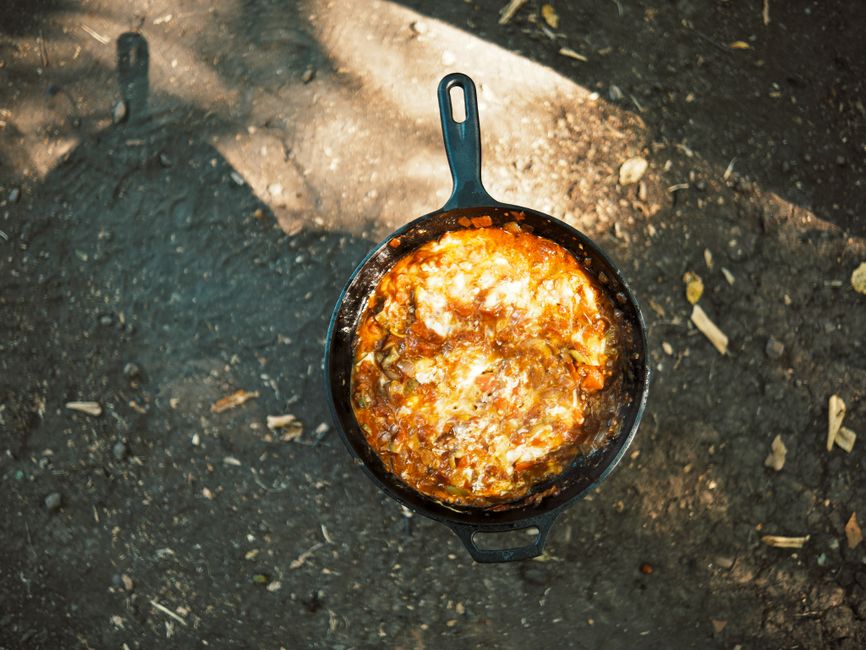
Cast iron skillets have survived more abuse than a rental car and still cook better than the day they were bought. The secret is that they have no coating to damage and no feelings to hurt. A well-used cast iron pan will outlast you. Your children might inherit it. This is not an exaggeration — it is genuinely what happens with cast iron, and it is one of the better things about it.
Cast iron works through seasoning: multiple thin layers of polymerized oil baked into the porous metal surface over time. A properly seasoned cast iron skillet is naturally non-stick, completely non-toxic, and improves with every use. It's also one of the most affordable options in this category. A quality 10-inch cast iron skillet costs well under $40 and will still be working when your grandchildren are cooking dinner.
Seasoning cast iron: simpler than its reputation suggests
Seasoning is less complicated than the internet makes it sound. The basic process for a new pan:
-
Apply a thin layer of oil to the entire pan — inside, outside, and handle.
Flaxseed oil and grapeseed oil polymerize well at high temperatures. Use a very thin coat — you're conditioning the surface, not frying. Thick layers become sticky and gummy, not smoother. -
Wipe off the excess with a clean cloth until the pan looks nearly dry.
This step matters more than most people realize. More oil does not mean better seasoning — it means a sticky pan. -
Bake upside down in a 450°F oven for one hour.
Put a sheet of foil on the rack below to catch any drips. Let the pan cool in the oven — don't rush it. -
Repeat 3–4 times for a new pan before relying on it for delicate cooking.
Each cycle builds the polymerized layer. After 3–4 rounds, the pan is ready to use. It gets better from there with every cook.
Enameled cast iron: all the heat retention, none of the seasoning
Enameled cast iron is cast iron coated with a layer of porcelain enamel. The enamel is glass-based and inert — it doesn't react with food, doesn't require seasoning, and handles acidic foods that bare cast iron can't cope with well: tomatoes, wine, citrus. It also cleans up easily with warm soapy water.
The tradeoff: enameled cast iron is more expensive than bare cast iron, and the enamel can chip if dropped or subjected to thermal shock (moving a very hot pan directly to a cold surface). A chip near the cooking surface is worth inspecting — if it's large enough to expose the cast iron underneath, that piece has reached the end of its useful life. Small chips on exterior surfaces are typically cosmetic only.
One practical note on sourcing: older or imported enameled cookware with unknown provenance occasionally tests positive for lead or cadmium in the glaze pigment. If you're cooking with vintage enameled pieces, a $5 lead test kit is a worthwhile 30 seconds of precaution.
Carbon steel: the choice serious cooks don't talk about enough
Carbon steel is what happens when someone took a cast iron pan, put it on a strict diet, and taught it to respond more quickly. It's not irony — it's just better engineering for certain applications.
Carbon steel pans contain roughly 98–99% iron and 1–2% carbon. That's similar to cast iron (which is 2–3.5% carbon), but the lower carbon content makes the metal thinner, lighter, and significantly quicker to heat and cool. Where cast iron holds heat like a thermal battery and changes temperature slowly, carbon steel responds faster — making it easier to control and better suited to high-heat cooking that requires precision adjustments.
Restaurant kitchens use carbon steel woks and pans heavily for exactly this reason. The same material that professional cooks have relied on for decades, no synthetic coatings, at a fraction of the cost of premium stainless steel sets.
Carbon steel vs cast iron: a practical comparison
- Choose carbon steel if you want a lighter pan, faster heat response, or plan to use it for high-heat stovetop work — stir-frying, searing fish, cooking at restaurant-level temperatures.
- Choose cast iron if you want maximum heat retention, a pan that doubles as a baking surface and camping skillet, or something that can genuinely be passed down.
- Both is a reasonable answer. Many serious home cooks end up with one of each. They're not interchangeable — they're complementary tools for different jobs.
Caring for carbon steel
Carbon steel requires the same seasoning process as cast iron and has the same care requirements: no prolonged contact with acidic foods, no dishwasher, dry thoroughly after washing, apply a light coat of oil when storing. New carbon steel typically needs 4–6 rounds of initial seasoning to perform reliably — slightly more than cast iron, since the thinner metal builds the polymerized layer more slowly per cycle.
Cookware to think twice about
A few materials that come up regularly in safe-cookware conversations, with some nuance worth unpacking rather than just listing as "avoid":
Traditional PTFE non-stick (Teflon-type coatings)
Under careful normal use, PTFE-coated pans are generally considered safe by regulators — the FDA has not banned them, and the primary risk appears at temperatures above 500°F. The practical concern is that empty pans can reach those temperatures quickly on high heat, and not everyone tracks how long their pan has been preheating before adding oil.
More practically: PTFE coatings wear down. When you see scratching, flaking, or chipping, the coating is degrading and the pan has had its useful life. Replacing scratched non-stick pans is the right call independent of the chemistry debate.
Uncoated aluminum
Bare aluminum reacts with acidic and alkaline foods and can leach small amounts of aluminum into food during cooking. The research on aluminum accumulation and health is less settled than the PFAS literature, but it's enough of a reason to prefer anodized aluminum (which creates a harder, less reactive surface layer) over bare aluminum where possible. Stainless steel handles most of the same applications without the concern.
Copper cookware
Unlined copper is reactive and can leach copper into food in quantities that cause problems. Most quality copper cookware is lined with stainless steel or tin on the cooking surface, which addresses the concern. Tin-lined copper requires careful handling (tin has a lower melting point and can be damaged by overheating). Stainless-lined copper is more practical and safe for regular use — though the price point of serious copper cookware means it's rarely the everyday family kitchen concern.
If you own copper cookware: check that the lining is fully intact before cooking. A worn tin lining is the issue to watch for.
How to clean your non-toxic pans without introducing new problems

This is the part most cookware guides skip entirely. You can buy the most carefully-made non-toxic pans available and then clean them with a product full of synthetic fragrance, surfactants with poor safety profiles, or abrasives that degrade the surface over time. A whole-kitchen view of non-toxic cooking includes what you clean with, not just what you cook in.
Cleaning guidelines by material
- Stainless steel: Dishwasher-safe in most cases, but hand washing extends the life of the finish. For stubborn staining or discoloration, a paste of baking soda and water with a non-scratch sponge works well. For rainbow discoloration from overheating or mineral deposits, Bar Keepers Friend (oxalic acid) is the standard fix. Both are effective without damaging the steel surface.
- Cast iron: Hand wash only. A small amount of dish soap is fine — modern dish soap is not lye-based and won't strip good seasoning in a single wash, despite what older guides say. Dry completely on the stovetop over low heat immediately after washing. Apply a very light coat of oil before storing. Never soak in water.
- Enameled cast iron: Hand wash with warm soapy water and a soft cloth or sponge. Avoid abrasive scrubbers on the enamel. Soaking in warm water for 15–20 minutes loosens stuck food without needing to scrub. Do not submerge a hot pan in cold water — thermal shock can crack the enamel.
- Ceramic-coated: Hand wash only, with a soft sponge. No abrasive cleaners of any kind. Let the pan cool before washing — putting a hot ceramic-coated pan into cold water accelerates coating degradation. The coating is the most fragile part of the pan; treat it like the thing that determines the pan's useful life, because it is.
- Carbon steel: Same approach as cast iron. Minimal soap, dry completely on the stovetop, light oil before storing. Don't leave it wet — carbon steel rusts faster than cast iron. A rusted carbon steel pan can be recovered the same way cast iron can: scrub, re-season, and move on.
A note on what you clean with: If you're making deliberate choices about your cookware, it's worth making the same choices about your cleaning products. HOCl (hypochlorous acid) has become our everyday kitchen surface cleaner — it's pH-balanced, non-toxic, fragrance-free, and safe around food prep surfaces. We make it at home by dissolving a Gentle Sen tablet in 20 fl. oz. of tap water. No harsh residue. No synthetic fragrance. Wipe down the stovetop, counters, and cooking surfaces — HOCl breaks down to water and trace salt. It's the non-toxic cleaner for the rest of the non-toxic kitchen.
Knowing when a pan is done
Non-toxic pans don't all last forever. Knowing when to replace one is part of using them well:
- Stainless steel: Rarely needs replacing under normal use. Warping from thermal shock is the main failure mode — if the base no longer sits flat on the cooktop, it's time.
- Cast iron: Almost never needs replacing. Rust and re-seasoning can be repeated indefinitely. A deep crack through the metal is the only real end state, and it takes significant abuse to get there.
- Enameled cast iron: Replace if the enamel chips significantly near the cooking surface. Minor chips on the exterior are cosmetic only.
- Ceramic-coated: When the non-stick property is consistently gone and food sticks on every cook, the coating has run its course. These have the shortest functional lifespan of the non-toxic options — typically 1–3 years of regular use.
- Carbon steel: Like cast iron, essentially indefinite. Always restorable with cleaning and re-seasoning.
Straight answers
Are non-stick pans toxic?
Traditional PTFE-based non-stick pans are generally considered safe under normal cooking conditions, but there are genuine concerns. PTFE coatings degrade when overheated above ~500°F, releasing fumes that are harmful to birds and can cause flu-like symptoms in humans. The more significant historical concern was PFOA — used in manufacturing until 2013 and classified as a likely human carcinogen. Modern PFOA-free PTFE pans address that specific concern but not the overheating risk or the general question of what happens when the coating wears and ends up in food. If you have older pans with damaged coatings, replacing them is the sensible call.
What is the safest non-toxic pan to cook with?
For overall safety and practical versatility, 18/10 (304 grade) stainless steel is the strongest first choice. It contains no synthetic coatings, is non-reactive at normal cooking temperatures, handles acidic foods, is dishwasher-safe, and lasts indefinitely with basic care. Cast iron and carbon steel are equally safe but need more maintenance. Pure solid ceramic is also very clean from a toxicity standpoint, though it's more fragile and expensive. Ultimately, the safest pan is the one you'll use correctly — a scratched ceramic pan is more problematic than a well-maintained stainless one.
Is stainless steel cookware really non-toxic?
Yes. Food-grade stainless steel (304 or 316 grade) is classified as non-reactive under normal cooking conditions. Some research has shown trace amounts of nickel and chromium migrating into food when acidic foods are cooked for extended periods in lower-quality stainless steel — but the quantities detected in 18/10 grade stainless under normal home use are generally well within established safety limits. People with diagnosed nickel allergies may want to speak with their doctor before making stainless steel their primary cookware.
Is ceramic cookware non-toxic?
Ceramic-coated cookware doesn't contain PTFE or PFAS, making it the safer choice over traditional non-stick from a chemical standpoint. The sol-gel coating itself is considered non-toxic. The practical concern isn't toxicity — it's lifespan. Ceramic coatings wear down over one to two years of regular use, losing their non-stick properties. There's no known health risk from a worn ceramic coating the way there is from degrading PTFE, but it does mean you're replacing the pan more often. Pure solid ceramic (not ceramic-coated) is more durable and also completely non-toxic, at a higher price point.
Are PFAS really that harmful?
The evidence has built steadily over two decades. PFAS are called "forever chemicals" because they genuinely don't break down in the environment or accumulate and clear from the body the way many compounds do — they stay. The EPA has linked PFAS exposure to effects on immune function, thyroid function, kidney function, cholesterol levels, and certain cancers. The FDA has found PFAS in food supply chains, including packaging. Whether to act on this in your own kitchen is a personal decision, but the alternatives — stainless steel, cast iron, carbon steel — are genuinely good and not particularly expensive. This isn't a hard trade-off.
Is cast iron cookware safe?
Yes. Bare cast iron contains no synthetic coatings or PFAS of any kind. It does leach small amounts of iron into food during cooking — an effect generally considered neutral to mildly beneficial for most people, since dietary iron deficiency is common. People with hemochromatosis (a condition involving iron overload) should be aware of this and may prefer enameled cast iron, which adds a glass-based layer that prevents iron from reaching food and is also non-toxic provided the enamel is intact.
How should I clean non-toxic pans to make them last?
The main rules: hand wash ceramic and carbon steel pans — no dishwasher. Use only a soft sponge on ceramic coatings. Dry cast iron and carbon steel completely on low stovetop heat after washing, then apply a very light coat of oil before storing. For stainless steel, baking soda paste or Bar Keepers Friend handles stubborn stains without damaging the surface. For the surfaces around your pans — stovetop, counters, cooking areas — HOCl spray is a practical non-toxic cleaning option: pH-balanced, no harsh residue, safe around food prep. GentleSen tablets make it at home without the plastic bottle.
What's specifically wrong with Teflon pans?
Teflon is a brand name for PTFE coatings. The concerns are: 1) PFOA, historically used to manufacture PTFE coatings, is a likely human carcinogen and persistent environmental contaminant — phased out by 2013, but still present in older pans and in the environment. 2) PTFE coatings degrade when overheated above ~500°F, releasing fumes. 3) Scratched or worn coatings mean the material is getting into food in some quantity. Modern PFOA-free PTFE pans addressed concern #1 but not #2 or #3. That's where the debate currently sits.
The bottom line on non-toxic pans
Switching to non-toxic cookware is a one-time project, not an ongoing task. Buy a good stainless steel pan or two. Add cast iron if you don't have it. Use ceramic for the things that genuinely require low-heat non-stick. Learn to cook on stainless properly and you'll stop missing the coated pans within a month — probably less.
At Gentle Sen, we think about this stuff because it's the same reason we built the brand: what touches your family shouldn't require defensive research. Non-toxic cleaning products, thoughtful cookware, a kitchen that's a bit less stressful to exist in — the pans are one piece of it. The cleaner is another.
If you want to take care of the cleaning side without the chemistry degree, we make one thing: HOCl tablets that turn tap water into a pH-balanced, non-toxic surface cleaner. No synthetic fragrance. No plastic bottle of premixed solution with a three-month shelf life. Just a tablet, some water, and a cleaner you understand completely. The cookware is the complicated part — the cleaning, it turns out, was always simple.
Sources
- U.S. Environmental Protection Agency — PFAS: Per- and Polyfluoroalkyl Substances
- National Cancer Institute — Perfluorooctanoic Acid (PFOA)
- U.S. Food and Drug Administration — Questions and Answers on PFAS in Food
Disclaimer: This article is for informational purposes only and does not constitute medical or dietary advice. Gentle Sen products are multi-purpose cleaners, not medical devices. Consult a qualified professional for health-related decisions.
0 comments