


The best oven cleaner depends on how long you've been ignoring the mess. (No judgment — that's what the door is for.) For baked-on grease that's been building since last Thanksgiving, baking soda paste left overnight is the answer. For regular upkeep, a gentler, fume-free approach works better and is considerably kinder to the people breathing in your kitchen.
Most guides stop at baking soda and vinegar. This one covers what to use at each stage of grime — including when to reach for a non-toxic spray for weekly wipe-downs, when baking soda paste is the right call, and when the oven's self-cleaning setting is actually worth using versus when it just makes your kitchen smell like a campfire for three hours.
The short version
Baking soda paste handles heavy, baked-on grease — apply overnight, wipe clean in the morning. For regular weekly maintenance, a pH-balanced non-toxic spray handles lighter residue and food odors without fumes or protective gear. Add white vinegar after baking soda for extra cleaning power on stubborn spots. The self-cleaning setting works but heats your kitchen to ~900°F and fills it with smoke — use it once or twice a year at most.
In this guide
- Why commercial oven cleaners have a chemical problem
- The baking soda method: best for heavy grease
- Adding vinegar: when the fizz actually helps
- Weekly maintenance: what to use before it gets bad
- Oven racks: the part everyone forgets
- The self-cleaning setting: use it or skip it?
- Straight answers (FAQ)
Why commercial oven cleaners have a chemical problem
Most commercial oven cleaners use sodium hydroxide — also called lye — as the active ingredient. It's corrosive enough to break down baked-on grease efficiently. It's also corrosive enough to irritate your lungs, eyes, and skin if you're not being careful, which is why the label tells you to wear gloves, protect your eyes, and open the windows. That's not fine print — it's a genuine instruction.
The EPA identifies chemical cleaning products as a significant contributor to indoor air quality issues, particularly in poorly ventilated spaces. Fumes from caustic cleaners can linger in a small kitchen for hours after application. If you're cooking the same evening, that's worth thinking about.
That said, commercial cleaners aren't off-limits. For truly carbonized grease that's been baking in for years, they do the job. But for most ovens, most of the time, the methods below handle the same work without the hazard warning on the side of the can.
The baking soda method: best for heavy grease
Baking soda is alkaline. Oven grease is acidic. Apply a baking soda paste and give it time, and the grease breaks down — no harsh chemistry required, no fumes, nothing you need gloves for.
This method works well for grease and food residue that's built up but hasn't fully carbonized. If the inside of your oven is mostly brown or yellow residue, one overnight application handles it. If it's solid black char, you may need a second round.
- 1 Remove the oven racks. Clean them separately — there's a better method for racks than paste (see below).
- 2 Make the paste. Mix ½ cup baking soda with 2–3 tablespoons of water. You want it spreadable — thick enough to cling to vertical walls. Add water one teaspoon at a time if needed.
- 3 Apply to the interior. Coat all interior surfaces. Avoid the heating elements — top and bottom. Pay extra attention to the back wall and base, which collect the most grease.
- 4 Wait. At least 4 hours. Overnight — 8 to 12 hours — is meaningfully better. The contact time is what does the work, not the application.
- 5 Wipe clean. Use a damp cloth or sponge with multiple passes. The paste will have turned brown or yellowish — that's the grease it absorbed. Not exciting to watch, but it works.

Adding vinegar: when the fizz actually helps
After wiping out the baking soda, spray the interior surfaces with a diluted white vinegar solution — roughly 1 part white vinegar to 3 parts water. It fizzes where residual baking soda remains. This is very satisfying. It's also mostly visual by that point — the baking soda paste has already done the actual work during the overnight soak.
What the vinegar does is help lift the remaining fine residue and neutralize any trace alkalinity on the surface. It makes the final wipe-down cleaner. (We know. Everyone wants to spray vinegar and call it done. It doesn't work that way — the overnight contact time with the paste is the mechanism, not the fizz.)
One thing to watch: white vinegar is mildly acidic and can dull aluminum surfaces if left to sit. A brief spray-and-wipe is fine for most oven interiors. Don't soak aluminum racks or trim pieces in straight vinegar overnight.
Weekly maintenance: what to use before it gets bad
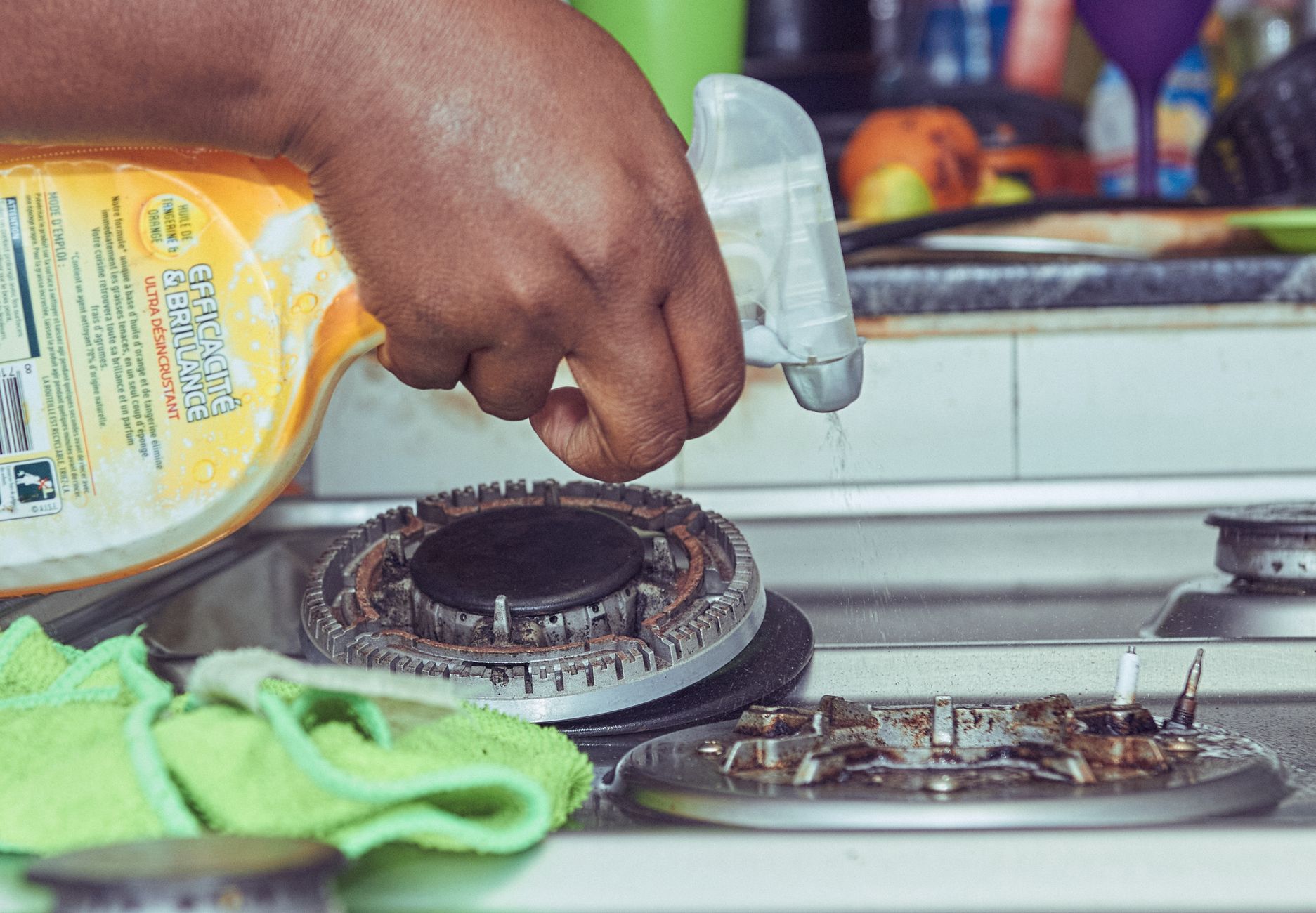
The baking soda method is for catch-up cleaning. The real goal is to never need it more than once or twice a year — which means a lighter wipe-down every week or two before grease and food residue have a chance to bake into the surfaces.
For that, a pH-balanced, non-toxic spray is a better tool than baking soda paste. It's faster, leaves no powder residue, handles food odors as well as surface grime, and doesn't require clearing the kitchen while it works.
A non-toxic option for regular kitchen maintenance
GentleSen HOCl tablets dissolve in 20 fl. oz. of water to make a pH-balanced, non-toxic spray. It works well for regular oven upkeep — wiping down the door glass, interior walls after a fresh spill, the rubber door seal, and the control panel. It neutralizes food odors without adding fragrance, leaves no chemical residue, and requires no protective gear. One tablet makes a bottle. The dissolved solution stays effective for up to 7 days.
When not to use it: For baked-on carbon or heavy grease buildup that's been sitting for months, an HOCl spray won't cut through it. That's what the baking soda paste method is for. Use HOCl for the light weekly wipe-down — before residue has time to harden.
Oven racks: the part everyone forgets
Oven racks collect grease differently than oven walls. The baking soda paste method works on them too, but the easiest approach by far is an overnight bathtub soak — set it up before bed and deal with it in the morning.
Remove the racks and lay them flat in the bathtub. Fill with hot water and add a generous amount of dish soap. Leave overnight. By morning, most of the grease wipes off without serious scrubbing. For stubborn spots, apply a small amount of baking soda paste, wait 30 minutes, then scrub with a stiff brush under running water.
Don't put oven racks in the dishwasher. The combination of high heat and detergent can dull the finish and, on older racks, start rust at any scratched or bare metal areas. The bathtub soak takes longer but doesn't damage them.

The self-cleaning setting: use it or skip it?
Most modern ovens have a pyrolytic self-cleaning cycle. It heats the oven to around 900°F — hot enough that food residue turns to ash, which you wipe out once everything cools. At that temperature, the grease doesn't so much clean as it has its mind changed.
It works. It also takes 2–3 hours, heats your kitchen considerably, and fills the air with the smell of burnt residue for the full duration. If you have pets — especially birds, which are highly sensitive to fumes — small children, or anyone with respiratory sensitivities in the house, plan around it carefully and ventilate thoroughly.
A reasonable rule of thumb: use the self-cleaning cycle once or twice a year at most. Running it more frequently wears out the door seal faster than regular cleaning would. Always remove the oven racks beforehand — the extreme heat can discolor and warp them permanently.
Straight answers (FAQ)
What is the safest natural oven cleaner?
Baking soda paste is the safest option for heavy grease — it's alkaline, non-toxic, and effective when given overnight contact time. For regular maintenance between deep cleans, a pH-balanced HOCl spray handles lighter residue and food odors without fumes or residue. Both are significantly safer for regular household use than sodium hydroxide-based commercial cleaners.
Does baking soda actually clean an oven?
Yes, reliably — for grease and food residue that hasn't fully carbonized into hard black char. Baking soda's alkalinity breaks down the acidic compounds in oven grease. The critical factor is time: a 4–12 hour contact period does the work. Apply it, leave it, wipe it. It won't handle rock-hard carbon in one pass, but for typical oven grime it works well without any chemicals.
Can I use vinegar alone to clean an oven?
White vinegar on its own isn't effective at breaking down baked-on oven grease. Vinegar is mildly acidic, and most oven residue is also acidic — there's no chemical reaction doing useful work when you apply acid to acid. Vinegar is best used as a follow-up after baking soda paste to lift remaining residue and neutralize trace alkalinity. Use them together, not vinegar alone.
How often should you clean an oven?
A deep clean every 3–6 months is a reasonable baseline depending on how often you cook. A light wipe-down of the interior walls, door glass, and door seal every 1–2 weeks prevents buildup from baking in and makes the periodic deep-clean significantly easier. Consistent light maintenance is more effective — and less work overall — than infrequent heavy sessions.
Is it safe to use the oven right after cleaning with baking soda?
Yes, but wipe it out thoroughly first. Baking soda residue left in a heated oven will smoke slightly and can affect the taste of food. After cleaning, run the oven empty at 300°F for 10–15 minutes to burn off any remaining trace residue before cooking. Then it's ready to use normally.
What should I avoid when cleaning an oven?
Avoid abrasive scrubbing pads on the oven door glass — they scratch permanently and the damage doesn't buff out. Don't spray anything directly onto the heating elements or gas ports. Keep caustic commercial oven cleaners away from the rubber door seal, which degrades with repeated exposure. And don't run the self-cleaning cycle more than twice a year — frequent use wears out the door seal faster than manual cleaning does.
Can you clean oven heating elements?
The heating elements themselves should not be cleaned with any spray, paste, or liquid. Normal oven use gradually burns off residue that lands on them. Applying liquid to heating elements risks short circuits and damage. Clean around them carefully, avoid getting paste or spray directly on the elements, and let the heat do the rest over time.
The honest summary
Your oven keeps an honest record of everything cooked in it. A light wipe-down every week or two with a non-toxic, fume-free spray keeps that record from compounding. When it does build up, baking soda paste overnight handles it. Neither approach requires a hazard warning on the side of the bottle — and that's the point.
See GentleSen HOCl Tablets →Sources
- EPA: Volatile Organic Compounds' Impact on Indoor Air Quality
- OSHA: Sodium Hydroxide Safety Data
- NIH PubChem: Hypochlorous Acid — compound data and properties
This article is for informational purposes only and does not constitute professional cleaning or medical advice. GentleSen products are multi-purpose cleaners and are not intended to treat, prevent, or cure any medical condition.
0 comments