


The playground has been running the same operation since roughly 1970: producing skinned knees, minor panic, and a race to the medicine cabinet. Wound care with hypochlorous acid has been part of the body's response to those injuries for just as long — your white blood cells make HOCl the moment skin breaks. What's new is that we can now make a stable version at home and skip the part where you splash hydrogen peroxide on a scrape and contemplate your life choices.
HOCl is what the body reaches for first when skin is compromised. It helps address harmful substances at the wound surface, leaves healthy tissue largely alone, then breaks down into water and salt. That's the short version. The longer version involves neutrophils, oxidative bursts, and a chemistry lecture we'll mostly spare you — though we will cover the part that actually matters for your first aid kit.
Here's what wound care hypochlorous acid does, how to use it correctly at home, and — just as importantly — when it's not the right call and you need medical attention instead.
The short version
Hypochlorous acid (HOCl) is a non-toxic, pH-balanced wound cleanser — the same molecule your immune system produces naturally. For minor cuts, scrapes, and abrasions, it helps keep the wound area clean without stinging, without damaging healthy tissue, and without the cell damage associated with hydrogen peroxide. Rinse the wound first with clean water, apply HOCl, let it sit 30–60 seconds, then cover or allow to air dry. It is not a substitute for medical care on deep, infected, or serious wounds.
In this guide
What Is Hypochlorous Acid — and Why Does the Body Make It?
HOCl (hypochlorous acid) is a weak acid produced naturally by white blood cells as part of the immune response. When harmful substances enter a wound, a class of white blood cells called neutrophils releases hypochlorous acid through what researchers call the "oxidative burst." It's not a backup plan — it's the body's first move.
This isn't a lab-engineered molecule. It's one of the oldest parts of human biochemistry. The ability to produce stable, pH-balanced HOCl solutions outside the body — and apply them topically — is what makes it useful for at-home wound care.
Published research from the National Institutes of Health describes HOCl as an ideal wound cleansing agent because it maintains activity at a pH similar to healthy skin (roughly 3.5 to 5.5) and doesn't persist on tissue the way harsher cleansers do. It breaks down into simple byproducts — water and salt — which is why it doesn't accumulate or cause buildup over repeated use.
For most of medical history, hypochlorous acid was something the body made internally and clinicians observed from the outside. The ability to formulate it stably at appropriate concentrations is what brought it into wound care products — and more recently, into everyday first aid.
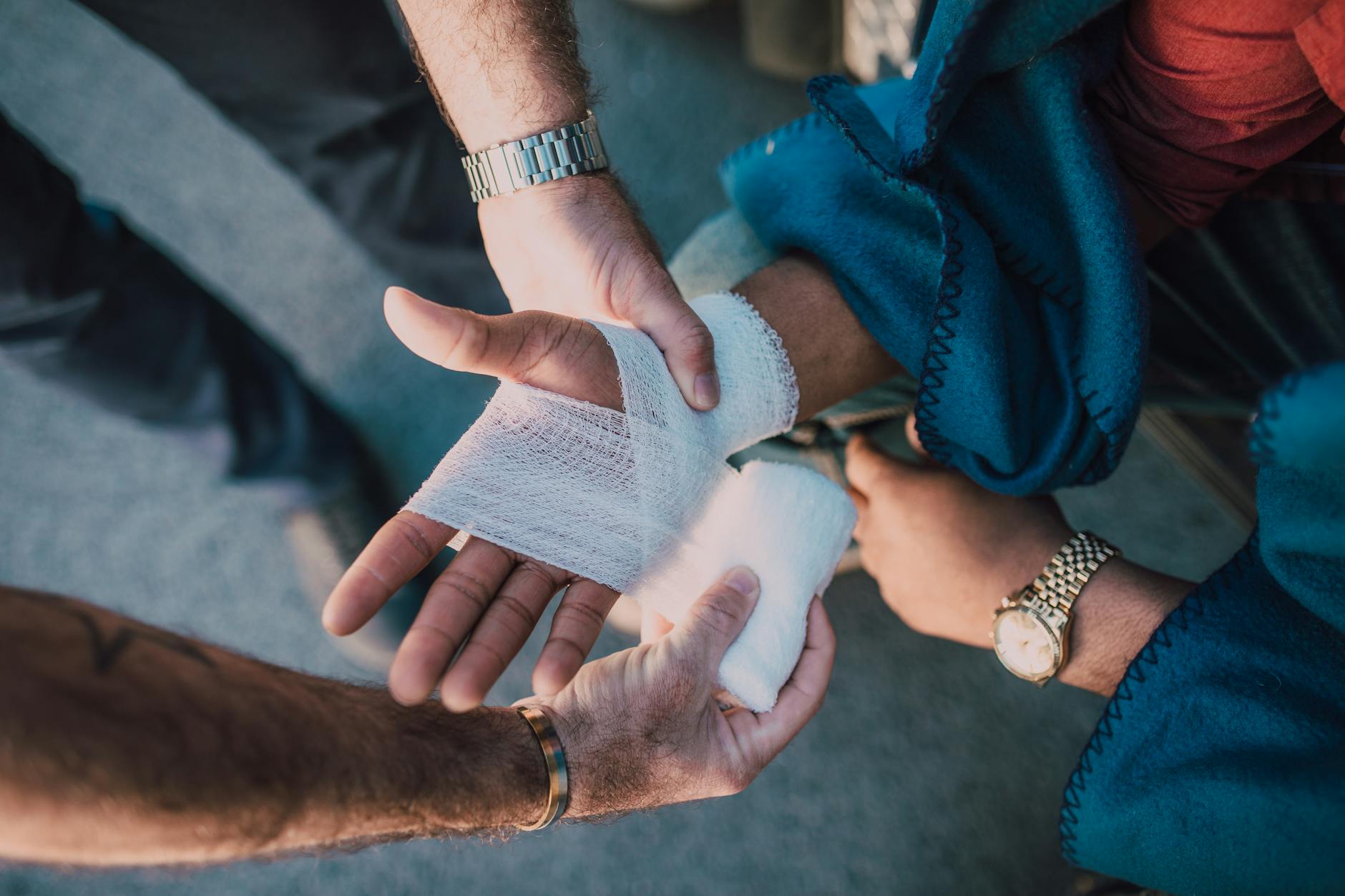
What Hypochlorous Acid Actually Does When Applied to a Wound
When you apply an HOCl solution to a minor cut or scrape, a few things happen that distinguish it from traditional wound cleaners.
It helps clean the wound environment. HOCl targets harmful substances and debris at the wound surface — the same function it performs inside the body. The key difference from older wound cleaners is that HOCl does this without damaging the healthy fibroblasts and keratinocytes responsible for rebuilding tissue.
It doesn't sting. This matters more than it sounds. Hydrogen peroxide causes a burning sensation because it is cytotoxic — it damages cells. HOCl doesn't trigger that response at appropriate concentrations, because it's not working against the body's own tissue. It's working alongside it.
It supports the wound environment. Research published in Bioinformation (2024) involving 10 patients with open wounds found that consistent HOCl application was associated with wound size reduction of more than 95% after six weeks, with full wound closure occurring within 8 to 15 weeks in all cases. This was a small clinical study using medical-grade formulations — we're describing the ingredient's documented behavior in the research literature, not making claims about any specific product.
It's pH-matched to skin. Healthy skin has a slightly acidic pH. Wound healing proceeds more efficiently in the same mildly acidic environment. HOCl formulations designed for wound care are typically in the pH 3.5 to 5.5 range — which is why they're well-tolerated and less disruptive than alkaline cleansers, which can interfere with the wound's natural healing chemistry.
It doesn't accumulate. HOCl breaks down quickly — into water and salt — which means it leaves no residue that needs to be rinsed off. Modest, for something doing that much work.

How to Use Hypochlorous Acid for Wound Care at Home
This step-by-step applies to minor cuts, scrapes, and abrasions — not deep lacerations, puncture wounds, or anything with separated edges. If you're unsure, the next section covers exactly when to stop and seek medical attention.
-
Rinse first. Run clean water over the wound for at least 30 seconds to remove dirt, gravel, and surface debris. HOCl is a cleanser — it's not designed to displace physical particles. Water does that job.
-
Pat gently dry. Use clean gauze or a soft cloth. The goal is to remove excess water, not scrub. Scrubbing irritates the wound and removes cells that are already working.
-
Apply the HOCl solution. Spray or gently apply the solution over the wound area. You don't need to flood it — a light, even application is enough. Avoid using cotton balls, which can shed fibers into the wound; gauze is better.
-
Let it sit for 30–60 seconds. This gives the solution time to work across the wound surface. There's no need to rub or agitate — just let it rest.
-
Cover if appropriate. For cuts still weeping or in areas that contact surfaces, a clean bandage makes sense. For shallow scrapes that have stopped bleeding, air drying is fine.
-
Reapply as needed. Once or twice daily is typical during the early phase of healing. Wounds that are actively weeping or in high-contact areas may benefit from more frequent application. There's no meaningful risk from too-frequent use — HOCl breaks down quickly and doesn't accumulate.
A note on concentration: HOCl wound care products are typically in the 100–200 parts per million (ppm) range. Anything significantly higher can feel harsh on sensitive tissue; significantly lower may be less effective. The concentration matters more than the volume applied.

When to Stop and Call a Doctor — the Part Most Guides Skip
HOCl is appropriate for minor wounds — cuts that stop bleeding on their own, scrapes from falls, small burns. For anything beyond that, it's not the right primary tool. Here's how to know:
Seek medical care — don't just apply more HOCl — if:
- The wound is deeper than about half a centimeter, or you can see yellow or white tissue at the base
- Bleeding doesn't stop within 10–15 minutes of direct pressure
- The wound has jagged or widely separated edges — these usually need closure
- You're seeing increasing redness, warmth, or swelling 24–48 hours after the injury
- There's pus, or a foul odor developing
- You feel feverish after the injury
- The wound is a puncture — animal bite, nail, sharp object — which needs assessment for tetanus and deeper infection
- The person is immunocompromised, diabetic, or on blood thinners
None of those are situations where HOCl is the wrong ingredient — they're situations where HOCl alone isn't enough. A clean wound is easier for a doctor to assess and treat. Wash it, cover it, and go.
We know this isn't the exciting part of a product guide. But if someone's using this article to decide whether to go to urgent care, we'd rather they go.
Why we make Gentle Sen for wound cleansing
We started Gentle Sen because our son went through severe eczema and topical steroid withdrawal in 2024. One of the things that helped most during that period was having a consistent, gentle wound-cleansing option on hand — something that didn't sting on reactive skin and wasn't loaded with preservatives or fragrance.
Gentle Sen HOCl tablets dissolve in water to make a fresh wound-cleansing solution on demand. Fragrance-free, pH-balanced for sensitive skin, non-toxic. Two-year shelf life before dissolving; about two weeks after. Make what you need, when you need it — no plastic bottle sitting on a shelf losing potency.
HOCl vs. Hydrogen Peroxide vs. Rubbing Alcohol — One of These Is Not Like the Others
This comparison comes up in almost every wound care conversation, so here it is plainly.
Hydrogen peroxide (H₂O₂) was the household standard for decades. When applied to a wound, it bubbles — and that bubbling looks reassuring, like something is happening. Something is. It's oxidizing your cells. Hydrogen peroxide is cytotoxic: it damages fibroblasts and keratinocytes, the cells responsible for building new tissue. Multiple wound care guidelines now advise against using it on open wounds for exactly this reason. The sting isn't a sign it's working. It's a sign it's causing damage.
Rubbing alcohol (isopropyl alcohol) has the same problem on the cell damage side, with the added issue of dehydrating tissue. It's effective at cleaning intact skin before a procedure. It is not the right tool for an open wound.
Hypochlorous acid is different because it's not a foreign chemical imposing on the wound. The body already knows how to use it. At the correct concentration and pH, it helps address surface-level debris without the cytotoxicity associated with hydrogen peroxide or alcohol. Research published in the International Wound Journal describes HOCl as having documented wound-care properties "without cytotoxicity" at therapeutic concentrations — which is the core clinical argument for using it over older alternatives.
If you've had a bottle of hydrogen peroxide in your bathroom since 2010 and it's been doing its job, we're not here to panic anyone. It's been in the medicine cabinet since roughly the Clinton administration and it seems unkind to throw it out. But for new wounds — especially on sensitive or reactive skin — there are better-tolerated options, and HOCl is one of them.
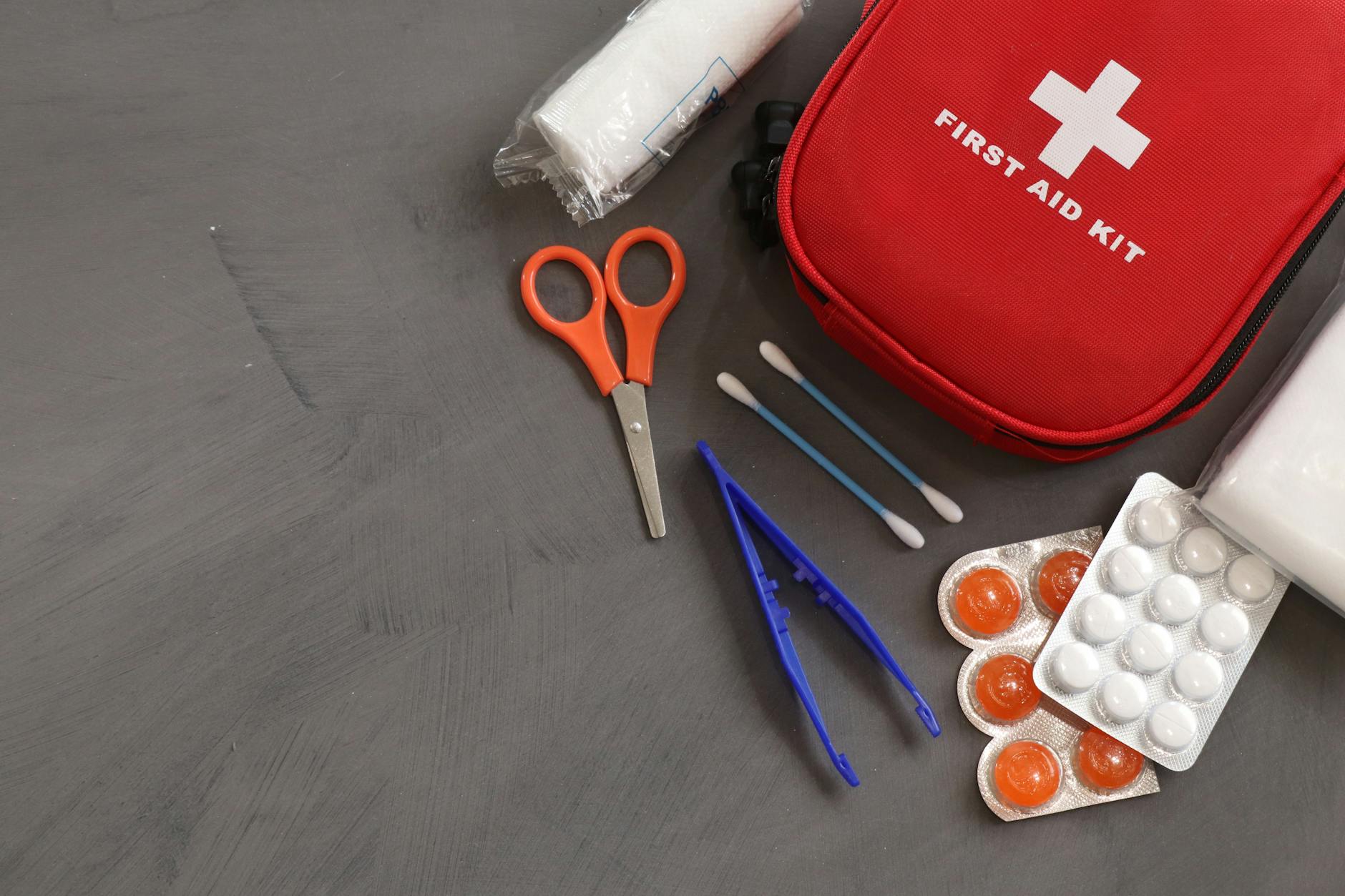
What to Look for in an HOCl Wound Cleanser
Not every HOCl product is formulated the same way. A few things worth checking before you buy:
pH range. For wound care, you want a product formulated in the 3.5 to 5.5 range — this matches healthy skin's natural pH and is where HOCl is most active. Products outside this range may be less effective or more irritating to compromised tissue.
Concentration. 100–200 ppm is the typical effective range for topical wound cleansing. Some products are significantly lower, which may be fine for general skin use but less suited to wound care specifically. The label should state the concentration; if it doesn't, that's worth noting.
Preservatives. HOCl degrades over time — faster in heat, light, and air exposure. Some products use preservatives to extend shelf life. Others use stabilization chemistry. Some formats bypass the issue by making the solution fresh at the point of use. If stability is a concern, check how the product handles it.
Fragrance. There's no reason to add fragrance to a wound cleanser. Fragrance compounds are among the most common contact allergens, and applying them to broken skin is a reliable way to cause a secondary reaction. Look for fragrance-free.
Format. Sprays are the most practical for at-home wound care — spraying avoids direct applicator contact with the wound, which reduces cross-contamination risk. Wipes are useful for portable first aid kits. Gels or liquids may be appropriate for dressing changes.
Gentle Sen HOCl tablets dissolve in water to make a fresh solution sized for what you actually need. One tablet in a measured volume of water — shake, done. No guessing the concentration, no preservatives, no fragrance, no large plastic bottle sitting half-used for a year. Learn more about how and why we built Gentle Sen.
Frequently Asked Questions
Is hypochlorous acid safe to put directly on open wounds?
Yes, for minor wounds. HOCl at appropriate concentrations (100–200 ppm) and pH (3.5–5.5) is non-cytotoxic and designed to be used on skin with compromised integrity. It doesn't cause the cellular damage associated with hydrogen peroxide or alcohol. For deep, infected, or serious wounds, seek medical attention rather than relying on topical cleansers alone.
Can hypochlorous acid be used on cuts and scrapes for children?
Yes. HOCl is non-toxic, non-stinging, and safe for children's skin. One of its practical advantages over traditional wound cleaners is that it doesn't cause the burning sensation that makes wound care difficult with young children. Rinse the wound with clean water first, then apply. If the wound is deep or the child has a health condition, consult a doctor.
How does hypochlorous acid compare to hydrogen peroxide for wound care?
Hydrogen peroxide is cytotoxic — it damages fibroblasts and keratinocytes, the cells responsible for healing. Clinical wound care guidelines increasingly advise against its use on open wounds for this reason. HOCl doesn't carry the same cytotoxic profile at appropriate concentrations; it's the molecule the body itself produces to address wound-site threats without damaging surrounding tissue. The bubbling from hydrogen peroxide looks like action. It is, unfortunately, the wrong kind.
How often should I apply hypochlorous acid to a wound?
Once or twice daily is typical during the early healing phase. Wounds that are heavily soiled, actively weeping, or in high-contact areas may benefit from more frequent application. There's no meaningful risk from too-frequent use — HOCl breaks down quickly, doesn't accumulate in tissue, and is safe for repeated contact with skin.
What is a hypochlorous acid wound cleanser?
A hypochlorous acid wound cleanser is a topical solution containing HOCl at a concentration and pH formulated for use on wounds or compromised skin. These are typically classified as wound cleansers — not drugs — and are used to clean the wound surface before dressing. They're used in both clinical and home first aid settings. The key distinguishing features are the pH range (3.5–5.5) and HOCl concentration (typically 100–200 ppm).
Can HOCl reduce wound scarring?
Keeping a wound clean and moist during the healing process is associated with reduced scarring in clinical literature — and HOCl contributes to maintaining that clean wound environment. This is different from claiming HOCl directly reduces scars, which is a separate biological process. The honest answer is that a clean, protected wound heals with less disruption than one that becomes infected or repeatedly aggravated.
Is HOCl safe for chronic wounds like pressure ulcers or diabetic foot wounds?
HOCl is used in clinical wound care settings for chronic wounds, and published research supports its tolerability on sensitive and compromised tissue. However, chronic wounds — pressure injuries, diabetic ulcers, venous leg wounds — require medical management and regular professional assessment. HOCl may play a role in a broader wound care protocol, but it's not a standalone approach for chronic or complex wounds. See a wound care specialist for these.
Can I make my own HOCl wound cleanser at home?
Yes, with the right source. HOCl can be made by dissolving HOCl-containing tablets in water at the correct ratio. The challenge with DIY approaches is knowing the final concentration of the solution. Products designed for this — like GentleSen tablets — are formulated so that dissolving one tablet in a specified volume of water produces a solution in the intended pH and concentration range, removing the guesswork. Making it fresh also means no preservatives and no degradation from long shelf storage.
The right tool for minor wounds — and a note about serious ones
Minor wounds are one of the most common household first aid situations, and they're also one of the most common reasons people reach for something outdated — hydrogen peroxide, rubbing alcohol, or nothing at all. Hypochlorous acid wound care gives you a gentler, better-tolerated option that's aligned with how the body already handles wound cleansing.
For cuts, scrapes, and abrasions, it's worth having on hand. For anything deeper, infected, or involving someone with a health condition that affects healing — that's a doctor's call, not a first aid kit's.
We built Gentle Sen to make fresh HOCl accessible for families with sensitive skin — no preservatives, no fragrance, no guessing. If that's what you're looking for, the Family Tab Kit is a practical place to start.
See how Gentle Sen works →Sources
- Robson MC, et al. "Hypochlorous Acid as a Potential Wound Care Agent." Journal of Burns and Wounds, 2007. NIH/PMC — PMC1853323
- Patel K, et al. "Effect of hypochlorous acid in open wound healing." Bioinformation, 2024. NIH/PMC — PMC11953545
- WoundSource editorial team. "Advances in Hypochlorous Acid for Optimal Wound Care." WoundSource.com
Disclaimer: This article is for informational purposes only and does not constitute medical advice. Gentle Sen products are multi-purpose cleansers and are not intended to diagnose, treat, cure, or prevent any disease or medical condition. Always consult a qualified healthcare professional for wound care guidance, especially for serious, infected, or chronic wounds.
0 comments