

Your white blood cells have been producing hypochlorous acid since before you were born. The skincare world figured this out, bottled it, and started selling it as a face mist. We reckon that's a fair trade — because for families with sensitive skin, eczema, or TSW, it genuinely changes things.
This isn't a trend ingredient that'll be gone by summer. HOCl has been used in clinical settings and wound care since the 1800s. What's new is how easy it is to use on your face every day — and the results for reactive, redness-prone, and sensitive skin are hard to argue with.
Here's what it does, how to use it correctly, what not to mix it with (this is the bit most guides skip), and how to make your own at home — affordably, without the plastic waste.
The short version
Hypochlorous acid (HOCl) spray is made by dissolving a concentrated HOCl source in water — the same substance your white blood cells use naturally. It's skin-safe, pH-balanced, non-toxic, and gentle enough for eczema, TSW, and the most reactive skin types. Use it post-cleanse, let it air dry for 30–60 seconds, then apply moisturizer. Safe for daily use, safe during pregnancy, safe on the eye area. Target concentration: 100–200 ppm.
In this guide
What is hypochlorous acid?
When your body detects an infection, your white blood cells produce hypochlorous acid to address the threat. It disrupts harmful substances, gets the job done without damaging surrounding tissue, then breaks down harmlessly into water and salt. Your body has been running this system your entire life.
The lab version works the same way. Apply an electrical current to a diluted salt-water solution — a process called electrolysis — and you get stabilized HOCl at a concentration that's safe to apply to skin. It's not a synthetic chemical. It's a molecule your immune system has been using for hundreds of thousands of years.
The first person to produce it artificially was French chemist Antoine Jérôme Balard, in 1834. It took about 185 years for someone to put it in a spray bottle for daily skincare use. Progress moves at its own pace.
In professional settings, according to WebMD, HOCl has been used for wound care, surgical surface preparation, and post-operative eye care for decades. That track record is why we built Gentle Sen around it — it's the same molecule, made accessible for everyday home use.
What does hypochlorous acid spray actually do for your face?
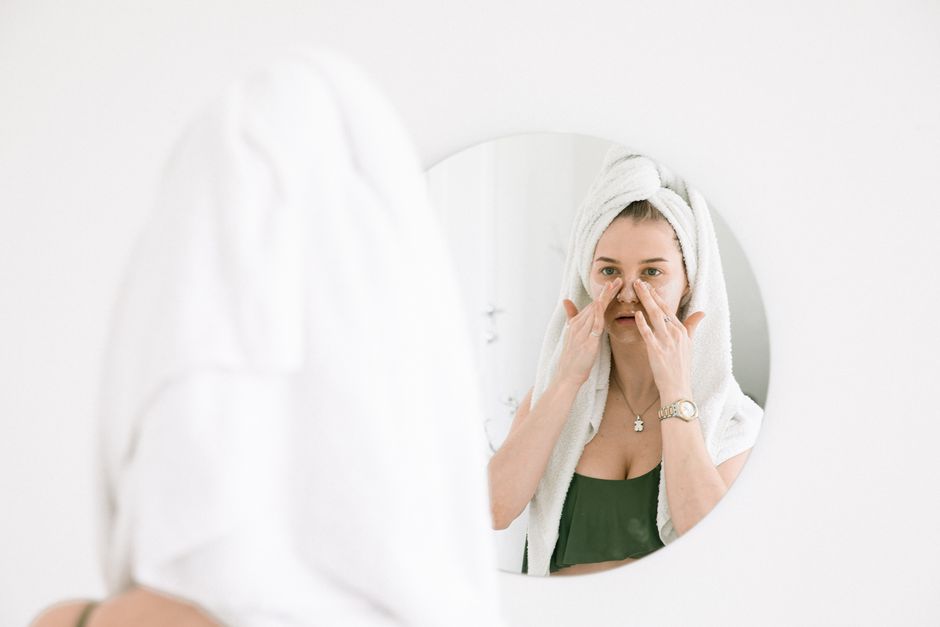
Supports clearer-looking skin for acne-prone complexions
HOCl helps create a cleaner environment on the skin's surface. Research has explored HOCl's role in supporting clearer-looking skin, with studies suggesting it may offer results for acne-prone skin comparable to conventional treatments — without the dryness, peeling, and irritation that tend to come with them.
Our take: HOCl is genuinely underrated in the sensitive-skin conversation. There's a long tradition of reaching for harsh treatments first. But a molecule that your own immune system uses, with a pH that matches your skin, and that doesn't strip your moisture barrier — that deserves a proper look.
Calms redness and rosacea-prone skin
HOCl has documented properties that support skin comfort and help reduce the appearance of redness. For rosacea-prone skin, misting it on after cleansing can help calm the surface and refresh irritated areas. Unlike some actives that take weeks to show results, many people notice a difference in redness and discomfort quickly.
Gentle support for eczema and TSW skin
This one is personal for us. Gentle Sen was founded in 2024 after our son went through Topical Steroid Withdrawal (TSW) and severe eczema. Watching him struggle through flares — and realizing how many "gentle" products still contained irritants — changed everything about how we thought about skincare and cleaning. HOCl became central to how we cared for his skin: no fumes, no harsh residue, pH-balanced to sit within his skin's natural range.
Research supports what we experienced. In a clinical study, most participants with eczema reported reduced discomfort within three days of regular HOCl use. A separate study on seborrheic dermatitis showed measurable improvement within two weeks. It doesn't treat the underlying condition — nothing we make does — but it helps keep the surface environment as calm as possible.
Supports skin's natural renewal after irritation
HOCl's credentials in wound and post-procedure care are well-established in clinical literature. Applied to irritated or recovering skin — a post-waxing flush, a healing spot, skin coming back after a flare — it helps create the conditions for the skin's natural repair process to proceed. One study found that an HOCl-based gel produced greater improvement in scar appearance than standard silicone gel after 16 weeks.
Safe for the eye area — including eyelids and lashes
This surprises most people. HOCl is the active ingredient in several ophthalmologist-recommended eyelid cleansers used for blepharitis and styes. HOCl solutions are also used in post-operative eye care. Misting near the eye area is safe — keep the bottle at least 6 inches away and don't spray directly into your eyes.
How to use hypochlorous acid spray on your face

Simple. There's no complicated layering to worry about. If you're using Gentle Sen HOCl tablets, start at Step 1 — otherwise skip to Step 3.
-
Fill your mist bottle with 20 fl. oz. of clean water.
Room temperature or slightly cool. -
Drop in one Gentle Sen tablet and let it dissolve — about 2 minutes.
Once dissolved, your solution is ready. Use within 7 days for best results. -
Cleanse your face first.
Remove makeup, sunscreen, and surface oil. HOCl works on clean skin. -
Hold the bottle 6–12 inches from your face and mist evenly.
3–4 pumps covers the whole face. Close your eyes — the eyelid area is fine. -
Let it air dry for 30–60 seconds. Do not rinse it off.
The solution needs contact time with the skin surface to do its job. -
Apply your moisturizer or serum as normal.
HOCl is a surface step, not a moisturizer. Follow it with whatever you'd normally use. -
Use morning and night — or any time your skin needs a reset.
Post-workout, post-flight, during a flare, after a long day in a mask. HOCl doesn't sensitize skin with repeated use.
What not to mix with hypochlorous acid spray
Most guides skip this entirely. The short version: timing matters more than avoidance. HOCl is an oxidizing molecule. Some skincare ingredients are antioxidants. Apply them at the same time and they neutralize each other — which means you've wasted both. Honeydew Labs covers the chemistry in detail if you want the full breakdown.
Vitamin C — apply separately, not simultaneously
If you mist HOCl and immediately apply vitamin C, both ingredients neutralize each other before either can do anything useful. The fix: let HOCl dry fully (60 seconds), then apply vitamin C. Or use them at different times of day — HOCl in the morning, vitamin C at night.
Benzoyl peroxide — double the stress, no extra benefit
Both HOCl and benzoyl peroxide are oxidizing agents. Using them together doesn't double the benefit — it doubles the potential for irritation. Use one or the other. If you're already on benzoyl peroxide and want to try HOCl, try swapping rather than stacking.
Retinol and exfoliating acids (AHAs/BHAs) — fine, with a 60-second gap
This is the combination people worry about most. The answer is: it's fine. Let HOCl dry completely before applying retinol or an exfoliating acid. Many people with sensitive skin actually find that HOCl first reduces the irritation that comes with retinol use. Layering order: cleanse → HOCl (60 seconds to dry) → retinol → moisturizer.
Moisturizers, sunscreen, and most serums are fine at any point after HOCl has dried. There's nothing dramatic to avoid — just don't layer it directly on top of an antioxidant serum and expect both to work.
Is hypochlorous acid safe?
Yes. It's one of the few skincare actives with a genuine clinical safety record, not just "no complaints so far."
It's produced naturally by your own body. It's been used in professional settings for decades. And it has a pH of around 5–6, which sits comfortably within your skin's natural acid mantle range of 4.5–5.5. It's not stripping. It's not disrupting. It's not introducing anything your skin hasn't worked with before.
Is it just bleach? No. It's technically in the same chemical family as bleach — so is table salt. Household bleach has a pH of 11–13, which is corrosive. HOCl at 5–6 is gentler than most tap water. The concern makes sense given the name, but the chemistry is very different.
Is it safe during pregnancy? Yes. HOCl doesn't absorb systemically through the skin and has no hormonal activity. It's one of the few active skincare options with a clean pregnancy safety profile — which matters, because retinoids, salicylic acid, and many other go-to actives come off the list during pregnancy.
Can you overuse it? At 100–200 ppm, overuse isn't a practical concern for most people. Very dry or compromised skin should follow every application with moisturizer. The molecule itself breaks down harmlessly and doesn't accumulate.
Will it bleach your clothes? No. The concentration is far too low. You can mist it near a white shirt without concern. (We reckon this question comes from the word "acid" — which, fair enough.)
How long does hypochlorous acid last — and how to tell when it's stopped working
Pre-made HOCl sprays have a problem: HOCl is inherently unstable. Light, heat, and air degrade it over time. A typical spray bottle lasts 6–12 months unopened and 3–6 months once opened. Once the HOCl degrades, you're left spraying salt water on your face.
The way to tell: a faint, clean scent means it's still active. No scent at all usually means it's broken down. That's harmless — but also pointless.
This is exactly why we built Gentle Sen around tablets instead of pre-filled sprays. The tablets have a 2-year shelf life — the HOCl doesn't activate until the moment you need it. Mix a tablet when you're ready, use the solution within 7 days, and every application is fresh and at full concentration. You're also not paying to ship water across the country.
How to make your own HOCl face mist — with Gentle Sen
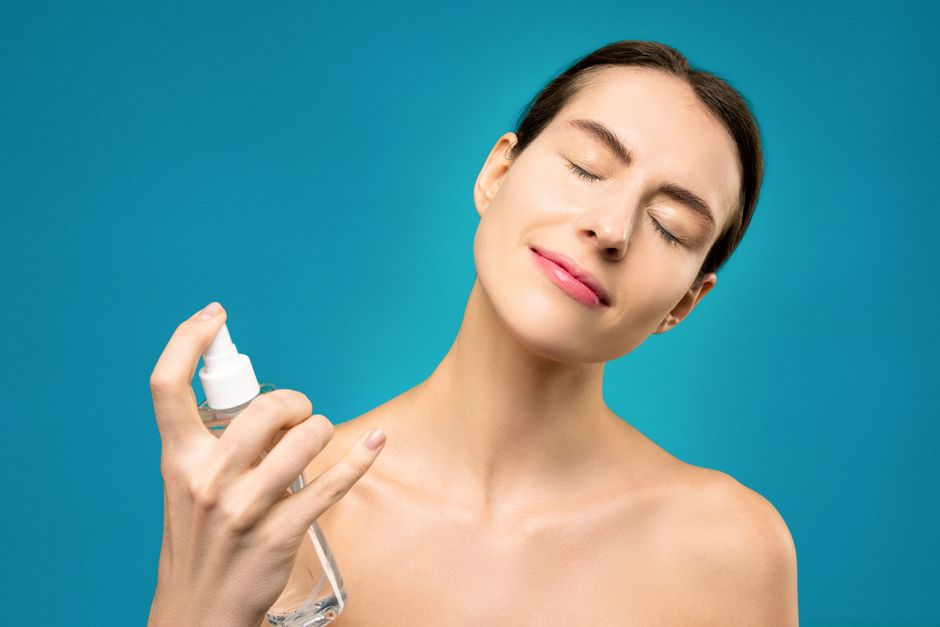
One Gentle Sen tablet + 20 fl. oz. of water = 200 ppm HOCl solution. That's the full-strength range recommended for facial use, fresh every time, for less than 50 cents per bottle.
No shipping water. No degraded formula sitting in a bottle for months. No stack of plastic empties under the sink. Just a tablet, your mist bottle, and water.
We made Gentle Sen because our son's skin couldn't tolerate most products — including ones marketed as gentle. We needed something genuinely pH-balanced, non-toxic, and without fumes or harsh residue. HOCl was the answer. The tablets were our way of making it available to every family, without the environmental waste of pre-filled spray bottles.
Best value for committed users. Everything for home, travel, and TSW / eczema skin care. The tablet splitter lets you adjust concentration for different uses.
Straight answers
Do dermatologists recommend hypochlorous acid for face?
Yes. Dermatologists and wound care specialists have used clinical HOCl for years. Most who've commented on it publicly describe it as a sound, gentle option for acne-prone, rosacea, and sensitive skin — including skin going through TSW recovery.
Is hypochlorous acid good for acne-prone skin?
Research suggests HOCl helps create a cleaner environment on the skin's surface, which may support the appearance of clearer skin. Many people with acne-prone skin find it a gentler option than conventional treatments — without the dryness and peeling. Worth trying before reaching for something harsher.
What should you not use hypochlorous acid with?
Don't apply it directly on top of vitamin C — they neutralize each other. Avoid pairing it with benzoyl peroxide in the same routine. Retinol and AHAs are fine with a 60-second gap after HOCl dries. Moisturiser, sunscreen, and most serums are safe to layer immediately after.
Is hypochlorous acid just bleach?
No. They share the same chemical family, but bleach has a pH of 11–13 — corrosive to skin. HOCl sits at 5–6, matching your skin's natural acid mantle. It's also the same substance your white blood cells produce naturally. The concern is understandable, but they're very different compounds at very different concentrations.
Can you overuse hypochlorous acid spray?
Not really, at 100–200 ppm. There's no accumulation or sensitization risk. Very dry or compromised skin should follow every application with moisturizer. The molecule itself breaks down harmlessly and doesn't build up.
What are the side effects of hypochlorous acid spray?
At standard concentrations, side effects are rare. A small number of people with very sensitive skin report mild dryness — if that's you, use once daily and follow immediately with moisturizer. If you react to a product, check for added fragrances or preservatives in the formula first; they're usually the cause, not the HOCl itself.
Is hypochlorous acid safe during pregnancy?
Yes. HOCl doesn't absorb systemically and has no hormonal activity. It's one of the few active skincare options with a clean pregnancy safety profile — relevant because retinoids, salicylic acid, and many other go-to actives come off the list during pregnancy.
How long does HOCl last once prepared?
Pre-made sprays last 3–6 months once opened. With Gentle Sen tablets, the tablets themselves store for 2 years. Once you dissolve a tablet in water, use the solution within 7 days for best results. A faint, clean scent means it's still active.
Worth it, or not?
Worth it. For most skin types — especially acne-prone, reactive, rosacea, eczema, TSW, or post-procedure skin — HOCl is one of the most effective and gentle additions you can make to a routine. It doesn't replace a cleanser or moisturizer. But as a step between cleansing and moisturizing, it does a job that very few ingredients do as gently or as consistently.
Your white blood cells have been right about this molecule your entire life. Your bathroom cabinet is just catching up.
Try Gentle Sen HOCl Tablets- WebMD — Hypochlorous Acid Spray: What to Know
- Ulta Beauty — Using Hypochlorous Acid Spray for Face
- Honeydew Labs — What to Avoid Mixing With Hypochlorous Acid
Images from Pexels photo library under the Pexels License. This post is for informational purposes only and is not medical advice. Gentle Sen HOCl tablets are a multi-purpose cleaner and deodorizer. This product is not intended to diagnose, treat, cure, or prevent any disease. Always consult a healthcare professional for medical concerns.
0 comments