


Eczema on the hands is inflammation that keeps coming back because the triggers are things you can't stop doing — washing dishes, cleaning the bathroom, cooking, washing your hands. It affects roughly 10% of people and is one of the most common forms of eczema treated by dermatologists.
Most people treat it like dry skin. They apply lotion, it helps for an hour, and then the cycle continues. The problem is usually not the moisturizer — it's everything that's stripping the skin barrier before the moisturizer gets a chance to work.
Here's what actually triggers hand eczema, how to manage it day to day, and when home care isn't enough.
The short version
Hand eczema usually flares from repeated contact with irritants — soap, water, detergents, fragrances. The management approach is: identify and reduce the triggers, apply a thick fragrance-free moisturizer within 3 minutes of every hand wash, and protect the skin barrier before it breaks down further. If blistering is severe, the skin looks infected, or nothing improves in two weeks, see a dermatologist.
In this guide
What hand eczema looks like — and the different types
Hand eczema is not one condition. There are several types, and they look different and respond to different treatments.
Irritant contact dermatitis is the most common. It shows up as redness, dryness, scaling, and cracking — usually on the backs of the hands and around the knuckles. It's caused by repeated contact with substances that damage the skin barrier.
Allergic contact dermatitis looks similar but is triggered by a specific allergen — nickel, fragrances, certain preservatives. The reaction can appear hours or even days after exposure. Patch testing is the only reliable way to identify the trigger.
Dyshidrotic eczema (also called pompholyx) causes small, intensely itchy fluid-filled blisters on the palms and along the sides of the fingers. They tend to appear suddenly after stress, heat, or sweating. Once they dry out, the skin cracks.
Hyperkeratotic eczema presents as thick, scaly, cracked skin on the palms — more common in adults and often mistaken for psoriasis.
Across all types, the shared symptoms are dry skin, itching, redness, and a tendency to crack at the knuckles and the webbing between fingers.
What triggers hand eczema flares
The most common triggers identified in clinical surveys of hand eczema patients:
- Frequent hand washing — especially with hot water
- Dish soap, laundry detergent, and household cleaning products
- Alcohol-based hand sanitizer
- Latex or rubber gloves (more on this below)
- Fragrances in soaps, moisturizers, and cleaning sprays
- Cold, dry weather — which reduces the skin's natural humidity
- Sweat trapped against the skin
- Stress — doesn't cause hand eczema, but consistently makes it worse
Dish soap is the number one offender in most studies. It's engineered to dissolve fats. Your skin's natural oils are not an exception to that process.

A simple daily routine for eczema-prone hands
The goal is to clean without stripping and to seal moisture in before it evaporates. Most people skip the third step, which is the only one that actually changes anything.
-
Wash with lukewarm water and a fragrance-free, soap-free cleanser. Avoid hot water — it feels good for about 30 seconds and then strips the barrier for the next several hours.
-
Pat dry, don't rub. Gently press a clean paper towel against the skin. Fabric hand towels are fine in theory but most people rub with them, which damages already-compromised skin.
-
Apply moisturizer within 3 minutes while the skin is still slightly damp. This is the step most people skip because their hands feel fine right after washing. The skin dries out in the next 10 minutes.
-
Repeat after every hand wash. Not once a day. After every single wash.
-
At night, apply a thicker ointment — petrolatum-based or shea butter — and put on loose cotton gloves over it. The gloves aren't for looks. They keep the ointment against the skin long enough for it to actually absorb.
The moisturizer matters. Thick creams and ointments (ceramide-based, petrolatum, lanolin) outperform thin lotions consistently in barrier repair studies. Lotions feel lighter because they're mostly water — which evaporates within minutes, sometimes leaving the skin drier than before.

What to avoid in soaps and cleaning products
A soap labeled "moisturizing" or "gentle" can still contain ingredients that damage the skin barrier on repeated contact. Labels are not the same as ingredient lists.
Avoid: sodium lauryl sulfate (SLS), synthetic fragrance, alcohol in any form, antibacterial agents (triclosan), and MI/MCI preservatives (methylisothiazolinone — common in "natural" formulas).
Look for: fragrance-free (not just "unscented"), no SLS or SLES, pH around 5.5 to match the skin's natural acidity.
The same logic applies to household cleaning products. A spray that works well on surfaces can leave a residue that irritates hands for hours after contact — especially if there's any skin cracking.
Why we created Gentle Sen
In 2024, our son was going through TSW (topical steroid withdrawal) and severe eczema. Everything on the shelf — soaps, cleaning sprays, even products marketed as "natural" — had fragrance, alcohol, or preservatives that made his skin flare. We couldn't find a cleaner that was genuinely safe around skin that was already struggling.
So we made one. Gentle Sen HOCl tablets dissolve in water to create a pH-balanced, fragrance-free, dye-free solution. People with hand eczema use it to wipe down surfaces and rinse away food, cleaning, and environmental residue without adding another irritant to already-damaged skin.
Non-toxic. No SLS, no alcohol, no synthetic fragrance.
See how Gentle Sen works →The gloves question
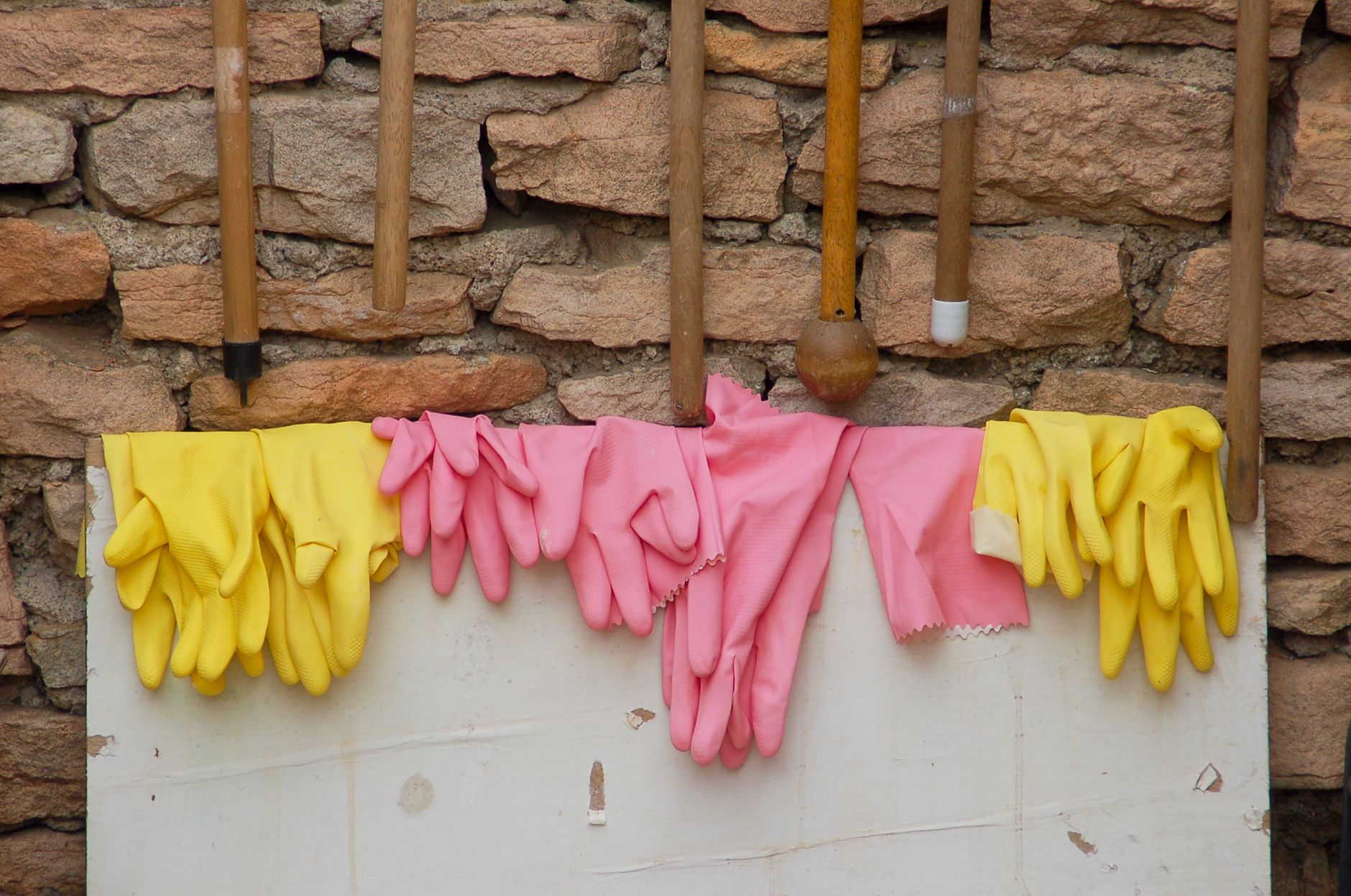
Most people with hand eczema are told to wear rubber gloves for wet work. That advice is correct in principle. In practice, rubber gloves cause their own set of problems.
A better approach: wear thin cotton liner gloves inside the rubber gloves. The cotton absorbs sweat and creates a barrier between the skin and the rubber material. Latex-free vinyl or nitrile gloves are a reasonable alternative if you suspect latex sensitivity.
For tasks where gloves feel impractical — cooking, light cleaning, food prep — rinse with cool water immediately after and moisturize. The goal is reducing cumulative exposure time, not eliminating all contact.
When to see a dermatologist
Try home management for two weeks. If things are not improving — or are getting worse — it's time to see someone.
See a doctor sooner if any of these apply:
- The skin looks infected — warm to the touch, weeping fluid, spreading redness, or you have a fever
- Blisters are severe, painful, or covering large areas of the palm
- Over-the-counter treatments have had no effect after two weeks of consistent use
- You suspect a specific contact allergen and need patch testing to identify it
Prescription options include topical corticosteroids for flares (short-term), calcineurin inhibitors (tacrolimus, pimecrolimus) for longer-term management, and for severe chronic hand eczema, systemic treatments. Identifying the subtype matters — irritant, allergic, and atopic hand eczema respond differently to treatment, and a dermatologist can distinguish them.
Frequently asked questions
What causes eczema on the hands?
Hand eczema is usually caused by repeated contact with irritating substances — dish soap, detergents, cleaning products, and water — that break down the skin's natural barrier. Allergic reactions to specific substances (fragrances, metals, preservatives) can also trigger it. Genetics and underlying atopic eczema increase the likelihood. Stress, cold weather, and sweating can worsen existing hand eczema but are rarely the root cause on their own.
What does hand eczema look like?
It depends on the type. Irritant contact dermatitis presents as dryness, redness, scaling, and cracking — typically on the backs of the hands and knuckles. Dyshidrotic eczema causes small fluid-filled blisters on the palms and finger edges. Hyperkeratotic eczema looks like thick, scaly, cracked skin on the palms. All types cause itching and a tendency to crack at knuckle folds.
How do I get rid of eczema on my hands?
There is no one-time fix. Management focuses on reducing trigger exposure, repairing the skin barrier, and keeping it repaired. That means switching to fragrance-free, gentle cleansers, applying a thick moisturizer within 3 minutes of every hand wash, wearing gloves with cotton liners for wet work, and using prescribed topicals during flares. For severe or chronic cases, a dermatologist can offer treatments beyond what's available over the counter.
Is hand eczema contagious?
No. Hand eczema is an inflammatory skin condition — not an infection. You cannot catch it from another person, and someone else cannot catch it from you. If the skin is cracked and open, bacterial infections can develop secondarily, but the eczema itself is not contagious.
Can stress cause eczema on the hands?
Stress does not cause hand eczema, but it reliably makes it worse. Psychological stress triggers the release of cortisol and inflammatory cytokines that amplify the immune response in the skin. Dyshidrotic eczema in particular tends to flare during high-stress periods. Managing stress is a legitimate part of managing hand eczema — not a soft suggestion.
What is dyshidrotic eczema?
Dyshidrotic eczema (pompholyx) is a type of hand eczema characterized by small, itchy blisters on the palms, fingers, and soles of the feet. The blisters usually last 2–4 weeks before drying and cracking. Triggers include stress, heat, sweat, and sometimes exposure to nickel or cobalt. It tends to be recurring. Treatment during flares typically involves potent topical corticosteroids and wet compresses; for chronic cases, light therapy or systemic treatment may be needed.
Should I wear gloves if I have hand eczema?
For wet work — dishes, cleaning, food prep — yes, with a cotton liner inside to absorb sweat. Latex gloves should be avoided if you have any latex sensitivity, as they can worsen allergic contact dermatitis. Vinyl or nitrile gloves are a safer alternative. Avoid wearing any gloves for long periods without breaks; sweat trapped against cracked skin acts as an additional irritant.
What is the difference between hand eczema and contact dermatitis?
Contact dermatitis is a subtype of hand eczema, not a separate condition. Irritant contact dermatitis is caused by repeated damage from substances like soap and water. Allergic contact dermatitis is an immune response to a specific allergen. Both appear under the broader umbrella of hand eczema. Atopic hand eczema is linked to underlying atopic dermatitis (the systemic form of eczema). The distinction matters because treatment approaches differ.
The honest summary
Hand eczema is hard to manage because the triggers are built into daily life. You can't stop washing your hands. You can, however, change what you wash them with, how you dry them, and what you apply immediately after.
The skin barrier is worth protecting. Once it's broken down, it takes weeks to rebuild — and every new exposure during that process sets the timeline back. The goal of everything above is to stop the cycle from restarting.
If what you're using around the home is contributing to the problem, our fragrance-free HOCl tablets are worth a look. Designed specifically for sensitive-skin households.
Sources
- Thyssen JP, Johansen JD, Linneberg A, Menné T. A Review of Existing and New Treatments for the Management of Hand Eczema. National Library of Medicine, 2023.
- National Eczema Association. Hand Eczema: Symptoms, Causes & Treatment.
- WeDerm. 5 Reasons Hand Eczema Flares Up (And How to Tame It).
This post is for informational purposes only and does not constitute medical advice. Gentle Sen is a multi-purpose cleaner, not a treatment for eczema or any other medical condition. Consult a qualified healthcare provider for diagnosis and treatment.
0 comments