


Bleach baths have been a dermatologist's go-to for eczema management for decades. The idea: a diluted sodium hypochlorite solution reduces the bacterial load that turns eczema into an inflammatory spiral. It works. It's also, frankly, a bit like defusing a bomb before breakfast — measuring precise teaspoons of household bleach into a bathtub at 7 a.m. is not most people's idea of a calm morning routine.
Hypochlorous acid (HOCl) is a different compound. Related chemistry, gentler profile, no bath required. Here's how the two approaches compare — including one surprising finding from clinical research that changes the conversation.
The short version
Both bleach baths and HOCl spray are used to support eczema-prone skin that's been colonized by bacteria. Research shows bleach baths improve skin barrier and reduce itch — but, surprisingly, they don't reliably lower bacterial colonization. HOCl is pH-balanced, fume-free, and can be used daily without a soak. For mild to moderate eczema, HOCl spray offers comparable skin support with fewer practical obstacles. For severe cases, keep your dermatologist in the loop before making any changes.
In this guide
- Why eczema skin and bacteria have a complicated relationship
- How bleach baths work — and why patients often quit
- What makes hypochlorous acid different from bleach
- HOCl vs. bleach baths: comparing what actually matters
- How to add HOCl to an eczema routine
- When a bleach bath might still make sense
- Straight answers (FAQ)
Why eczema skin and bacteria have a complicated relationship
Atopic dermatitis weakens the skin barrier. When the barrier is compromised, moisture escapes and environmental irritants get in — but so does Staphylococcus aureus. Research estimates that S. aureus colonizes eczema-affected skin in up to 90% of people with atopic dermatitis, compared to roughly 5–30% of healthy skin.
The bacteria don't just sit there. S. aureus releases toxins that trigger an immune response, which worsens inflammation, which further weakens the barrier, which invites more colonization. It's a cycle that's hard to interrupt with moisturizer alone.
Managing that bacterial environment is why dermatologists reached for diluted bleach in the first place. Whether bleach baths actually reduce bacterial levels — or work through a different mechanism entirely — turns out to be a more interesting question than it first appears.
How bleach baths work — and why patients often quit

The standard protocol: add roughly one teaspoon of unscented household bleach (6% sodium hypochlorite) per gallon of lukewarm bathwater. Soak for 10 to 15 minutes. Rinse off, pat dry, and apply moisturizer immediately. Twice weekly, ongoing.
If you've ever stood at your bathroom vanity at 6 a.m. squinting at a measuring spoon while calculating gallons — your bathtub is an irregular shape and the instructions assume a standard fill — you know why adherence to this protocol is famously low.
The clinical data on effectiveness is actually solid. A 2023 trial published in the Journal of Investigative Dermatology found that twice-weekly bleach baths produced meaningful results over 12 weeks: around 53% of participants achieved at least a 50% improvement in eczema severity. Sleep quality improved in 87% of participants. Skin barrier function — measured by transepidermal water loss — improved measurably within six weeks.
The catch: the same study found no significant reduction in S. aureus colonization. The bacteria were still there. The skin improved anyway. The researchers concluded that bleach baths likely work through barrier restoration and anti-inflammatory effects — not by clearing the bacteria the original theory assumed they would.
The practical drawbacks are real too. Bleach fumes are a problem for anyone with asthma or reactive airways. Diluted bleach stings on cracked or raw skin. Not everyone has bath access. And for those going through a TSW flare, twice-weekly soaking is often the last thing their skin needs.
What makes hypochlorous acid different from bleach
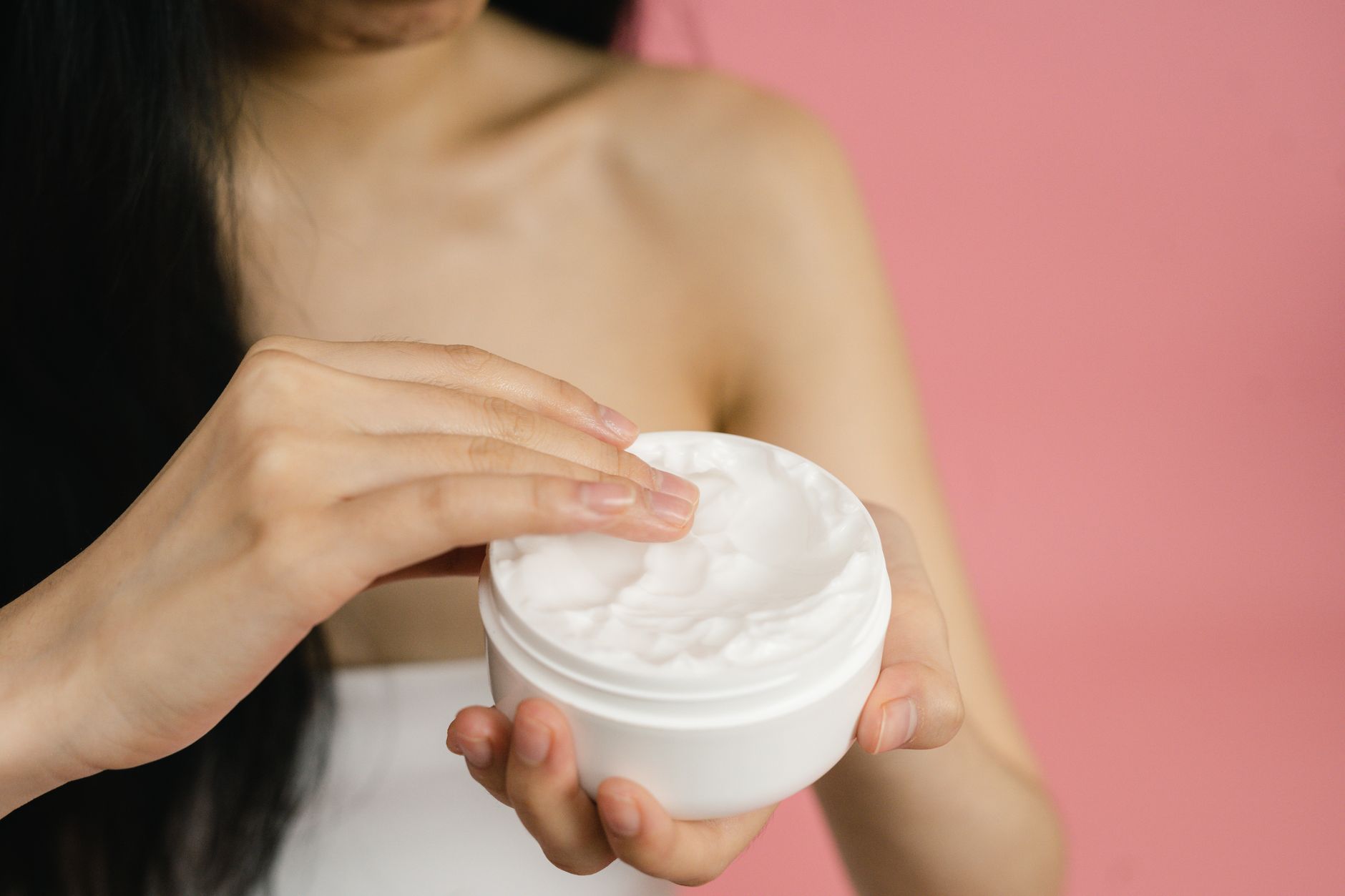
HOCl and bleach are related, but they are not the same compound.
Bleach is sodium hypochlorite (NaOCl) — an alkaline salt. When dissolved in water, it releases hypochlorous acid as the active molecule. In some sense, a bleach bath is trying to deliver HOCl to your skin via a fairly roundabout route. The bleach is the vehicle. HOCl is what you actually want.
The key differences are pH and stability. Bleach solutions are alkaline. HOCl sprays formulated for skin use are buffered to a pH of roughly 4.5–6.5 — close to the skin's natural pH range. That matters on eczema-prone skin, where the acid mantle is already disrupted and alkaline exposure can worsen barrier function.
Your white blood cells produce HOCl naturally as part of the immune response — it's been part of human biology since long before anyone bottled it. It's also been used in clinical wound care since the 1800s. What's changed is formulation: HOCl can now be made stable enough for daily topical use, at concentrations that support sensitive skin without the harshness of diluted bleach.
Clinical data backs its use for atopic dermatitis. One trial found that participants who used HOCl spray reported reduced itching in over 73% of cases. It breaks down into water and salt — no residue, no fumes, nothing that lingers on reactive skin.
We started Gentle Sen because our son went through severe eczema and TSW in 2024. Finding something gentle enough for open, reactive skin — that didn't smell like a public pool — was the whole reason we built it. HOCl tablets that dissolve in water on demand became our answer. Fresh solution every time, no shelf degradation.
HOCl vs. bleach baths: comparing what actually matters for eczema skin
| Factor | Bleach Baths (0.005% NaOCl) | HOCl Spray |
|---|---|---|
| Active compound | Sodium hypochlorite releasing HOCl in water | Hypochlorous acid directly |
| pH | Alkaline | ~4.5–6.5 (close to skin's natural pH) |
| Application | 10–15 min soak, twice weekly | Spray on affected areas, daily or as needed |
| Feel on raw skin | Can sting on cracked or open skin | Gentle, non-drying |
| Fumes | Yes — problematic for asthma | None |
| Precision required | Teaspoon-level measuring per gallon | None |
| Bathtub needed | Yes | No |
| Clinical backing | Solid for barrier improvement and itch reduction | Growing body of evidence for atopic dermatitis |
| Reduces S. aureus? | Surprisingly, research shows no significant effect | Supports a cleaner skin environment |
The PMC research finding is worth sitting with: bleach baths improved skin barrier and reduced itch, but bacterial colonization levels didn't change. If that's the mechanism — barrier restoration, not bacterial clearance — then HOCl's skin-pH-matched, non-drying profile starts to look like a more logical tool for the job.
One honest note on HOCl quality: hypochlorous acid degrades over time, especially when exposed to light or air. A pre-made bottle that's been sitting in a warehouse or on a shelf for months is meaningfully less effective than a fresh solution. If you're using HOCl for eczema support, freshness is not a minor detail.
How to add HOCl to an eczema routine

HOCl fits into an eczema routine as a second step, right after cleansing. The steps:
-
1
Cleanse gently. Use a fragrance-free, pH-balanced cleanser. On reactive days, plain water is fine. Avoid anything foaming or alkaline — it disrupts the barrier you're trying to support.
-
2
Pat lightly dry. Don't rub. Leave skin slightly damp — not wet, just not bone dry.
-
3
Spray HOCl onto affected areas. Face, body, wherever. You don't need to saturate the skin — a fine mist is enough. Apply to closed skin; avoid spraying directly on actively weeping or broken-open wounds without medical guidance.
-
4
Wait 30–60 seconds. Let it air-dry. Don't wipe it off. This is the step most people rush, and it matters.
-
5
Apply moisturizer immediately. HOCl doesn't lock moisture in. Follow it straight away with an unscented emollient — the wetter the skin when you apply, the better the barrier benefit.
Daily use is appropriate for most people. If skin is particularly raw or actively flaring, start with every other day and adjust based on response. There's no point in rushing a reactive skin type.
Compatibility note: HOCl is pH-sensitive. Don't apply it immediately after highly acidic or alkaline products. On a standard eczema routine — gentle cleanser, HOCl, plain moisturizer — this isn't an issue. If you're also using topical prescription treatments, apply those separately and ask your dermatologist about sequencing.
When a bleach bath might still make sense
Here's the part most skin-care guides skip: HOCl spray is not the right answer for every situation.
If a dermatologist has prescribed bleach baths for your eczema — particularly for a child with moderate-to-severe atopic dermatitis, or for widespread colonization on the body — don't swap the protocol on the basis of a blog post. Bleach baths are a clinically validated therapy with years of real-world data. The measuring is annoying. The fumes are unpleasant. They still have a place.
If you're managing a TSW flare with significant skin compromise — open, weeping, or widely broken skin — consult your dermatologist before adding anything new. HOCl is gentle on intact skin and on closed, irritated patches. It is a different matter on actively open wounds. When in doubt, ask first.
The short version: HOCl is a strong daily maintenance and mild-flare tool. For severe atopic dermatitis or medically supervised treatment plans, it's a conversation, not a swap.
About Gentle Sen HOCl Tablets
We built Gentle Sen because our son went through severe eczema and TSW in 2024. Finding a way to support his skin without harsh chemicals — and without a solution that sat on a shelf degrading for months — was the whole point. Our HOCl tablets dissolve in water on demand. Fresh solution every time, pH-optimized for sensitive skin, fragrance-free, and non-toxic. No measuring, no fumes.
For eczema-prone skin, we use one tablet per 16 oz of water for a daily mist — the Family Tab Kit comes with everything you need to get started.
See how Gentle Sen works →Straight answers
Are bleach baths actually good for eczema?
Yes, with nuance. Research shows bleach baths improve skin barrier function and reduce itch — one trial found 53% of participants achieved at least 50% eczema improvement over 12 weeks, and 87% reported better sleep. Interestingly, the same study found no significant reduction in S. aureus levels, suggesting the benefit is more about barrier restoration than bacterial clearance. They work, but the mechanism isn't what most people assume.
Is hypochlorous acid safe for eczema-prone skin?
Yes. HOCl is non-toxic, pH-balanced to a range close to the skin's own, and breaks down into water and salt with no residue. Clinical data shows it is well tolerated on sensitive and eczema-affected skin. It's the same compound white blood cells produce naturally during an immune response — your body has been running that process since before you had skin problems.
Can hypochlorous acid replace bleach baths?
For mild to moderate eczema used as a daily maintenance tool, HOCl spray offers comparable skin support with fewer practical obstacles. For severe atopic dermatitis managed under dermatologist supervision, don't swap protocols without discussing it first. HOCl is not a medical treatment — it supports healthy-looking skin as part of a routine.
How does HOCl help with eczema?
HOCl helps create a cleaner environment on the skin's surface and, at a skin-appropriate pH, may support the acid mantle that eczema-prone skin struggles to maintain. Clinical trials in atopic dermatitis have shown it supports reduced itch and healthier-looking skin. It doesn't replace moisturizer or prescription treatments — it sits before them in the routine.
How often should I use HOCl for eczema?
Once daily is the standard starting point — apply after cleansing, let it air-dry for 30–60 seconds, then apply moisturizer. On very raw or reactive skin, start every other day. There's no benefit to multiple applications per day; once is enough for routine skin support.
What is the correct bleach bath concentration for eczema?
The standard clinical protocol is approximately one teaspoon of unscented household bleach (6% sodium hypochlorite) per gallon of lukewarm water — roughly 0.005% sodium hypochlorite in the bath. Some guidelines use half a teaspoon per gallon. Exact ratios depend on your tub size and bleach concentration. Always check with a dermatologist before starting; too much is worse than too little.
Can children use hypochlorous acid for eczema?
HOCl is generally considered safe for use on children's skin — it's non-toxic, fragrance-free, and doesn't sting the way diluted bleach can on cracked skin. For infants or young children with significant eczema, check with a pediatric dermatologist before starting any new topical regimen. What's gentle for an adult isn't always the right protocol for very young skin.
What's the difference between sodium hypochlorite (bleach) and hypochlorous acid?
Sodium hypochlorite (NaOCl) is the compound in household bleach — alkaline, stable, used as a cleaning agent and disinfectant. When dissolved in water, it releases hypochlorous acid (HOCl) as the active molecule. HOCl has a pH closer to skin's natural range, is non-drying, and breaks down into water and salt. Bleach baths try to deliver HOCl to your skin; a formulated HOCl spray delivers it directly — at a more skin-compatible pH and without the fumes.
The practical takeaway
Bleach baths are a legitimate clinical tool with solid research behind them. They also require a bathtub, a measuring spoon, tolerance for fumes, and twice-weekly commitment — which is why adherence to the protocol is notoriously low. HOCl spray covers similar skin-support ground as a daily leave-on application, at a pH the skin actually finds comfortable.
The right choice depends on your eczema severity, your routine, and whether you have medical supervision in the picture. For most people managing mild to moderate eczema day-to-day, HOCl is easier to use consistently — and for a skin condition where consistency is half the battle, that's not a small thing.
If you're curious about making fresh HOCl at home — no pre-made bottle, no shelf degradation — the Gentle Sen Family Tab Kit was built exactly for that.
Sources
- Bleach baths enhance skin barrier, reduce itch but do not normalize skin dysbiosis in atopic dermatitis — PMC / NCBI (2023)
- Hypochlorous Acid for Eczema — Healthline
- Bathing and Moisturizing for Eczema — National Eczema Association
Disclaimer: This article is for educational purposes only and does not constitute medical advice. Gentle Sen products are multi-purpose cleaners, not medical treatments. If you have eczema, atopic dermatitis, or a related condition, consult a licensed dermatologist before making changes to your skin care routine.
0 comments