


No, eczema is not contagious. You cannot catch it from another person, it cannot transfer through touch or shared items, and it has nothing to do with hygiene or personal cleanliness. Eczema is an inflammatory skin condition that comes from inside the person who has it — not from contact with the outside world.
That's the short answer. It's worth stating plainly, because a lot of people with visible eczema have had the experience of watching someone quietly move their arm away. That experience is common, genuinely uncomfortable, and based entirely on a misunderstanding.
Here's what eczema actually is, why it can appear to spread, the one nuance that does matter (secondary infections), and what helps during a flare.
The short version
Eczema cannot be transmitted between people — it is not an infectious disease. It is an inflammatory condition driven by genetics and immune system responses internal to the person who has it. It can appear to spread on a person's own body during a flare. The one exception: secondary bacterial infections that sometimes develop in broken eczema skin are contagious, the way bacterial infections generally are. Those are treatable and separate from eczema itself.
In this article
What eczema actually is — and why "contagious" doesn't apply
The most common form — atopic dermatitis — starts with a combination of genetic susceptibility and immune system overreactivity. Many people with eczema carry a variation in the gene that codes for filaggrin, a protein responsible for maintaining the skin's outer barrier. A weaker barrier means irritants and allergens penetrate more easily. The immune system responds with inflammation. That inflammation is eczema.
There's no pathogen at the center of this process. No virus transferring between people. No bacteria being picked up from a surface. The condition originates inside the person experiencing it — from their own biology.
This is also why eczema tends to run in families. If one parent has atopic dermatitis, a child has a meaningfully higher risk of developing it. If both parents have it, that risk increases further. That's genetic inheritance — not contagion. The distinction matters, and it's often the piece that gets lost in the explanation.
Environmental triggers vary considerably between individuals. Common ones include certain soaps and detergents, synthetic fabrics worn close to the skin, pet dander, pollen, sweat, heat, emotional stress, and specific foods (more commonly in children than adults). Two people with eczema can have almost completely different trigger lists.
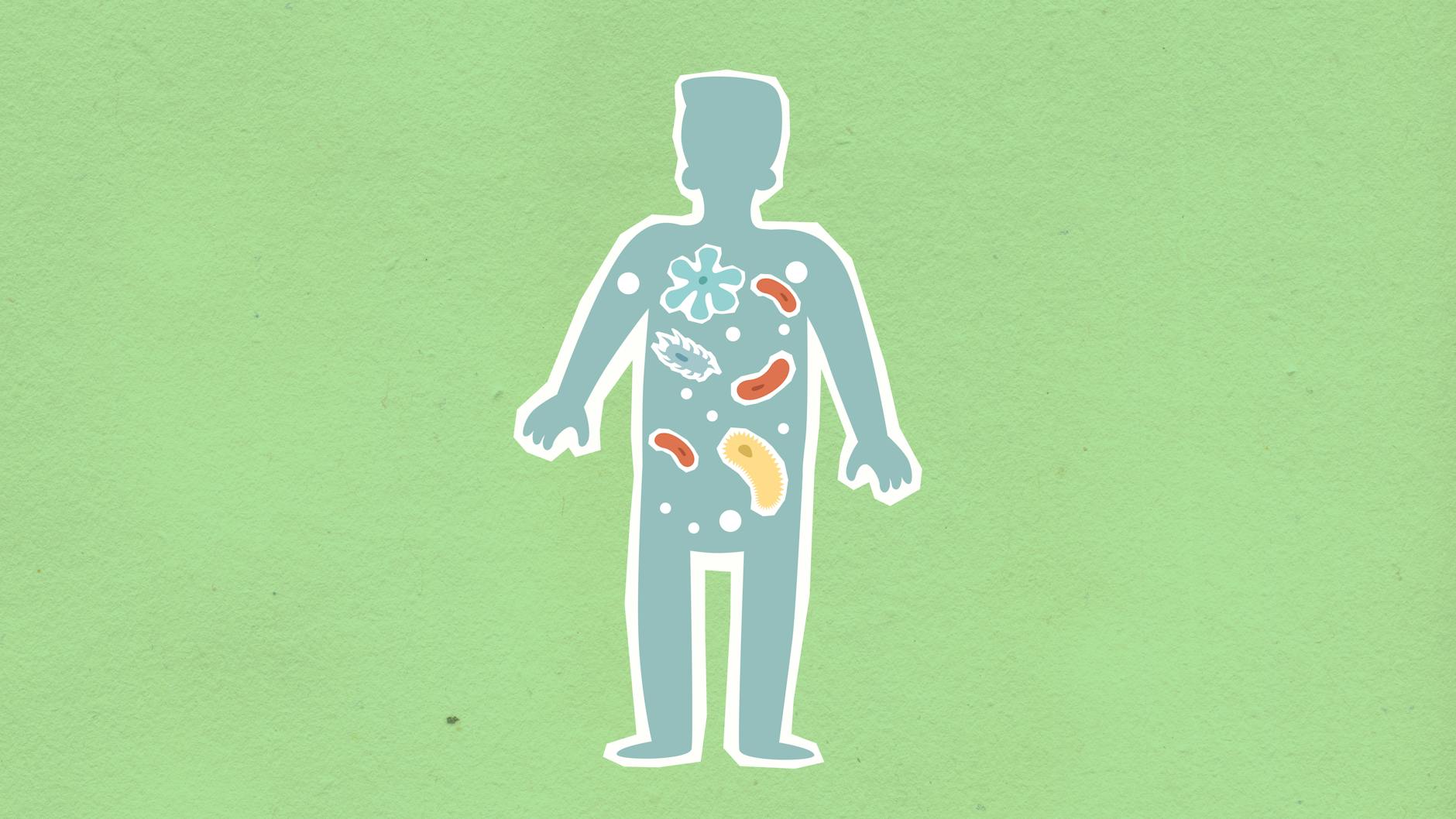
Why eczema can look like it's spreading — without being contagious
During a flare, eczema patches can appear in new areas on the same person's body. Scratching inflamed skin creates further mechanical irritation, which can trigger inflammation in nearby areas. The histamine released during the immune response can sensitize surrounding skin. The result can look like spread — and to someone who doesn't know what they're looking at, it can look infectious.
It isn't. It's the same inflammatory process becoming more active on one person's skin. Not a transmission between people.
Eczema also looks significantly different across people and across stages. Active flares look different from chronic eczema, from healing eczema, from the hyperpigmentation that often lingers after inflammation resolves. In some forms — dyshidrotic eczema in particular — it produces small fluid-filled blisters. In others, the skin becomes thick and leathery over time. The visual range is wide enough that eczema is frequently mistaken for other conditions entirely.
The condition most commonly confused with eczema is ringworm, which despite the name is a fungal infection — and actually is contagious. If there's genuine uncertainty about which one is present, a GP or dermatologist can confirm. This distinction matters practically: treating eczema with antifungal cream doesn't help, and vice versa.
(For the record, we've had informal contact with a great many eczema-affected families over the years. None of us have managed to accidentally give it to the postman. The condition is ungenerous in a lot of ways. Transmissibility is not one of them.)

The one exception: secondary skin infections
Here's where it gets slightly more complicated — and where being precise matters.
People with eczema often have a compromised skin barrier. Cracked and broken skin is a more accessible entry point for bacteria. The most common is Staphylococcus aureus, which colonizes eczema-affected skin at significantly higher rates than unaffected skin. That bacterial presence can intensify flares and make them considerably harder to manage — which is part of why bleach baths have historically been recommended by some dermatologists for atopic dermatitis.
The secondary bacterial infections that develop in broken eczema skin — impetigo is the most common — are contagious in the way that bacterial skin infections generally are. The eczema itself has not become contagious. The bacteria that found an entry point through damaged skin have.
Signs that eczema may have developed a secondary infection:
- Yellow or honey-colored crusting over patches
- Weeping or oozing that feels different from a standard flare
- Warmth and swelling in and around the affected area
- Significantly spreading redness beyond the usual patch borders
- Fever or general unwellness (less common, but more serious when present)
If any of these appear, see a GP or dermatologist. Secondary infections in eczema-affected skin are treatable — typically with topical or oral antibiotics — and treating them promptly improves both the infection and the underlying eczema flare.
What actually triggers an eczema flare
Since eczema originates internally rather than from infectious contact, the useful question becomes: what sets it off? Triggers are personal, but there are common patterns.
- Harsh cleansers and soaps — anything that strips or disrupts the skin barrier further
- Synthetic fabrics — polyester, nylon, and wool worn close to the skin
- Environmental allergens — dust mites, pet dander, pollen, mold spores
- Sweat and heat — both can trigger the inflammatory response independently
- Emotional stress — reliably documented as a trigger, less reliably explained in mechanistic terms
- Fragranced products — in skincare, laundry detergent, and household cleaning sprays
- Certain foods — dairy, eggs, soy, wheat, and tree nuts more commonly in children; less consistent in adults
One trigger that gets less attention than it deserves: residues from household cleaners on surfaces and laundered fabrics. For children with eczema especially, daily contact with surfaces treated using harsh, fragranced cleaners can be a quiet, consistent contributor to flares that's hard to trace unless you're looking for it.
What helps during a flare — and when to stop managing at home
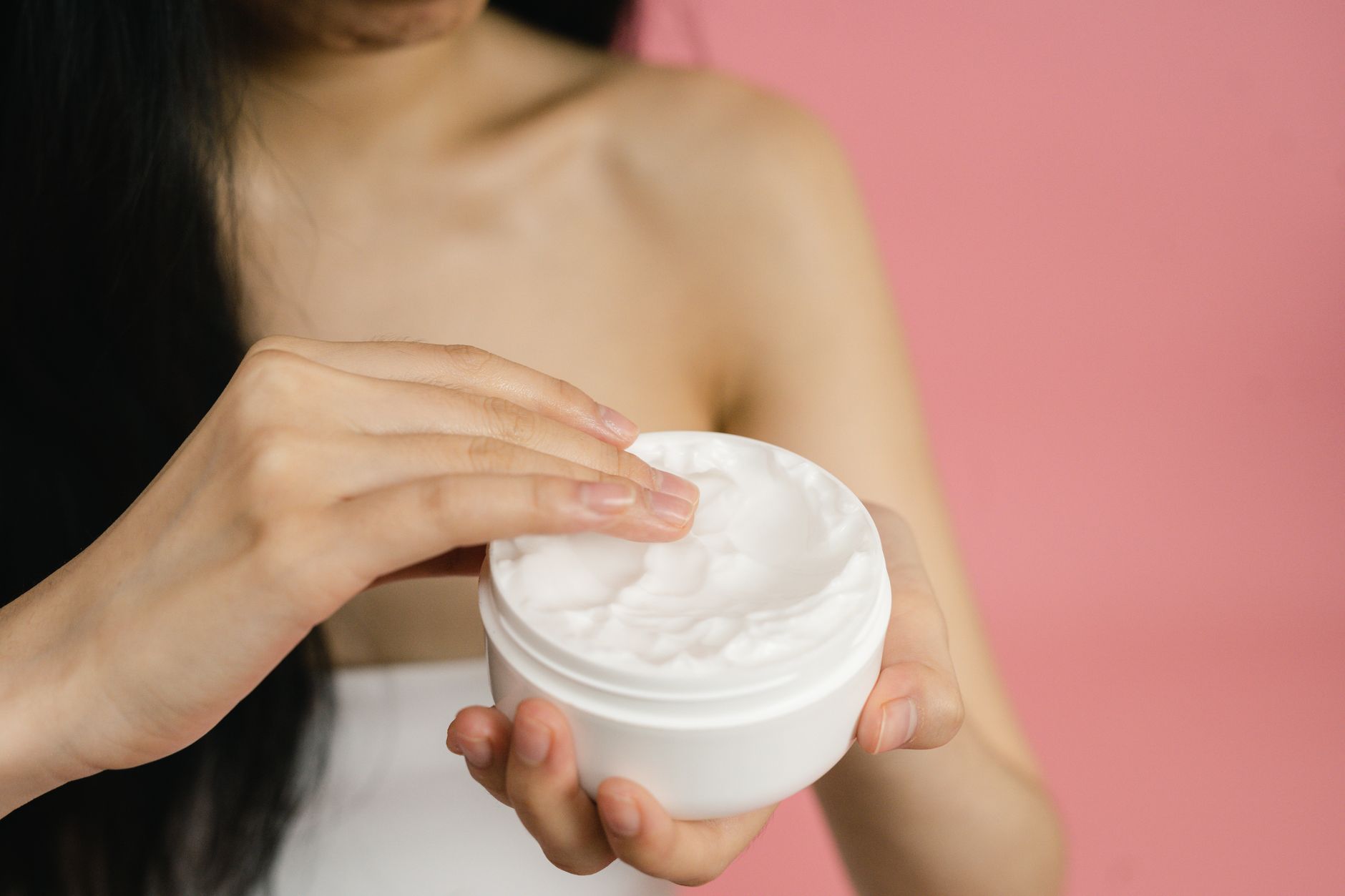
Keep the barrier supported. Fragrance-free, thick moisturizers applied to damp skin within a few minutes of bathing are the consistent foundation of eczema management across clinical guidance. The timing matters — skin absorbs moisturizer better when it's still slightly damp. Emollients with heavier oil content work well for most eczema-affected skin.
Water temperature matters more than most people think. Hot showers feel appealing when your skin is inflamed and itching. They also dilate blood vessels, increase histamine response, and worsen the itch-scratch cycle that drives flares. Lukewarm water only. We know.
Avoid barrier-stripping products. Soaps with sodium lauryl sulfate (SLS), strongly fragranced detergents, alcohol-heavy toners, and harsh household cleaning sprays can all compromise the skin barrier further — in sensitive adults, and especially in children who have regular contact with cleaned surfaces and freshly washed clothing.
Identify and reduce personal triggers. Keeping a simple log during flares — what you ate, what you wore, what cleaning products were used recently — can reveal patterns that aren't otherwise obvious.
When to stop managing at home and see a professional
- Any of the secondary infection signs listed above
- Eczema that isn't responding to any management approach after several weeks
- Significant involvement of the eye area or eyelids
- A child whose sleep is substantially disrupted by itch
- Any adult whose daily function or quality of life is significantly affected
Home management works well for most flares. It has its limits, and recognizing those limits early leads to better outcomes.
Straight answers (FAQ)
Is eczema contagious to touch?
No. Eczema cannot transfer through physical contact of any kind. You can touch, hug, or share space with someone during an active flare without any risk of developing eczema yourself. It is an inflammatory condition internal to the person who has it.
Can you catch eczema from someone else?
No. Eczema is not caused by a pathogen — there is no bacteria, virus, or fungus to transmit. It cannot spread between people through touch, shared items, or any other route of contact. It is not an infectious disease.
Why does eczema run in families if it's not contagious?
Eczema is hereditary, which is a different thing from being contagious. Genetic factors — particularly variations in the filaggrin gene, which helps form and maintain the skin barrier — are passed from parent to child. If one parent has atopic dermatitis, the risk for a child is meaningfully elevated. This is inheritance, not transmission.
Can eczema spread on my own body?
Yes — eczema can appear in new areas on the same person's body, particularly during a flare. Scratching inflamed skin causes further irritation that can trigger inflammation in nearby areas. The immune response can also sensitize surrounding skin. This is one person's condition becoming more active, not a transmission between people.
What's the difference between eczema and ringworm?
Ringworm is a fungal infection that is contagious and spreads through direct contact. Eczema is a non-infectious inflammatory condition. Both can produce raised, inflamed, itchy patches that look superficially similar. A GP or dermatologist can confirm which is present. Treating eczema with antifungal cream won't help, and treating ringworm with eczema management strategies won't either — so the distinction matters practically.
Can infected eczema spread to other people?
Eczema itself cannot spread to anyone. But the secondary bacterial infections that sometimes develop in broken eczema skin — such as impetigo — are contagious, as bacterial skin infections generally are. The eczema has not become contagious; the bacteria that colonized the broken skin barrier have. Both require separate management, and the infection is worth treating promptly.
Is it safe to be close to or touch someone who has eczema?
Completely safe, including during an active flare. Eczema is not contagious in any form. Close physical contact — hugging, sharing a bed, sharing towels — carries no risk of eczema transmission. The only related caution is if secondary bacterial infection is present, in which case the usual hygiene precautions for skin infections apply.
How do I know if eczema is infected rather than just a bad flare?
Standard eczema flares involve dryness, itch, redness, and sometimes cracking. Signs that suggest a secondary infection has developed include: yellow or honey-colored crusting, weeping or oozing that feels different from usual, noticeable warmth and swelling around the patch, and redness that spreads beyond the usual border. Fever or general unwellness can accompany more serious infections. If any of these appear, see a GP or dermatologist rather than continuing to manage at home.
The short version, one more time
Eczema is not contagious. It cannot transfer between people. It runs in families because of genetics, and it can become more active on one person's own skin during flares. The only related concern is secondary bacterial infection — that's treatable, and separate from the eczema itself.
Gentle Sen was started because our son went through topical steroid withdrawal and severe eczema in 2024. We spent a lot of time reading ingredient labels and deciding we didn't want fragrances, harsh detergents, or chemical residues anywhere near already-reactive skin. If you're looking for a pH-balanced, fragrance-free option that helps create a cleaner environment for sensitive skin, our HOCl tablets dissolve in water on demand — no plastic bottle full of water shipped to your door, no preservatives, fresh every time.
Your skin doesn't need to be explained or apologized for. It needs good skincare. One of those, we'd argue, is within our wheelhouse.
Sources and further reading
- National Eczema Association — Eczema Overview
- National Institute of Arthritis and Musculoskeletal and Skin Diseases (NIAMS) — Atopic Dermatitis
- American Academy of Dermatology — Eczema Causes and Triggers
This article is for informational purposes only and does not constitute medical advice. Gentle Sen HOCl tablets are a multi-purpose cleaner and are not intended to diagnose, treat, cure, or prevent any disease or medical condition. If you have concerns about your skin, consult a qualified healthcare provider.
0 comments