


Your kitchen sponge and the dish rag sitting next to it are, by most published testing, the two dirtiest items in your home — dirtier than your toilet seat, your kitchen sink, and the bottom of your shoe. That's not an exaggeration for effect. Researchers have measured roughly 10 million bacteria per square inch on a kitchen sponge, against about 50 on an average toilet seat.
The hidden part isn't that sponges and rags get dirty. Everyone knows that. It's how fast it happens, what's actually living in there by day three, and why cleaning them doesn't always fix the problem the way most people assume.
This isn't a scare piece for its own sake. It's what NSF International, Clemson University's Extension office, and a 2026 peer-reviewed contamination study actually found when they tested real household sponges and rags. Below: the numbers, why cleaning can sometimes make things worse, and a soak method using Gentle Sen HOCl tablets — with exact steps.
Kitchen sponges and dish rags carry more bacteria, gram for gram, than almost anything else in your home — more than 75 percent of tested sponges and rags carried coliform bacteria, the family that includes E. coli and Salmonella. Heat-based cleaning reduces the total count but doesn't reliably fix the underlying risk, and some research found regularly cleaned sponges skewed toward tougher survivor species. The fix: wring them out fully, replace them on a schedule, and — if you want a non-toxic way to keep them fresher between replacements — soak them in a Gentle Sen HOCl solution.
- Why sponges and rags are the dirtiest things in your kitchen
- Sponges vs. dish rags — is one actually worse
- What happens when that bacteria gets on your food
- Why cleaning your sponge doesn't always make it safer
- How to soak sponges and rags in an HOCl solution
- When to stop cleaning it and just replace it
- Frequently asked questions
Why Sponges and Rags Are the Dirtiest Things in Your Kitchen
A 2017 German study that's still widely cited found up to 45 billion bacteria packed into a single square centimeter of sponge foam, spanning more than 300 different species. A 2026 peer-reviewed study of 98 household sponges confirmed the same pattern, with particularly high loads of Enterobacteriaceae and Pseudomonas species — both groups linked to spoilage and, in some cases, illness.
Compared against the rest of your kitchen, the gap is bigger than most people expect. Clemson University Extension testing found kitchen sinks carry roughly 32,000 bacteria per 25 square centimeters, countertops around 316, and toilet seats about 398. Sponges are measured in the tens of millions on the same scale. Nothing else in the room comes close.
(We've mentioned this at a dinner party once. Someone put their fork down. We stand by the science, not the timing.)
Sponges vs. Dish Rags: Is One Actually Worse
Sponges carry more raw bacteria — roughly 10 million per square inch, against about 1 million per square inch on a dishcloth, based on NSF International testing. The porous foam structure is the reason: it traps food particles and stays damp in a way flat fabric doesn't.
Rags make up for the lower count by spreading further. A sponge mostly stays at the sink. A dish rag gets dragged across countertops, stovetops, and hands in a single session, which moves whatever it's carrying onto more surfaces than a sponge typically touches. NSF found coliform bacteria — the group that includes E. coli and Salmonella — on more than 75 percent of dish sponges and rags tested combined. Neither one is the "safer" choice. They're just dirty in different directions.

What Happens When That Bacteria Gets on Your Food
The risk isn't the sponge itself. It's cross-contamination — a sponge or rag touches raw chicken juice on a cutting board, then gets used to wipe the counter, rinse a mug, or clean a knife that's about to cut vegetables for a salad. Nothing about that sequence looks unusual in a normal kitchen. That's exactly the problem.
A 2026 contamination study found that E. coli and Salmonella enteritidis, starting from small initial amounts, multiplied to populations of up to a billion colony-forming units per sponge section within days. Clemson Extension, citing CDC figures, notes that roughly 1 in 6 Americans gets a foodborne illness every year — and a meaningful share of those cases trace back to home kitchens, not restaurants.
(Yes, a tablet company writing about kitchen bacteria has an angle. We'd rather you know the actual numbers than not — what you do with them is up to you.)

Why Cleaning Your Sponge Doesn't Always Make It Safer
Here's the part most cleaning guides skip. The German study mentioned earlier also looked at sponges that were cleaned regularly — boiled, microwaved, or run through the dishwasher — and compared them to sponges that weren't cleaned at all. The regularly cleaned sponges didn't reliably end up with less bacteria overall. In some cases, the surviving population skewed toward tougher, more resistant species, likely because cleaning wipes out weaker competing bacteria and leaves the hardier ones more room.
We'll say the part a cleaning-product company usually leaves out: if you're microwaving your sponge every night and treating that as the whole solution, we'd push back on that. Heat reduces the numbers. It doesn't reliably fix what's actually living in the foam, and by the two-week mark it stops mattering how carefully you cleaned it — the sponge needs to go in the bin either way.
How to Soak Sponges and Rags in an HOCl Solution
Hypochlorous acid (HOCl) is the same compound the body's white blood cells produce as part of a normal immune response, which is part of why it's used as a surface treatment option in food-processing and clinical settings. At the low concentrations used at home, it's non-toxic, fragrance-free, and pH-balanced — which makes it a reasonable option for something you're about to touch food with.
Here's the soak method we use in our own kitchen, step by step:
-
Fill a bowl or your sink basin with about 20 fl. oz. (roughly 2.5 cups) of cool water.
-
Drop in one Gentle Sen HOCl tablet and let it dissolve fully — about 5 minutes.
-
Submerge the sponge or rag completely so the solution reaches every surface, not just the top.
-
Let it sit for 10 minutes. Longer soaks don't add much — the solution has done its work well before then.
-
Wring it out completely and let it air dry somewhere with airflow. No rinsing needed — HOCl breaks down into salt and water, so there's no chemical residue left behind.
-
Mix a fresh batch each time. HOCl solution is most effective within 24 to 48 hours of mixing, so don't make a bottle and let it sit on the counter for a week.
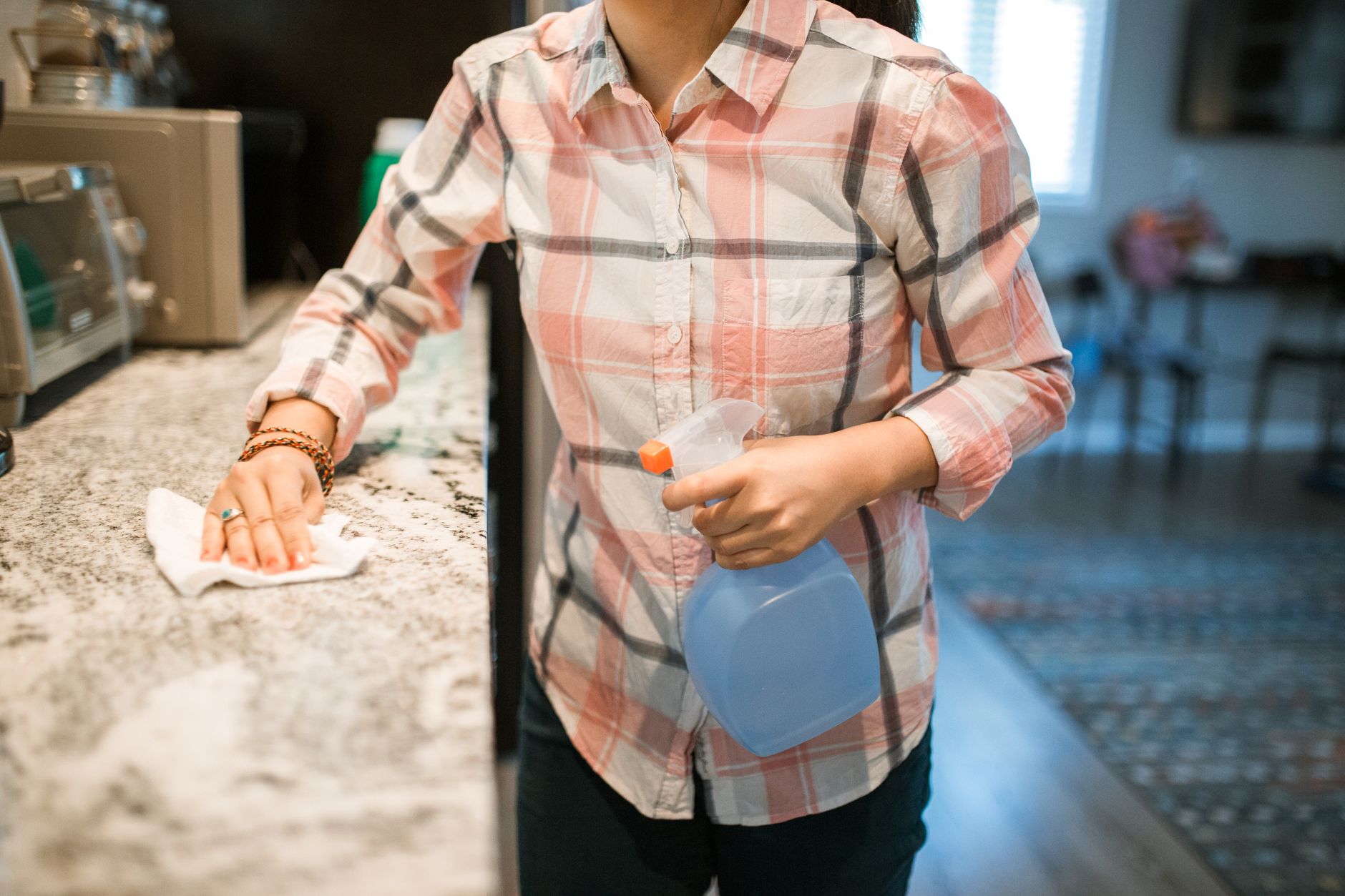
A non-toxic option for daily maintenance
Gentle Sen HOCl tablets dissolve in water to make a fresh solution on demand — no bleach smell, no fumes, no residue to rinse off. It's not a replacement for the microwave, the dishwasher, or the trash can on schedule. It's a daily habit that fits in the gaps between them.
When to Stop Cleaning It and Just Replace It
No cleaning or soaking method rescues a sponge or rag that's past its useful life. Replace it when:
- It smells even right after cleaning or soaking
- The sponge foam is shedding, or the rag has gone thin and permanently gray
- It's been in daily use for more than two weeks (sponges) or two days without a wash (rags)
- It touched raw meat, poultry, or fish and hasn't been through a hot wash since
As a schedule: replace sponges every one to two weeks regardless of appearance, and put dish rags through a hot laundry cycle every one to two days. Neither should be judged by smell alone — by the time you can smell it, it's already overdue. Some people write the start date on a sponge with a marker. It looks a little odd on the counter. It works.
Frequently Asked Questions
How many bacteria live in a kitchen sponge?
Published testing puts the number in the billions per square centimeter of foam. One widely cited German study found up to 45 billion bacteria per square centimeter of sponge material, spanning more than 300 species. A sponge that looks and smells fine can still carry that load — you can't see or smell bacteria at that scale.
Is a kitchen sponge really dirtier than a toilet seat?
Yes, by a wide margin. NSF International testing found roughly 10 million bacteria per square inch on kitchen sponges, compared to about 50 bacteria per square inch on an average toilet seat. The toilet gets cleaned on a schedule and dries out between uses. The sponge usually doesn't.
Are dish rags as dangerous as sponges?
They carry less raw bacteria than sponges — roughly a million per square inch versus 10 million — but they spread it further. A rag gets dragged across counters, stovetops, and hands in one session, which moves contamination onto more surfaces than a sponge that mostly stays at the sink.
Can a dirty sponge or rag actually make you sick?
Yes, mainly through cross-contamination. If a sponge or rag touches raw meat juices and is then used on a cutting board, counter, or another dish, it can transfer E. coli or Salmonella onto food that isn't cooked again before eating. The CDC estimates 1 in 6 Americans gets a foodborne illness every year, and a meaningful share of those cases trace back to home kitchens.
Does microwaving a sponge actually reduce the bacteria?
It reduces the total count, but not reliably the risk. Research has found that sponges cleaned regularly by microwave, boiling, or dishwasher didn't always end up with fewer bacteria overall — and in some cases the surviving population skewed toward tougher, more resistant species. Heat helps. It isn't a substitute for replacing the sponge on schedule.
How often should I replace my kitchen sponge or dish rag?
Sponges every one to two weeks regardless of appearance. Dish rags should go through a hot laundry wash every one to two days, and immediately after contact with raw meat, poultry, or fish. Don't rely on smell as your signal — by the time you notice it, it's already overdue.
Is it safe to soak a sponge or rag in an HOCl solution?
Yes. Hypochlorous acid at the low concentrations used at home is non-toxic, fragrance-free, and pH-balanced, which is part of why it's used around food-contact surfaces in food-processing settings. Gentle Sen HOCl tablets dissolve in water to make a fresh solution for soaking sponges and rags between deeper cleans.
How do I make an HOCl soak at home?
Dissolve one Gentle Sen HOCl tablet in about 20 fl. oz. of cool water, submerge the sponge or rag fully, and let it sit for 10 minutes. Wring it out and let it air dry — no rinsing needed. Mix a fresh batch each time, since the solution is most effective within 24 to 48 hours of mixing.
The Bottom Line on Sponges and Rags
The numbers are genuinely higher than most people expect, and cleaning alone doesn't fully solve the problem the way it feels like it should. Wring your sponge and rag out fully after every use, keep them somewhere they can actually dry, and replace them on a schedule rather than by how they look or smell.
If you want a non-toxic way to keep them fresher in between, Gentle Sen HOCl tablets make a fresh soaking solution on demand — no fumes, no residue, safe around food surfaces. The replacement schedule still applies. This just makes the days in between a little less of a gamble.
- NSF International — Germiest Items in the Home
- Clemson Cooperative Extension HGIC — Kitchen Hygiene: Let's Talk About That Sponge
- Frontiers in Microbiology (2026) — Microbiological Contamination of Domestic Kitchen Sponges
This article is for informational purposes only and does not constitute medical or food-safety advice. Gentle Sen HOCl tablets are a multi-purpose cleaner and deodorizer. If you have specific health or food-safety concerns, consult a qualified professional.
0 comments