


Why is your skin so sensitive? The short answer: your skin barrier has developed gaps. The outermost layer of skin — the stratum corneum — is supposed to work like a sealed wall, keeping moisture in and irritants out. When it's compromised, ordinary things like fragrance, tap water, or a drop in temperature get through and trigger a reaction in the layers beneath. Most sensitive skin comes back to this one problem.
The longer answer depends on why the barrier broke down in the first place. Genetics, product overload, environmental stress, hormonal shifts, and underlying conditions you may not know you have — any of these can be the culprit, and often it's more than one at once.
Here's what's actually going on, what's likely making it worse, and how to start calming it down.
The short version
Sensitive skin usually comes from a weakened skin barrier that lets irritants through. The most common triggers are fragrance, over-exfoliation, and harsh detergents — not some irreversible condition. Strip your routine back to three fragrance-free products, repair the barrier with ceramides and niacinamide, and protect with a mineral SPF. If reactions continue after 6–8 weeks, see a dermatologist to rule out contact allergies or an underlying condition.
In this guide
What "sensitive skin" actually means
Sensitive skin isn't a formal diagnosis. It's a description — skin that reacts to stimuli that most people's skin ignores. Stinging after applying a product. Redness after washing. Tightness in the cold. Itching for no obvious reason.
Dermatologists often separate this into two types. Objective sensitive skin has visible signs: redness, rashes, broken capillaries, or bumps you can see. Subjective sensitive skin has no visible signs at all — you just feel it. Burning or stinging where nothing should be burning or stinging.
Your skin's outermost layer — the stratum corneum — has one job: keep moisture in and irritants out. It does this through a tightly packed arrangement of skin cells and lipids, sometimes described as a "brick and mortar" structure. When the lipid layer is compromised, moisture escapes and irritants get in. Your skin registers this as a threat and responds accordingly.
That's sensitive skin. Not a skin type you're born with and stuck with — a barrier function problem that, in most cases, can be meaningfully improved.
The main reasons your skin is reacting to everything

Genetics
This is the one you can't change. If your parents had sensitive skin, eczema, rosacea, or allergic conditions, you're more likely to start life with a thinner stratum corneum and a lower threshold for irritation. You didn't do anything wrong — you just drew a shorter straw on barrier thickness.
Genetic variants that reduce the production of filaggrin — a protein that holds skin cells together and helps maintain the lipid layer — are common in people with eczema and persistently sensitive skin. According to Cleveland Clinic, this structural difference makes the barrier less effective at its core function from the start.
Age
As skin ages, it produces fewer lipids and loses moisture more easily. People who had no sensitivity in their twenties often find it developing in their thirties and forties. This isn't a betrayal — it's the barrier maintenance schedule changing. Ceramide production drops, the skin becomes drier, and the window for irritation widens.
Hormones
Fluctuations during the menstrual cycle, pregnancy, perimenopause, and thyroid changes all affect skin reactivity. This is why sensitive skin can feel completely inconsistent — calm one week, reacting to products you've used for years the next. The product didn't change. The barrier did.
Environmental stress
UV exposure, air pollution, cold dry air, hard water, and central heating all degrade the skin barrier over time. Seasonal changes and climate changes are among the most common triggers for sudden skin sensitivity. If your skin got noticeably worse after moving or after winter set in, this is probably why.
Psychological stress
Elevated cortisol weakens the skin barrier, reduces moisture retention, and makes inflammatory responses more likely. If your skin reliably flares during stressful periods at work or at home, that connection is biochemical, not coincidental. Elevated cortisol weakens the skin barrier directly. So technically, your inbox is a skincare problem. We're not sure how to bill that.
Related: Eczema treatment: what actually helps and what to avoid
Products and ingredients that are making it worse
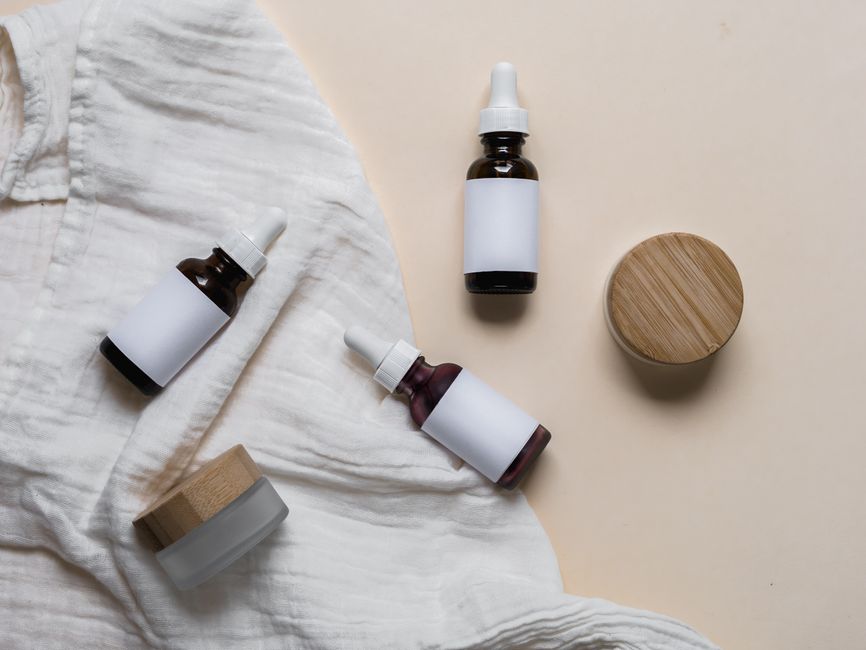
Most people with sensitive skin are using too much. More steps, more actives, more products labelled "nourishing" or "brightening" — and the barrier is being stripped from five directions at once. Before adding anything, consider what needs to go.
Fragrance
This is the biggest one. Fragrance is listed as a single ingredient on product labels but can legally contain over 100 individual compounds. A significant portion of people with skin reactions — including many who don't consider themselves allergic — react to fragrance. It's in cleansers, moisturizers, sunscreens, shampoos, fabric softeners, and dryer sheets. If you haven't tried going fully fragrance-free, that is the first change to make.
Certain preservatives
Methylisothiazolinone (MI) and methylchloroisothiazolinone (MCI) are among the most common causes of contact dermatitis. They appear in rinse-off products, leave-on products, and unfortunately in many products specifically labelled for sensitive skin. Check your ingredient lists — they're not rare.
Over-exfoliation
AHAs, BHAs, retinoids, and physical scrubs all remove the top layer of skin faster than it can rebuild. Used once or twice a week with a healthy barrier: useful. Used daily, or layered on top of each other: the barrier doesn't stand a chance. If your current routine includes more than one exfoliating step, that is almost certainly part of the problem.
Drying alcohols
Ethanol, SD alcohol, and denatured alcohol evaporate quickly and leave a clean, cooling sensation. In the short term this feels good. Long-term, they strip lipids from the skin surface and increase transepidermal water loss. Toners and essences are the most common sources.
Your laundry detergent
This one consistently gets overlooked. Fragrance residue left in clothing and bedding from scented detergents is a direct irritant to reactive skin — especially in areas covered by fabric. If your skin reacts on your back, chest, or the backs of your arms, the washing product is worth checking before anything in your skincare routine.
Sensitive skin — or something else?
This is worth pausing on. Sensitive skin and several skin conditions look nearly identical. The difference matters because they're treated differently.
Eczema (atopic dermatitis)
Eczema is an immune response, not just a barrier response. It tends to concentrate in patches — the insides of elbows, behind the knees, the face and neck — and involves more intense, persistent itching. Skin can become thickened, cracked, or weepy during flares. Sensitive skin can be reactive and uncomfortable, but it rarely breaks down the way eczema does. A filaggrin gene variant is present in a significant proportion of people with eczema — making the barrier structurally weaker from birth.
Rosacea
Rosacea is a vascular condition that causes persistent redness, visible blood vessels, and sometimes bumps resembling acne. It's commonly triggered by heat, alcohol, spicy food, and UV exposure. Sensitive skin is reactive to a range of stimuli; rosacea has specific triggers and responds best to targeted dermatological treatment.
Contact dermatitis
Contact dermatitis is an allergic reaction to a specific substance — often a preservative, fragrance compound, metal (nickel in jewelry), or plant extract. It can appear suddenly even after months or years of using the same product. Allergies develop over time. If you've had a sudden, localized reaction to something you've used before, contact dermatitis is worth investigating.
Signs you're more likely dealing with general sensitive skin rather than one of these conditions:
- Reactions are widespread, not concentrated in specific areas
- Multiple triggers across different product types and weather conditions
- Symptoms improve noticeably when you simplify your routine
- No family history of eczema, psoriasis, or autoimmune skin conditions
If you're genuinely unsure, a patch test with a dermatologist can identify contact allergies within 48–72 hours and rule out the most common look-alikes.
How to care for sensitive skin without overcomplicating it

Less is the strategy, not the fallback. Most dermatologists recommend a sensitive skin routine that fits on one hand: a gentle cleanser, a barrier-supporting moisturizer, and an SPF. That's it. Adding more to fix a reaction is usually what causes the reaction.
-
1
Simplify first. Before adding anything new, remove things. Cut to three products for two weeks. Nine times out of ten, the reaction disappears when you stop layering. This is both a treatment and a diagnostic — if things calm down, you know what was causing the problem.
-
2
Switch to fragrance-free everything. Cleanser, moisturizer, laundry detergent, fabric softener, and dryer sheets. Look for the words "fragrance-free" specifically — not "unscented," which can mean the fragrance was masked rather than removed.
-
3
Repair the barrier. Look for moisturizers containing ceramides, niacinamide, or fatty acids. These support the stratum corneum directly. Apply to damp skin after washing to lock in moisture before it evaporates.
-
4
Protect from UV every day. Sun damage is one of the biggest long-term contributors to skin sensitivity. Mineral sunscreens — zinc oxide or titanium dioxide — tend to be better tolerated than chemical filters, which can cause stinging on reactive skin. (Yes, you have to find a sunscreen that doesn't sting you. Yes, it takes a while. The good ones exist.)
-
5
Stay consistent. Sensitive skin responds to routine, not rotation. Trying a new serum every few weeks is one of the worst habits for reactive skin. Find a minimal routine that works and stay on it for at least a month before evaluating.
One area most sensitive skin guides don't mention: the surfaces your skin actually touches. Pillowcases, towels, and washcloths pick up residue from scented products and standard household cleaners. Switching to a fragrance-free, non-toxic cleaning option for laundry and surfaces keeps the whole environment around your skin as calm as the routine you've built for it. GentleSen HOCl tablets dissolve in water for a pH-balanced, fragrance-free solution safe to use on all of those surfaces.
Related: Hypochlorous acid spray for face: what it does and how to use it
When to stop managing it yourself
Sensitive skin that improves with a simplified, fragrance-free routine is usually manageable at home. Stop managing it yourself when:
- Reactions are severe, cover large areas, or include swelling
- You develop symptoms that suggest an autoimmune condition — joint pain or fatigue alongside skin symptoms
- Nothing improves after 6–8 weeks of a stripped-back routine
- You suspect contact dermatitis and need patch testing to identify the allergen
- A topical steroid that worked before has stopped working — this can be an early sign of topical steroid dependency
A dermatologist can run allergy patch testing, identify underlying conditions, and prescribe barrier-repair treatments not available over the counter. It's not a last resort. It's the right call when home management isn't resolving things after a genuine effort.
Straight answers (FAQ)
What causes sensitive skin?
The most common cause is a weakened skin barrier — specifically the stratum corneum, the outermost skin layer, losing its ability to retain moisture and block irritants. This can happen due to genetics, age, hormonal changes, environmental stress, over-exfoliation, or harsh products. Often it's a combination of factors rather than one single cause.
How do I know if I have sensitive skin?
The main indicators are: stinging or burning when applying products, redness or flushing easily, tightness after washing, and reacting to things that most people tolerate — fragrances, temperature changes, or certain fabrics. If reactions are widespread, have multiple triggers, and improve when you simplify your routine, sensitive skin is the most likely explanation. If reactions are localized or sudden, consider patch testing to check for contact allergies.
What is the best skincare routine for sensitive skin?
A gentle fragrance-free cleanser, a ceramide or niacinamide moisturizer applied to damp skin, and a mineral SPF daily. That's the core routine recommended consistently across dermatological guidance. Add products back one at a time, waiting two to four weeks between additions, so you can identify what your skin actually tolerates.
Is sensitive skin genetic?
Partly, yes. Variants in the filaggrin gene — which codes for a protein critical to barrier function — are common in people with eczema and persistently sensitive skin. If sensitive skin or eczema runs in your family, your baseline barrier may be thinner. That doesn't mean it can't be managed well — it just means barrier repair products matter more than average.
What ingredients should I avoid with sensitive skin?
Fragrance (including "parfum"), preservatives like methylisothiazolinone (MI/MCI), drying alcohols (ethanol, SD alcohol, denatured alcohol), strong AHAs and BHAs used daily, and physical scrubs with abrasive particles. Essential oils also commonly cause reactions in sensitive skin despite being perceived as "natural." When in doubt: fewer ingredients is usually better than more.
What is a good sunscreen for sensitive skin?
Mineral sunscreens using zinc oxide or titanium dioxide as the active ingredient are generally the best starting point for sensitive skin. They sit on top of the skin rather than absorbing into it, which reduces the risk of stinging and irritation. Look for formulas that are also fragrance-free and don't contain alcohol. Chemical filters like oxybenzone and avobenzone tend to cause more stinging on reactive skin.
Can stress make your skin more sensitive?
Yes, directly. Elevated cortisol — the primary stress hormone — weakens the skin barrier, reduces the skin's ability to retain moisture, and increases inflammatory responses. This is why sensitive skin often flares during stressful periods even when the skincare routine hasn't changed. Managing stress genuinely affects skin health, not just as folk wisdom but as a documented physiological relationship.
Can sensitive skin be treated?
In most cases, yes — though "treated" is better understood as "managed effectively." Identifying and removing triggers, repairing the barrier with ceramides and lipid-rich moisturizers, and avoiding over-exfoliation resolves most reactive skin issues over time. Genetic predispositions can't be changed, but the barrier can be reinforced. For persistent or severe sensitivity, a dermatologist can prescribe topical treatments and help identify specific allergens through patch testing.
The takeaway
Sensitive skin is almost always a barrier problem. A weakened stratum corneum, too many actives, fragrance in everything — that's the formula for reactive skin, and removing those variables is usually what fixes it. Less, not more.
Gentle Sen was founded in 2024 after our son went through Topical Steroid Withdrawal and severe eczema. It changed how we thought about every product in our home — not just skincare, but everything that came near his skin. Fragrance-free and non-toxic stopped being preferences and started being requirements. If you're on the same path, we get it.
If it's not resolving after you've stripped things back and given it time, see a dermatologist. Sensitive skin has a lot of look-alikes, and some of them need different treatment. Don't manage something for a year when a patch test could tell you what it actually is in two days.
- Cleveland Clinic — Sensitive Skin: Symptoms, Causes & Treatment
- Schweiger Dermatology Group — Why Is My Skin Suddenly So Sensitive?
- Banner Health — What Causes Sensitive Skin and How to Care for It
This article is for informational purposes only and does not constitute medical advice. Gentle Sen products are multi-purpose cleaners, not medical treatments. Consult a qualified dermatologist or healthcare provider for diagnosis and treatment of skin conditions.
0 comments