


Aloe vera helps with eczema — up to a point. It reduces surface inflammation, eases short-term itch, and gives a compromised moisture barrier something to work with. It is not a treatment. It is not a cure. It won't address the immune response driving your flares. That distinction matters if you've been applying it consistently for weeks and still flaring just as often.
Here's what aloe vera actually does for eczema-prone skin, how to use it correctly, what to pair it with, and the situations where you should skip it entirely.
The short version
Aloe vera has real anti-inflammatory and moisturizing properties that can ease eczema symptoms — particularly itch, redness, and surface dryness. Apply pure, fragrance-free gel to slightly damp skin after cleansing, then follow immediately with a heavier emollient. Always patch test first. It works best as part of a broader routine, not as the whole routine. A small percentage of people react to aloe vera — if your skin worsens, stop.
In this guide
What aloe vera actually contains
Aloe vera gel — the clear substance inside the leaf — is about 99.5% water. The active fraction contains the compounds that do the useful work: acemannan (a polysaccharide with moisture-holding properties), anthraquinones (which reduce surface inflammation), vitamins C and E, zinc, and several amino acids your skin can use for barrier repair.
Aloe vera has been used on irritated skin for roughly 6,000 years of recorded history. Skincare brands just recently figured out they could charge $45 for it. (The plant is, for the record, entirely unbothered by this development.)
One thing that matters specifically for eczema: aloe leaves contain aloin, a yellowish latex-like layer sitting between the outer skin and the clear inner gel. Aloin is a known irritant. Commercially processed gels filter it out. The raw gel from a freshly cut leaf does not come aloin-free automatically — which is why the "scrape it straight from your houseplant" advice has more nuance to it than most articles acknowledge.
The anti-inflammatory action comes primarily from anthraquinones and a compound called aloesin, which research has shown can suppress inflammatory pathways at the skin surface. It's not a strong anti-inflammatory in the way prescription creams are. It's more of a "reduce the noise" tool than a "silence the alarm" tool. Knowing that distinction sets realistic expectations.

What aloe vera can — and can't — do for eczema
What it can do:
- Reduce surface inflammation and redness on active patches
- Ease short-term itch by cooling the skin and softening surface dryness
- Add a lightweight moisture layer to dry, compromised skin
- Support faster recovery of cracked patches once acute inflammation settles
What it can't do:
- Fix the underlying immune response that triggers eczema flares
- Replace prescribed treatment for moderate to severe eczema
- Work for everyone — some skin reacts to aloe instead of calming down
Clinical research on aloe vera and eczema is mostly small-scale, and the results are genuinely mixed. The mechanism makes biochemical sense. Anecdotal reports are strong and consistent. We're in the territory of "probably helpful, worth trying" rather than "evidence-based first-line treatment."
What the research does show consistently: aloe vera has a better long-term safety profile for sensitive skin than most OTC hydrocortisone preparations. For eczema management, where sustainable daily habits matter more than short-term fixes, that's worth noting.
How to use aloe vera on eczema skin
The most common mistake is applying aloe vera incorrectly and concluding it doesn't work. Application order matters here.
-
Patch test first. Apply a small amount to the inside of your elbow or behind your ear. Wait 24 hours. If redness, burning, or increased itch appears, aloe vera is not the right tool for your skin. Stop there.
-
Apply to damp skin. After cleansing or bathing, pat dry until skin is still slightly moist. Aloe gel absorbs more effectively on damp skin than on fully dry skin.
-
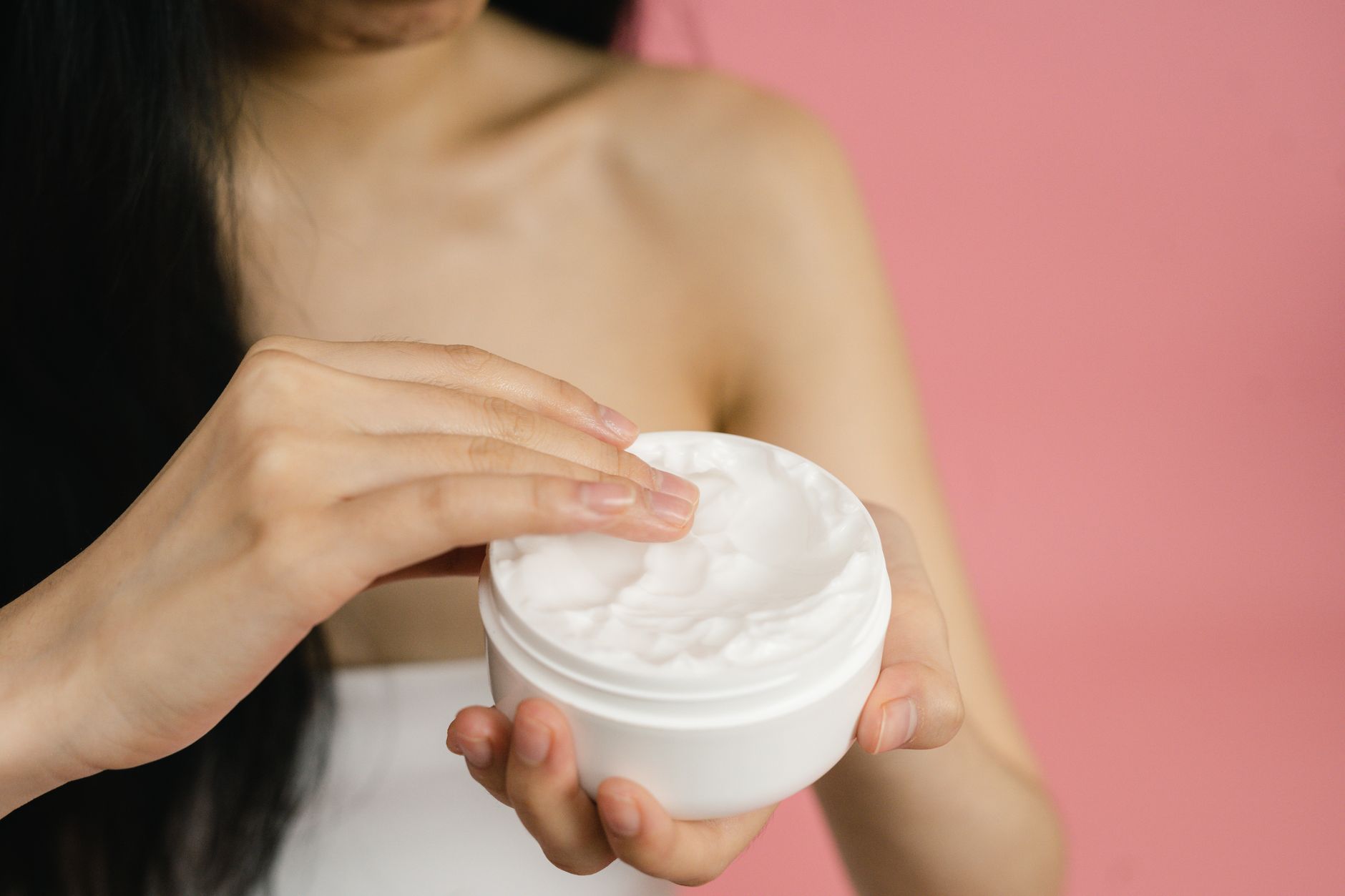
Use a thin, even layer. You don't need a thick coat. A thin film absorbs faster and avoids any surface stickiness that makes the next step harder.
-
Follow within 30–60 seconds with an emollient. Aloe vera helps with hydration but doesn't lock moisture in. A fragrance-free emollient applied immediately after seals the hydration layer and provides the barrier support eczema skin actually needs.
-
Be consistent. Expect 4–6 weeks of daily use before drawing conclusions. Skin barrier recovery runs on its own timeline, not yours.
What to look for — and what to avoid — in an aloe vera product
Look for:
- Aloe barbadensis leaf juice or gel as the first ingredient — not buried behind water and glycerin in position seven
- Short ingredient list — a quality aloe gel doesn't need much else
- No added fragrance or parfum — fragrance is among the most common eczema triggers in skincare products
- No alcohol (ethanol or alcohol denat.) — dries and irritates skin that's already compromised
Avoid:
- Products listing water first and aloe far down the list — you're mostly buying flavored water
- "Natural botanical extract" additions that sound helpful — several are common sensitizers for eczema-prone skin
- Fresh leaf gel unless you're removing the outer skin and yellow latex layer properly — aloin is not filtered out automatically
Read the label. It's shorter than you think. If you can't identify most of the ingredients, that's information worth acting on.
When aloe vera isn't enough — and what else helps
Aloe vera is one part of a broader toolkit. It is not the whole toolkit.
For many people with eczema, the problem isn't only surface inflammation — it's also microbial imbalance on the skin. Staphylococcus aureus overgrowth is consistently associated with eczema flares in the literature. Aloe vera doesn't address that directly.
Other approaches worth pairing with aloe vera:
Oatmeal baths. Colloidal oatmeal is an FDA-recognized skin protectant for eczema. Twenty minutes in a lukewarm oatmeal bath two to three times per week can reduce itch significantly. Not glamorous. Works.
Coconut oil. Small clinical trials show benefit for eczema skin when used as an emollient. Unrefined, virgin coconut oil applied to slightly damp skin is a good heavier layer after aloe. Some people find it too occlusive — worth trying on a small area first.
Brief sun exposure. Short, controlled time in direct sun (15–20 minutes) reduces inflammation for some eczema subtypes. For others, it worsens things. Start short, monitor closely, and don't extrapolate from one good session.
HOCl (hypochlorous acid) sprays. Hypochlorous acid is what your white blood cells naturally produce. Applied as a spray to eczema-prone skin, it helps create a cleaner environment on the skin surface — without the dryness or irritation that alcohol-based cleansers cause. For families managing eczema daily, a pH-balanced HOCl spray is worth considering as part of the cleansing routine alongside moisturizer.
From the Gentle Sen team
We started Gentle Sen in 2024 after our son went through a long run of TSW and severe eczema. We were looking for things that were genuinely safe — no harsh chemicals, nothing that would make already-reactive skin angrier. HOCl was part of how we handled daily skin cleansing during his recovery.
Gentle Sen tablets dissolve in water to make a fresh pH-balanced HOCl solution — about 200 ppm in 20 fl. oz., at roughly $0.50 per bottle. Fragrance-free, non-toxic, gentle enough for sensitive skin. We keep a small spray bottle as part of the daily routine alongside moisturizer.
See how Gentle Sen works →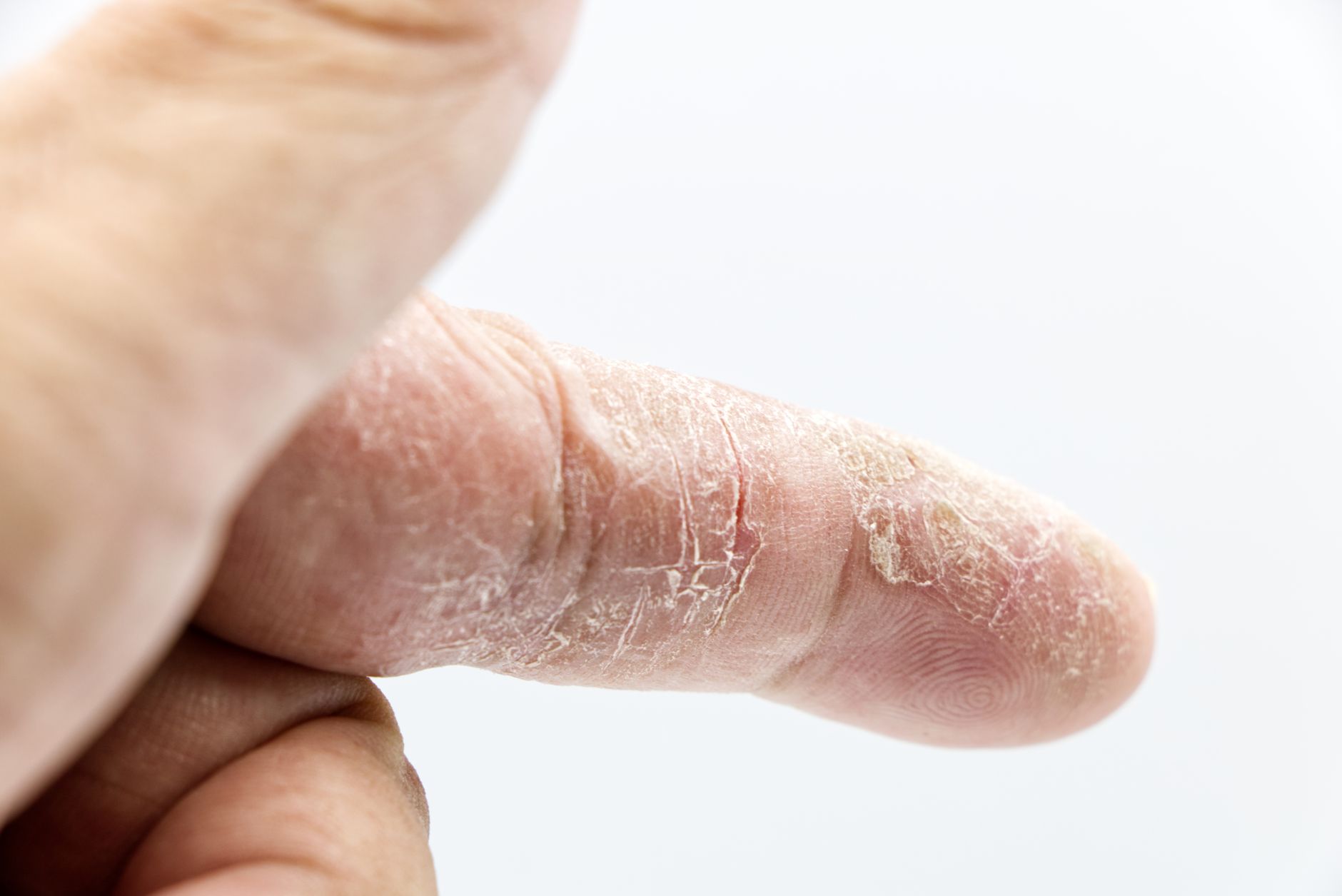
When to skip aloe vera
Hold off if: your eczema patches are actively weeping or show signs of infection (see a dermatologist first — that is not the moment for home remedies), you have a known allergy to the lily plant family (aloe is botanically related), or you've patch-tested twice and your skin reacted badly both times. Not every natural ingredient works for every person. The plant doesn't know your skin personally.
See a doctor if:
Patches are weeping, crusting, or show signs of infection. Eczema is spreading significantly. No meaningful improvement after 4–6 weeks of consistent care. None of the approaches above — aloe vera, HOCl spray, coconut oil — replace proper dermatological evaluation when eczema is moderate to severe.
Straight answers (FAQ)
Do dermatologists recommend aloe vera for eczema?
Some do, as part of a broader supportive routine — but not as a primary treatment. Most frame it as worth including alongside your regular emollient routine rather than a standalone recommendation. If you have moderate to severe eczema and are relying mainly on aloe vera, that conversation with a dermatologist is overdue.
Can aloe vera make eczema worse?
Yes, for a small percentage of people. Aloe vera contains compounds that some skin types react to — particularly aloin if not properly processed, and occasionally the polysaccharides themselves. If your skin burns, gets redder, or feels more irritated after applying aloe vera, stop. Give your skin a few days to settle before trying anything else new.
Can you use aloe vera on eczema in babies?
Ask your pediatrician first. Baby skin is thinner and more permeable — both the beneficial compounds and any irritants absorb more easily. If you do use it, use a minimal amount of pure, additive-free gel on a small area after a patch test. Do not apply to open or broken skin.
How long does aloe vera take to work on eczema?
For acute itch relief, most people notice some cooling effect within 20–30 minutes. For meaningful improvement to skin barrier function and inflammation, expect 4–6 weeks of consistent daily use. Skin doesn't repair itself on your preferred timeline, and two applications tells you nothing useful.
Can I use aloe vera on eczema every day?
Yes. Aloe vera is safe for daily use on eczema-prone skin — provided your skin tolerates it. Apply it as part of your regular post-cleanse routine, and always follow with a proper emollient. Aloe alone won't provide sufficient barrier support for daily eczema management.
Is fresh aloe plant gel better than store-bought for eczema?
Not necessarily. Fresh leaves contain aloin in the yellow latex layer, which is a known irritant. To get clean gel from a fresh leaf, you need to remove the outer skin and yellow layer completely and only use the clear inner gel. Quality processed gels do this consistently and reliably. For most people, a well-formulated store-bought gel is more practical — and considerably less messy.
Can aloe vera help with weeping eczema?
Be careful here. Weeping eczema — active, open, oozing patches — can indicate bacterial involvement. Applying anything topical to open, weeping skin before seeing a doctor carries real risk. Aloe vera is better suited to calm, dry, itchy eczema skin than to acute, open flares. When patches are weeping regularly, see a dermatologist before reaching for any topical.
Does coconut oil work better than aloe vera for eczema?
They do different jobs. Aloe vera is lighter and better at reducing surface inflammation and cooling itch. Coconut oil is a heavier emollient, better at physically locking moisture in and supporting the skin barrier. They work well together: aloe first on damp skin, coconut oil layered on top within 30–60 seconds. Two-step routine, different tools, different functions.
The honest summary
Aloe vera is a genuine and useful tool for eczema-prone skin. It reduces surface inflammation, eases itch, and supports skin recovery. It works better when you apply it correctly, use the right product, and pair it with an emollient and a consistent routine.
It won't fix everything. Nothing over-the-counter will. But for daily management, it's one of the safer, more sensible options — and it has been doing this one job for about 6,000 years, so at minimum it knows the territory.
See how Gentle Sen works →Sources & further reading
- Aloe Vera: A Short Review — Indian Journal of Dermatology (NCBI)
- Complementary and Alternative Treatments — National Eczema Association
- Eczema: How to Manage It at Home — American Academy of Dermatology
This post is for informational purposes only and does not constitute medical advice. Gentle Sen HOCl tablets are a multi-purpose cleaner and are not intended to diagnose, treat, cure, or prevent any disease or skin condition. Consult a qualified healthcare provider for any medical concerns.
0 comments