


Aquaphor can help with eczema. For most people with dry, broken, or flare-prone skin, it's one of the most useful products you can reach for — which is why the National Eczema Association lists petroleum jelly-based ointments as a first-choice moisturizer. Dermatologists have been recommending petrolatum for eczema since long before skincare became a content category.
What it won't do is resolve the underlying condition, calm an infected flare on its own, or work well for every person with every type of eczema. There's an ingredient in Aquaphor that a meaningful number of eczema patients react to — and most guides don't mention it until the very end, if at all.
Here's what Aquaphor actually does, how to use it correctly, when it's the wrong choice, and what the alternatives look like.
The short version
Aquaphor contains 41% petrolatum, which forms an occlusive seal over skin and reduces moisture loss by nearly 99%. It's fragrance-free, preservative-free, and endorsed by the NEA as a first-choice eczema moisturizer. Use it with the soak-and-seal method: lukewarm bath for 5–10 minutes, pat dry, apply within three minutes of stepping out. One important caveat: Aquaphor contains lanolin alcohol, and a notable portion of people with eczema have a lanolin sensitivity. If it doesn't help — or makes things worse — that's the likely reason.
In this guide
What Aquaphor is and why dermatologists recommend it
Aquaphor Healing Ointment is a semi-occlusive moisturizer made by Beiersdorf. It has been on pharmacy shelves since 1925. Its active ingredient is petrolatum at 41%. The rest of the formula — mineral oil, ceresin, lanolin alcohol, panthenol, glycerol, and bisabolol — each does something specific to help compromised skin recover.
The National Eczema Association (NEA) recommends petrolatum-based and mineral oil-based ointments as a first-choice moisturizer for eczema. That endorsement isn't brand-specific, but Aquaphor checks all the relevant boxes: fragrance-free, preservative-free, and studied specifically for atopic dermatitis. A 2022 study found it effective as adjuvant therapy for mild to moderate hand eczema.
The recommendation makes sense when you understand how eczema skin differs from healthy skin. In atopic dermatitis, the skin barrier is structurally compromised — it loses moisture faster, allows irritants and allergens in more easily, and struggles to repair itself. Aquaphor doesn't fix the barrier. It stands in for it while the barrier tries to recover.
Related: Hypochlorous acid vs bleach baths for eczema — which approach makes more sense?
The ingredients that make Aquaphor work (or not)
Petrolatum (41%) is the main event. It forms an occlusive film over the skin's surface that reduces transepidermal water loss (TEWL) by nearly 99%. That matters because one of the core problems with eczema is a compromised skin barrier that loses moisture faster than it can be replaced. Mineral oil contributes an additional 20–30% reduction in water loss.
The supporting ingredients each contribute something:
- Panthenol (vitamin B5) — promotes wound healing, reduces itch, and supports skin recovery after a flare
- Glycerol — a humectant that draws moisture from the environment and deeper skin layers. A 2017 review found glycerol-based emollients consistently outperform non-glycerol alternatives for atopic skin
- Bisabolol — a derivative of chamomile with documented soothing properties for irritated skin
- Lanolin alcohol — helps the ointment spread and stay in place. Also the ingredient most likely to cause trouble for people with eczema, which we'll cover in the next section
Together, these create what clinicians call a protected skin environment — humid, low-friction, shielded from air and irritants — that gives the barrier a chance to repair itself. That's the mechanism. It doesn't treat eczema. It creates the conditions where skin can do its own work.
How to use Aquaphor for eczema — the soak-and-seal method

The soak-and-seal method is the approach recommended by the American Academy of Dermatology for people with eczema. The timing matters more than most people realize.
-
Bathe in lukewarm water for 5–10 minutes.
Not hot. Hot water increases inflammation and strips the skin barrier further. Lukewarm is as close to body temperature as you can manage. A shorter soak is fine for children who won't sit still. -
Pat skin dry with a soft towel. Don't rub.
Rubbing creates friction on skin that's already compromised. Pat gently and leave the skin slightly damp — not dripping, but not bone dry. -
Apply Aquaphor within three minutes of stepping out.
This window matters. Your skin's capacity to absorb and retain moisture is highest when it's still slightly damp. Wait longer and you seal dry air in instead of moisture — which is precisely the opposite of the goal. -
Apply a thin, even layer over affected areas.
You don't need a thick coat. A thin film on slightly damp skin does the job. A pea-sized amount covers roughly the size of a palm. -
For severe flares, consider a wet-wrap layer on top.
Apply Aquaphor, then wrap the area with a clean, damp cloth, then a dry cloth over that. Leave it on for several hours or overnight. This wet-wrap technique is used in clinical settings for severe atopic dermatitis and can meaningfully improve moisture retention. It feels odd the first time. It works.
Most dermatologists recommend applying a moisturizer like Aquaphor twice daily — morning and after the evening bath. Consistency matters more than quantity.
When Aquaphor is not the right choice
This is the section most guides skip. Aquaphor is good — but it is not right for everyone with eczema, and it is worth knowing that before you buy a large tube and commit.
Lanolin sensitivity: A 2017 Dutch study of 1,012 children found that those with eczema were significantly more likely to react to lanolin than children without eczema. Something of a plot twist, given that lanolin alcohol is an ingredient in the product many of them were using to manage the same condition. If you patch-test on the inner arm for 24 hours and see redness or increased irritation, this is the likely culprit. Try pure petroleum jelly (Vaseline) instead — no lanolin, same occlusive effect.
Active, weeping, or infected flares: Aquaphor seals things in. On wet, broken, or infected skin, an occlusive ointment can trap bacteria and worsen the situation. Get an active infected flare assessed before reaching for the jar.
Acne-prone skin: The occlusive properties that help eczema can worsen clogged pores. If your eczema overlaps with acne on the face, ask a dermatologist about non-comedogenic alternatives.
And if it's not helping after two consistent weeks: it's not the right product for you. That's not a failure — it's information.
A note on the step before moisturizing
Aquaphor seals. It doesn't cleanse. What happens on the surface of the skin before you apply your ointment matters — especially for eczema-prone skin that's more sensitive to surface buildup.
Gentle Sen was founded in 2024 after our son went through severe eczema and Topical Steroid Withdrawal. Finding products that were genuinely non-irritating — no fragrance, no harsh residue, pH-balanced — led us to hypochlorous acid. We developed Gentle Sen HOCl tablets to support that step before moisturizing: dissolve one tablet in water, mist onto skin, let it air-dry, then apply your ointment. It helps create a cleaner environment on the skin's surface without stripping what's already there.
Non-toxic, fragrance-free, and pH-balanced for sensitive skin.
What about the alternatives?
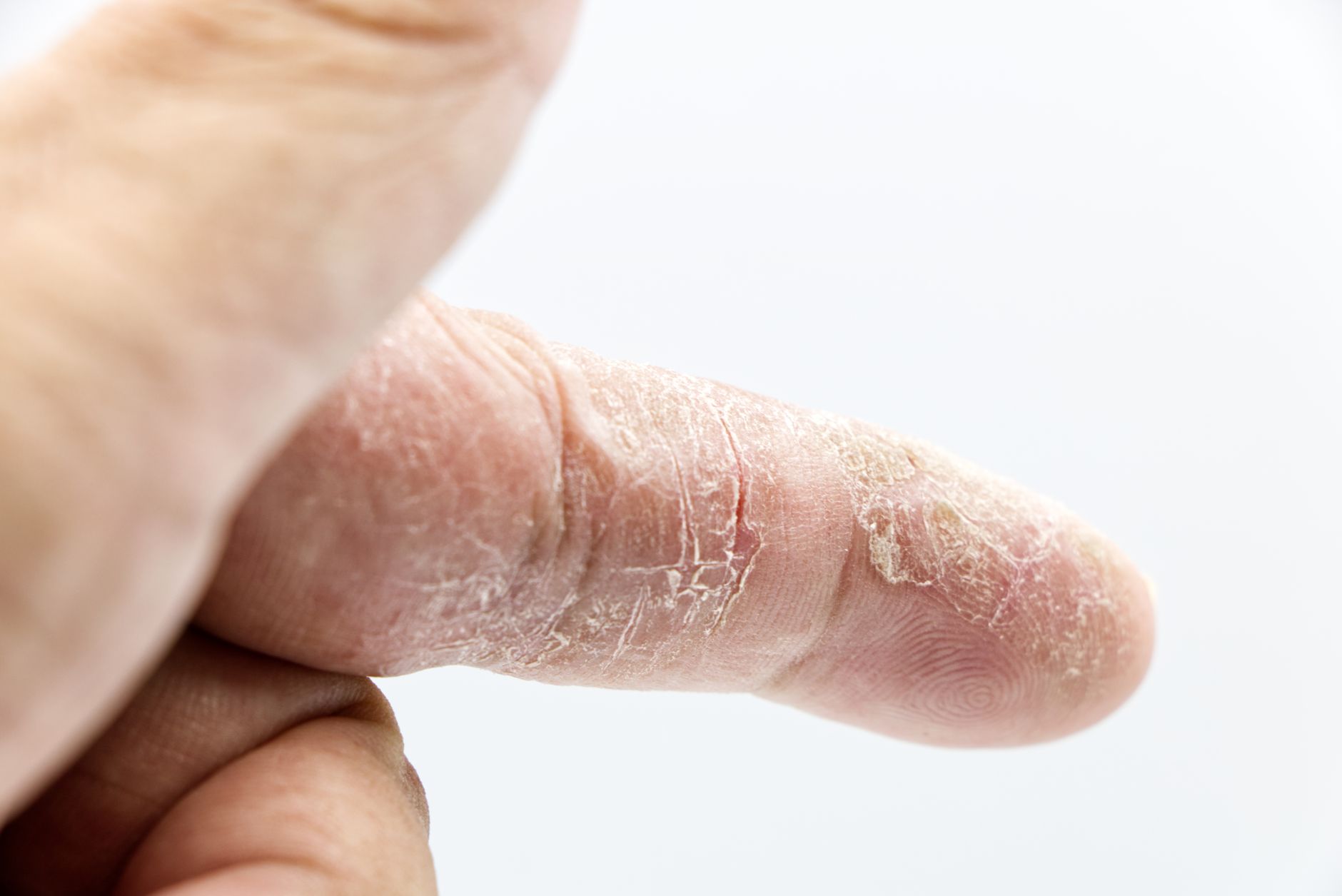
If Aquaphor doesn't work for you — or you want to understand what else is available — here's how the common alternatives compare:
Vaseline (pure petroleum jelly)
The most occlusive readily-available option. No lanolin, no additives, no fragrance. Identical occlusive mechanism to Aquaphor but without the additional ingredients — which means less potential for sensitivity. Greasier and heavier than Aquaphor, but if you're reacting to Aquaphor, this is the first thing to try.
CeraVe Moisturizing Cream
Less occlusive than Aquaphor but contains ceramides — structural lipids that your skin actually uses to rebuild its own barrier. A useful option for daily maintenance moisturizing rather than intensive overnight treatment. Better tolerated on facial eczema for many people.
Castor oil
Thick, occlusive, and fragrance-free. Some people find it helpful for smaller affected areas. Research specifically for eczema is limited, but a 2019 review noted evidence for anti-inflammatory properties in various skin conditions. Not a first-line recommendation — but a reasonable option for people who prefer to avoid petroleum-based products entirely.
Calamine lotion
Effective for acute itch relief but not for moisturizing. Calamine is astringent — it can actually dry the skin further if used as a daily moisturizer. Best reserved for short-term itch flares, not routine barrier care. Using it as a primary moisturizer is a common mistake.
Red light therapy
Some clinical evidence supports red and near-infrared light for reducing eczema inflammation, particularly for cases that don't respond well to standard topical treatments. It's not a moisturizer — it works through a different mechanism entirely — and the evidence, while promising, is still developing. Worth discussing with a dermatologist if you've exhausted the standard options.
Rule of thumb: for eczema barrier care, thicker and greasier consistently outperforms thin and elegant. Lotions are mostly water and evaporate quickly. Creams are better. Ointments — including Aquaphor and Vaseline — are the most effective at reducing transepidermal water loss, which is why they remain first-line recommendations from dermatologists regardless of what trends through skincare content.
Related: Eczema treatment options — what actually works and what the research says
Straight answers (FAQ)
Is Aquaphor good for eczema in children?
Yes, Aquaphor is widely used for eczema in children and is generally considered safe for infant and child skin. Apply using the soak-and-seal method after a lukewarm bath. Watch for any increase in redness after application — the lanolin content can cause reactions in a subset of children with atopic dermatitis. Pure Vaseline is a lower-risk alternative if you want to start without lanolin exposure.
Can I use Aquaphor on my face if I have eczema?
You can, but with caution. Aquaphor is safe for facial eczema, including around the eye area. The main concern on the face is that the occlusive film can contribute to clogged pores on acne-prone skin. If you have eczema on the face without significant acne, it's fine to use. Apply a thin layer — the face needs less than the body. Avoid applying over active, open sores.
How often should I apply Aquaphor for eczema?
Twice daily is the standard recommendation — once in the morning and once after your evening bath or shower. The evening application is the more important one: apply within three minutes of patting dry to lock in moisture from the bath. More frequent application is fine for very dry areas, particularly hands, which lose moisture faster due to washing.
Is Aquaphor the same as Vaseline for eczema?
Not exactly. Both are petrolatum-based and occlusive, but Vaseline is pure petroleum jelly with nothing else added. Aquaphor contains petrolatum at 41% alongside lanolin alcohol, panthenol, glycerol, and bisabolol — ingredients that add healing and humectant properties but also increase the potential for sensitivity reactions. For most people, both work well. For those with lanolin sensitivity, Vaseline is the safer choice.
Can Aquaphor make eczema worse?
It can for some people, yes. The most common reason is a lanolin sensitivity — a meaningful percentage of people with atopic dermatitis have a contact allergy to lanolin alcohol, which is in Aquaphor's formula. Less commonly, applying Aquaphor over infected or weeping skin can trap bacteria and worsen the flare. If your eczema gets worse after using Aquaphor, stop and switch to plain petroleum jelly. If it continues to worsen, see a dermatologist.
Does calamine lotion help eczema?
Calamine helps with acute itch but is not a moisturizer for eczema. It's astringent, meaning it has a mild drying effect — useful for short-term itch relief but counterproductive as a regular moisturizer for eczema skin that already loses too much moisture. Use it for flare-driven itch, not as a daily barrier product.
What do dermatologists actually recommend for eczema moisturizing?
Ointments first, then creams, then lotions — in that order of effectiveness for barrier repair. The National Eczema Association recommends petrolatum (petroleum jelly) as a first-choice moisturizer specifically because it reduces transepidermal water loss by nearly 99%. Apply using the soak-and-seal method twice daily. For mild to moderate eczema, consistent moisturizing is often more important than which product you use — the key is applying it immediately after bathing and doing so regularly.
The bottom line
Aquaphor is a solid, well-studied, dermatologist-endorsed option for most people with eczema. It won't resolve the underlying condition — nothing applied to the skin's surface will — but as a barrier-sealing moisturizer, it does its job reliably. Use the soak-and-seal method, watch for lanolin sensitivity, give it two consistent weeks before drawing conclusions.
If Aquaphor isn't the right fit, Vaseline is the logical next step. If you want to address what's on the surface before you moisturize, a gentle HOCl mist from Gentle Sen tablets is worth looking at as a complementary step — pH-balanced, non-toxic, and developed with sensitive eczema skin specifically in mind.
Sources
- National Eczema Association — Moisturizing and Eczema Treatment Guidelines
- American Academy of Dermatology — Eczema (Atopic Dermatitis): Skin Care Tips
- PubMed — Referenced studies: glycerol emollients (2017), lanolin sensitivity in eczema children (2017), Aquaphor for hand eczema (2022)
Disclaimer: This article is for informational purposes only and does not constitute medical advice. Gentle Sen products are general-purpose multi-use cleaners, not treatments for any medical condition. Always consult a qualified healthcare professional for diagnosis and treatment of eczema or any skin condition.
0 comments