


Eyelid eczema responds to most of the same principles as eczema anywhere else — fragrance-free emollients, barrier support, trigger avoidance. The catch is the location. Eyelid skin is the thinnest on the face, absorbs topical products faster than anywhere else on your body, and sits a few millimeters from your eye. Approaches that work fine on your arms or legs require a much more careful hand here.
Most eyelid eczema falls into one of two categories: atopic (part of your broader eczema) or contact/allergic (triggered by something touching that area — eye makeup, preservatives in eye drops, or even shampoo running down your forehead). Getting the treatment right usually depends on knowing which you're dealing with.
Here's what actually helps, what commonly makes it worse, and when the eyelids specifically call for a dermatologist rather than a DIY approach.
The short version
Eyelid eczema is most commonly atopic (linked to your immune system and general eczema) or contact/allergic (a reaction to something touching that area). Treat with a fragrance-free emollient applied twice daily to clean skin. If a topical steroid is prescribed, use the lowest potency for the shortest course — the eye area absorbs medication faster and carries unique risks with prolonged steroid use. Identifying your trigger, especially in makeup, preservatives, and even your shampoo, is often the most effective long-term step. And for what it's worth: "just don't touch it" is technically correct advice and also completely useless — your eyelids blink around 14,000 times a day. Good luck with that.
In this guide
- What eyelid eczema looks and feels like
- Why eyelid skin makes this harder to treat
- The two main types: atopic and contact dermatitis
- Common triggers for eyelid eczema flares
- How to treat eczema on eyelids — what actually works
- What to stop using near your eyelids right now
- When to see a doctor about eyelid eczema
- Straight answers (FAQ)
What eyelid eczema looks and feels like
The classic signs: red, dry, or thickened skin on the upper lid, lower lid, or both. Itching is almost always present — and usually what pushes people to do something about it. Some people get swelling. Some get weeping or crusting during flares. In cases that go unmanaged long-term, the skin can become lichenified (thickened and leathery from repeated scratching).
The pattern can be a clue. Eyelid eczema that affects only one eye often points toward a contact trigger — something being applied more to that side, or something you're touching with one hand more than the other. Bilateral, symmetric flares that tend to come and go with your skin generally are more consistent with atopic dermatitis.
Conditions it can be confused with: eyelid psoriasis (less common, produces more defined silvery scaling), rosacea (typically affects the cheeks and nose too), seborrheic dermatitis (usually involves the eyebrows and scalp as well), and fungal infections. If you're not certain what you're looking at, a dermatologist can tell you in about ninety seconds — and it matters, because the treatments differ.
Why eyelid skin makes this harder to treat
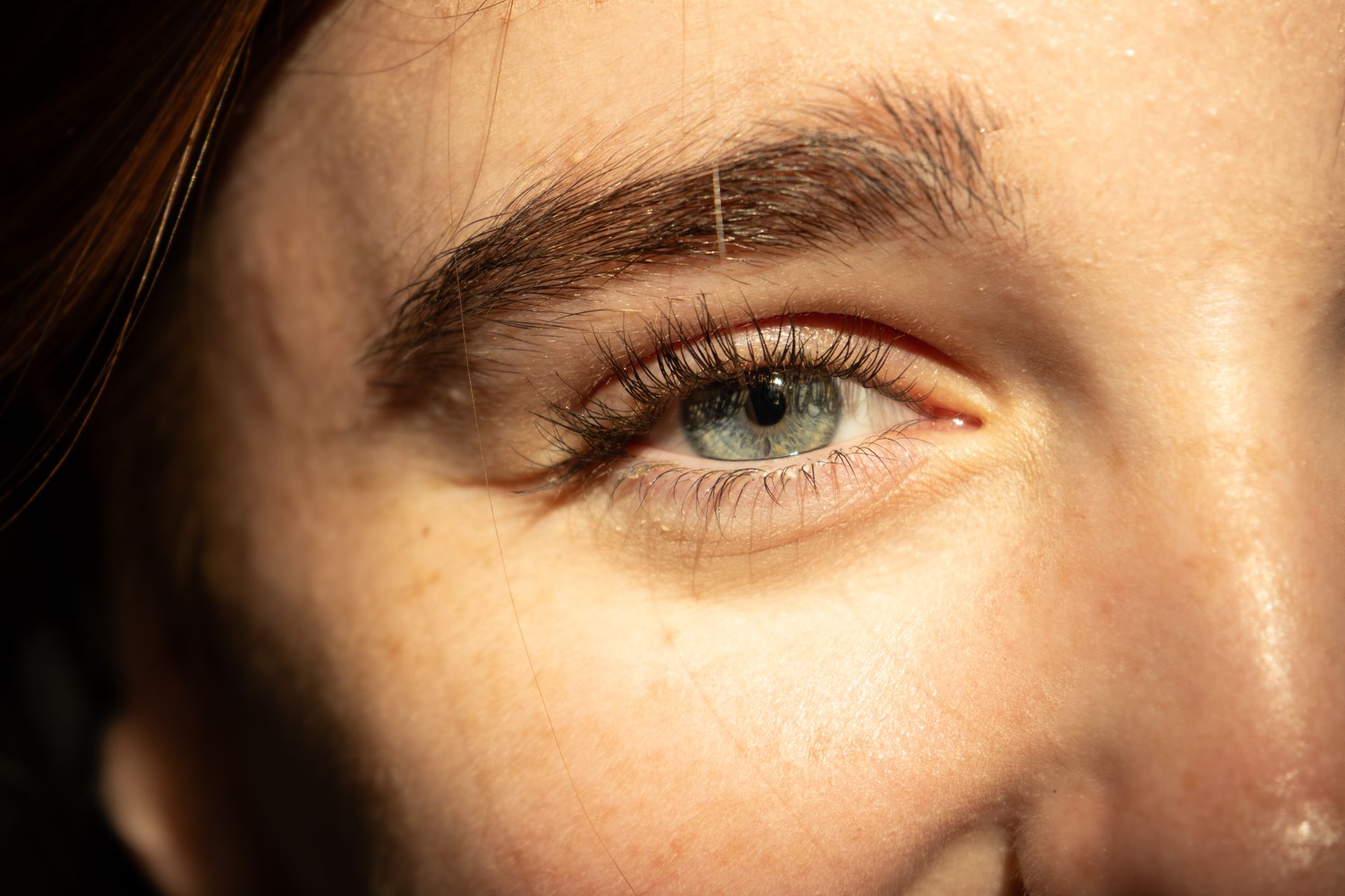
Eyelid skin is roughly 0.5 mm thick — about a quarter of the thickness of skin on your palm. That has real consequences:
- Higher absorption rate. Topical products penetrate eyelid skin significantly faster than thicker-skinned areas. Emollients work better — but so do irritants and allergens. The same thinness that makes treatment more effective also makes reactions more likely.
- Steroid risks specific to the eye area. Most of the body can tolerate short courses of topical corticosteroids without major concern. The eye area is different. Prolonged use of topical steroids near the eyes has been associated with elevated intraocular pressure and — in some cases — cataracts. This is why dermatologists often prefer tacrolimus ointment (a calcineurin inhibitor) for recurring eyelid eczema: same result, different mechanism, without those specific risks.
- Proximity to the eye itself. Anything applied to the eyelid can migrate. Ocular complications — irritation, conjunctivitis — are a real concern with products that weren't designed with that proximity in mind. This is not the place to experiment with new formulas.
This is also why "use what works elsewhere on your body" is genuinely poor advice for the eyelids. The stakes around the eye are meaningfully different from the rest of your skin.
Related: Eczema treatment — what actually helps, what doesn't, and when to see a dermatologist
The two main types: atopic and contact dermatitis
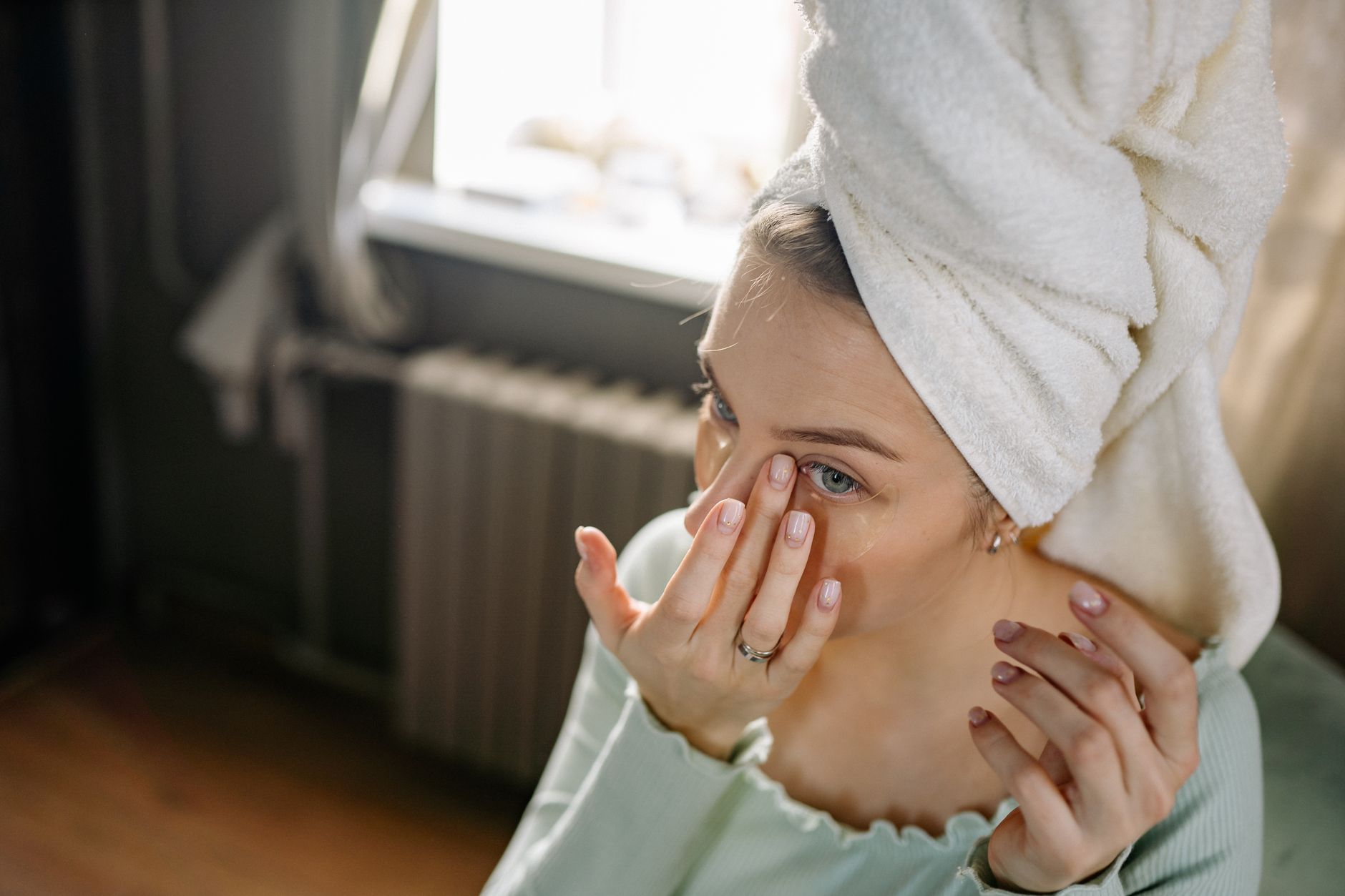
Atopic dermatitis on the eyelids
This is eyelid eczema as an expression of your broader atopic dermatitis. It tends to affect both eyes, flares alongside your skin generally, and has the same immune-system involvement as eczema elsewhere. Research estimates that between 15% and 30% of people with atopic dermatitis develop eyelid or periocular involvement at some point — so it's common, not rare.
Treatment approach: consistent barrier support with emollients, management of your overall eczema triggers (stress, dryness, allergen exposure), and low-potency topical steroid or tacrolimus for acute flares — directed by a dermatologist, not self-prescribed.
Contact / allergic dermatitis on the eyelids
This type is a reaction to something coming into contact with the eyelid skin. The tricky part: the allergen doesn't have to be something you're applying near your eyes. The eyelid is one of the most reactive areas on the face, and it gets exposed to everything from your hands (every time you touch your eyes) to shampoo rinsing down your forehead.
Contact dermatitis often shows up more suddenly than atopic eczema, can affect just one eye, and may appear days after the initial exposure rather than immediately. A patch test from a dermatologist can identify the specific allergen — which is important, because emollients manage the symptoms but don't address the cause.
Treatment approach: identify and remove the allergen. Everything else is barrier support while you track down the culprit.
Common triggers for eyelid eczema flares
This section determines whether your treatment plan actually works long-term. Emollients manage the barrier. Trigger avoidance prevents the next flare.
Eye makeup
Mascara, eyeliner, eyeshadow, and especially eyelash glue. The eyelid skin is thin and reactive — formulas that are completely fine for most people can cause contact dermatitis in eczema-prone skin. Fragrance and preservatives are the most frequent culprits within makeup. During a flare, all eye makeup should come off the table temporarily, not just the products you suspect.
Makeup remover and face wipes
Most makeup removers contain solvents, preservatives, and often fragrance — ingredients that are effective at dissolving makeup and equally effective at stripping the skin barrier. They make direct contact with eyelid skin. If you're using a liquid remover on a cotton pad, you're applying a preserved, solvent-based product to the thinnest skin on your face every night.
Nail polish (yes, really)
Dermatologists flag this one regularly. Most people touch their eyes many times a day without noticing. Nail polish allergens — particularly tosylamide/formaldehyde resin — transfer from fingernails to eyelid skin on contact, and can cause eyelid dermatitis with no eye makeup involvement at all. If your eyelid eczema appeared without any obvious cosmetic change, this is worth considering.
Eye drops with preservatives
Benzalkonium chloride (BAK) is a common preservative in artificial tears and some medicated eye drops. For people who use eye drops frequently, that preservative alone can be enough to trigger or maintain eyelid eczema. Preservative-free formulations exist for most drop types — worth asking about if this applies to you.
Shampoo and conditioner
Most people don't think of this as something that touches their eyelids — but if you're washing your hair in the shower, it's running down your face. Rinse-off products are still in contact with eyelid skin for the duration of your shower. Fragrance and preservatives in shampoo are well-documented contact allergens. If you've changed shampoo recently and your eyelid eczema appeared or worsened around the same time, that's a data point.
Environmental allergens
Dust mites, pollen, pet dander, and mold are established atopic triggers. In the eyelid context, the problem compounds: environmental allergens cause itchy eyes, itching the eyes transfers hand allergens to eyelid skin, and mechanical rubbing on already-thin skin further damages the barrier. It becomes a cycle quickly.
How to treat eczema on eyelids — what actually works
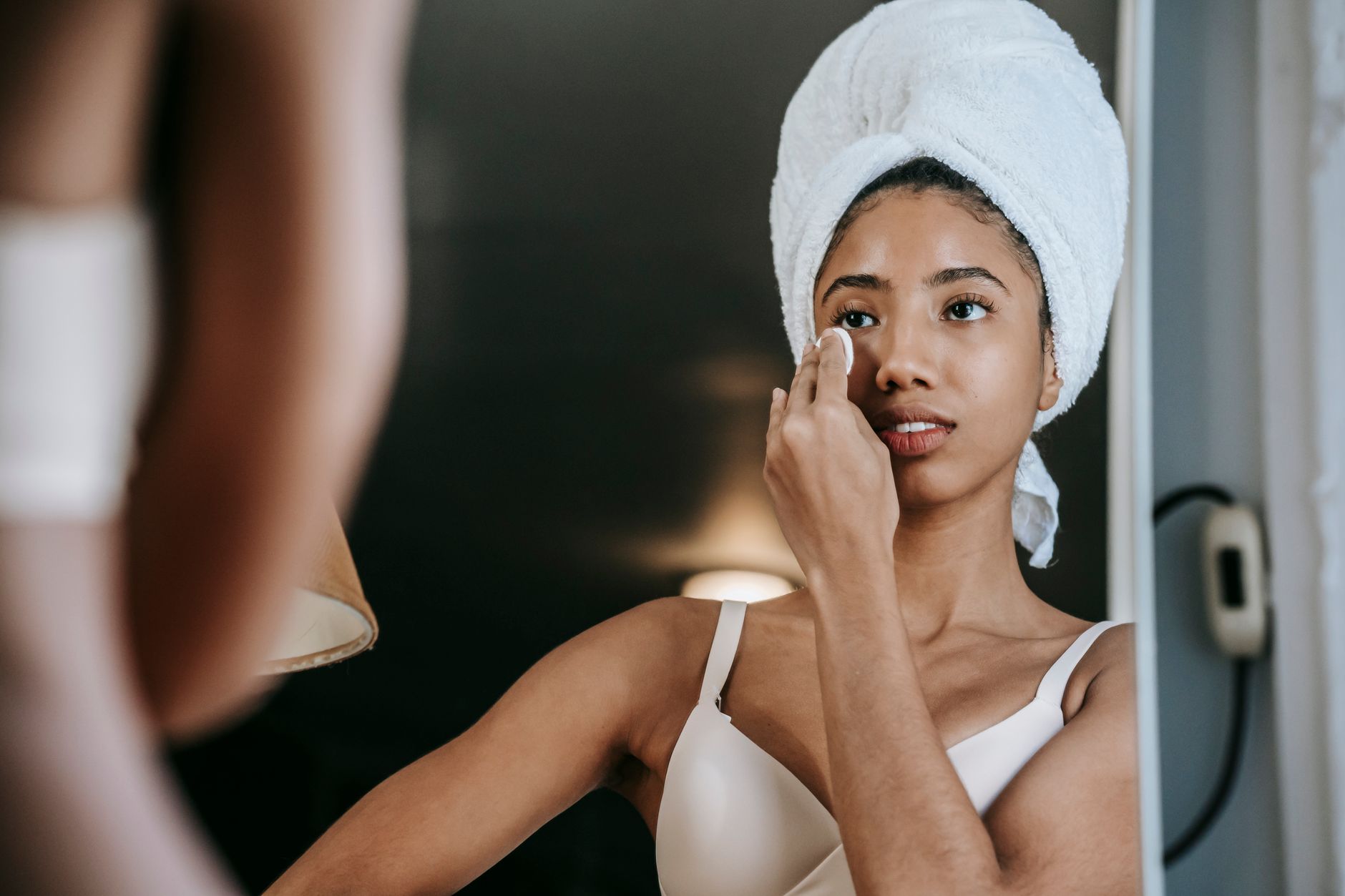
Most eyelid eczema can be managed well with the following approach, applied consistently. The key word is consistently — sporadic treatment doesn't give the barrier time to recover.
-
Cleanse gently — warm water or a preservative-free, fragrance-free cleanser only.
Avoid anything with fragrance, alcohol, or preservatives near the eye area. Micellar water is a reasonable choice for people who wear light eye makeup — look for preservative-free formulations. Warm water alone is fine for no-makeup days. The goal is removing surface debris without stripping what's left of the barrier. -
Apply a fragrance-free emollient twice daily on clean skin.
Pure petroleum jelly (plain, unscented) is one of the safest and most effective options for the eyelid area. It's non-comedogenic in thin layers, fragrance-free, preservative-free, and has been recommended by the National Eczema Association as a first-choice emollient for decades. Apply a thin layer with a clean fingertip, morning and evening. Thicker ointments outperform creams and lotions for barrier repair. -
If a topical steroid is prescribed, use it exactly as directed — no longer.
Low-potency steroids can be appropriate for short-course use on the eyelids, but this is not a place to self-prescribe or continue beyond the recommended duration. The risks of prolonged steroid use near the eyes — elevated intraocular pressure, potential cataract formation — are well-documented. If your eyelid eczema keeps returning, ask your dermatologist about tacrolimus ointment as an alternative for maintenance. -
Patch test any new product before it goes near the eye area.
Apply a small amount to the inner arm, leave for 24–48 hours, and watch for redness or itching before using it on the face. This includes products marketed as "gentle" or "hypoallergenic" — those terms are not regulated and mean different things to different brands. -
Switch your laundry detergent to a fragrance-free formula.
Pillowcases are in contact with your eyelid skin for six to eight hours every night. Detergent fragrance residue left in the fabric after washing is a well-documented trigger for periocular and facial eczema. It's a small change that some people find makes a significant difference.
On non-steroid alternatives: Tacrolimus ointment (brand name Protopic) is a calcineurin inhibitor that controls inflammation without the steroid-specific risks near the eyes. It's prescription-only in the US and can cause a temporary burning sensation when first applied — but for people with recurring eyelid eczema, it's often the treatment dermatologists reach for over a long-term steroid course.
On what you're using to cleanse
The step before your emollient matters as much as the emollient itself — particularly near the eye area, where the skin absorbs whatever touches it faster than anywhere else on your face.
Gentle Sen was started in 2024 after our son went through severe eczema and Topical Steroid Withdrawal. Part of what we learned: the products we used to clean his skin made as much difference as the products we used to moisturize it. Harsh cleansers, even "gentle" ones with preservatives and fragrance, kept flares cycling. We built Gentle Sen HOCl tablets as a cleansing option that's pH-balanced to match skin's natural level, fragrance-free, non-toxic, and gentle enough for eczema-prone skin — including the sensitive area around the eyes. Dissolve a tablet in water, mist onto skin, let it air-dry, then apply your emollient.
Non-toxic, fragrance-free, and pH-balanced for sensitive skin.
What to stop using near your eyelids right now
If you have active eyelid eczema, the following are worth removing from your routine until your skin has had time to recover — and then reintroducing one at a time, slowly, to identify the culprit.
All eye makeup. Not just the mascara you bought recently. All of it. Contact dermatitis reactions can take days or weeks to appear, and the allergen may not be from the newest product in your routine.
Face wipes and makeup remover wipes. Most contain preservatives (phenoxyethanol, methylisothiazolinone) and sometimes fragrance — exactly the combination most likely to aggravate eczema-prone eyelid skin.
Anything with fragrance, even "natural" fragrances. Linalool, limonene, geraniol — these are naturally-occurring fragrance compounds that are also among the most common contact allergens. "Natural" on a label doesn't mean non-reactive for sensitive skin.
Your current eye drops, if they contain BAK (benzalkonium chloride). Check the ingredients. Preservative-free alternatives exist and are widely available. If you use drops daily for dry eyes, this swap alone can make a significant difference for eyelid eczema that won't resolve with other treatment.
Anything your shampoo touches during rinsing. Switching to a fragrance-free, low-preservative shampoo (or tilting your head back during rinse) is a step many people overlook entirely because they don't think of hair products as face products. They are, for the thirty seconds of every shower that they run down your forehead.
When to see a doctor about eyelid eczema
Most mild eyelid eczema responds to consistent emollient use and trigger removal within two to four weeks. A doctor is worth contacting when:
- Swelling extends significantly beyond the eyelid itself
- Your eye is red, painful, or your vision is affected in any way — these are not eczema symptoms and need prompt evaluation
- There are signs of infection: yellow or green discharge, warmth, increasing pain
- The flare isn't responding to basic emollient care after two weeks of consistent use
- You're considering using any topical steroid near your eyes — this is one of the few areas where self-prescription is genuinely not a good idea, given the specific risks involved
- You've had recurring eyelid eczema for more than a few months without identifying a clear trigger — a patch test through a dermatologist can identify contact allergens you'd never guess on your own
We'd add one more: if you've been managing eyelid eczema with a topical steroid for more than a few weeks and no one has discussed tacrolimus with you as an alternative, it's worth raising the question.
Straight answers (FAQ)
What is eyelid eczema?
Eyelid eczema (also called eyelid dermatitis or periocular eczema) is eczema affecting the thin skin of the upper or lower eyelids. It may be atopic — meaning it's part of your broader eczema — or contact/allergic, meaning it's triggered by something touching that area. Symptoms include redness, dryness, itching, swelling, and sometimes weeping or crusting during flares. Because eyelid skin is the thinnest on the face, it's both more reactive to allergens and more sensitive to treatments.
What causes eczema to appear on the eyelids?
The two main causes are atopic dermatitis (an immune-system condition that causes eczema across multiple body areas) and contact/allergic dermatitis (a reaction to something touching the eyelid skin). Common contact triggers include eye makeup, makeup remover, nail polish allergens transferred by touching the eyes, preservatives in eye drops (particularly benzalkonium chloride), shampoo and conditioner rinsing over the face, and fragrance in skincare products.
Can I use regular hydrocortisone cream on my eyelids?
Not without guidance from a doctor. Over-the-counter hydrocortisone may be appropriate for short-term use on the eyelids in some situations, but the eye area absorbs topical steroids faster than most of the body, and prolonged use near the eyes has been associated with elevated intraocular pressure and cataract formation. If your eyelid eczema keeps coming back, ask a dermatologist about tacrolimus ointment — it controls inflammation through a different mechanism without those specific risks.
How long does eyelid eczema last?
For atopic eyelid eczema, duration depends on how well your overall eczema is managed — flares can come and go over years. For contact dermatitis, once the allergen is identified and removed, the skin typically begins to improve within one to two weeks, with full resolution in three to four weeks. If you're treating the symptoms but haven't identified the trigger, eyelid eczema will tend to recur. The trigger is the variable that determines long-term outcome.
Is eyelid eczema contagious?
No. Eczema is not contagious in any form. It cannot be transmitted through contact, sharing towels, or any other route. Eyelid eczema is an inflammatory skin condition driven by genetics, immune function, and environmental triggers — not by anything infectious. The redness and cracked skin can sometimes look like an infection, but it's a different mechanism entirely.
What makeup is safe to use during an eyelid eczema flare?
Ideally, none — at least until the flare resolves. Even "hypoallergenic" or "sensitive skin" labeling isn't regulated and doesn't guarantee safety for eczema-prone eyelids. Once the skin has recovered, reintroduce products one at a time, with a patch test on the inner arm first. Mineral makeup formulations without fragrance or parabens are generally lower-risk, but any new product near the eye area should go through a patch test before regular use.
How do I know if it's eczema or contact dermatitis on my eyelid?
The short answer is: a dermatologist with a patch test can tell you. Clinically, atopic dermatitis tends to affect both eyelids symmetrically, comes and goes with your eczema more broadly, and responds to the same treatments as your eczema elsewhere. Contact dermatitis often appears on one side, may show up days after the initial exposure, and frequently doesn't respond to standard eczema treatment until the allergen is removed. If it's recurring without a clear pattern, a patch test is the most efficient way to get an answer.
Can eyelid eczema cause eye problems?
Eczema itself on the eyelid skin doesn't directly cause eye problems, but there are a few ways it connects to ocular health. Scratching or rubbing the eyelids can introduce bacteria and cause conjunctivitis. Prolonged inflammation on the eyelids has been associated with an increased risk of keratoconus (a condition affecting the cornea's shape) in people with severe atopic dermatitis — though this connection is not fully established. And as noted above, prolonged use of topical steroids near the eyes to treat eczema has documented ocular risks. If you notice any changes in vision, redness in the eye itself, or eye pain, see a doctor promptly — those are not eczema symptoms.
The bottom line
Eyelid eczema is manageable, but the location requires more care than eczema elsewhere. Fragrance-free emollients applied consistently, trigger identification (especially in makeup and preservatives), and appropriate topical treatment directed by a dermatologist are the foundations. The steroid warnings are real — if you're using topical steroids near your eyes regularly without a doctor's input, that's worth addressing sooner rather than later.
For the cleansing step specifically — which matters more near the eye area than people realize — a pH-balanced, fragrance-free option like Gentle Sen HOCl tablets is worth considering as an alternative to preserved or fragrance-containing products. Non-toxic, formulated with sensitive skin in mind, and gentle enough for the face.
Sources
- National Eczema Association — Ask the Ecz-perts: How Do You Treat Eyelid Eczema?
- Cleveland Clinic — Eyelid Dermatitis: Symptoms, Causes and Treatment
- PubMed Central — Management of Ocular Manifestations of Atopic Dermatitis (2022)
Disclaimer: This article is for informational purposes only and does not constitute medical advice. Gentle Sen products are general-purpose multi-use cleaners, not treatments for any medical condition. Always consult a qualified healthcare professional for diagnosis and treatment of eczema or any skin condition.
0 comments