


How to clean a garbage disposal, the fastest way: drop a handful of ice cubes and a tablespoon of rock salt down the drain, run cold water, and flip the disposal on for thirty seconds. That scours the blades and chamber walls of the gunk a plain water rinse can't touch. It does nothing for a smell that's been building for weeks, though, and that's most of what this guide is actually for.
We get why this one gets ignored. It's a spinning metal chamber under the sink that nobody can actually see into, so it tends to stay out of mind right up until it smells like something died down there — which, in a fairly literal sense, it did. Below: the ice-and-salt scrub, the baking-soda-and-vinegar classic, our own ten-minute tablet soak, the rubber flap everyone forgets exists, and how to tell a smelly disposal from one that actually needs a plumber.

The short version
Ice and rock salt scour the blades in thirty seconds; citrus peels run right behind them for a fresh smell. For the odor that keeps coming back, our own method is to dissolve a Gentle Sen HOCl tablet in water, pour it down slowly, and let it sit ten minutes before flushing — that dwell time reaches up under the rubber splash guard where ice never does. No tablets on hand, baking soda and vinegar still works, just with more waiting. Clean the underside of the splash guard by hand every couple of weeks, run cold water (never hot) while grinding food waste, and if the motor hums but the blades don't spin, that's a jam or a tripped breaker — not a job for more cleaning product.
In this article
- How often you actually need to do this
- Ice, rock salt, and citrus for the blades
- Our recommended deep clean: Gentle Sen HOCl tablets
- No tablets on hand? Baking soda and vinegar
- Why your disposal smells bad in the first place
- Don't skip the splash guard (or the foods it's begging you to avoid)
- When it's not a cleaning problem
- Frequently asked questions
How Often You Actually Need to Do This
Run cold water for a few seconds before and after every use — that's not really "cleaning," it's just how a disposal is supposed to be operated, and skipping it is the number one reason food residue builds up faster than it should.
Beyond that, a real clean once a week is enough for a disposal that runs daily, dropping to once every two to three weeks for a lighter household. The splash guard gets its own separate wipe-down on roughly the same schedule, since it doesn't benefit at all from whatever gets rinsed down the drain above it.
Ice, Rock Salt, and Citrus for the Blades
This is the one people already half-know, and it's genuinely the fastest option here.
-
1
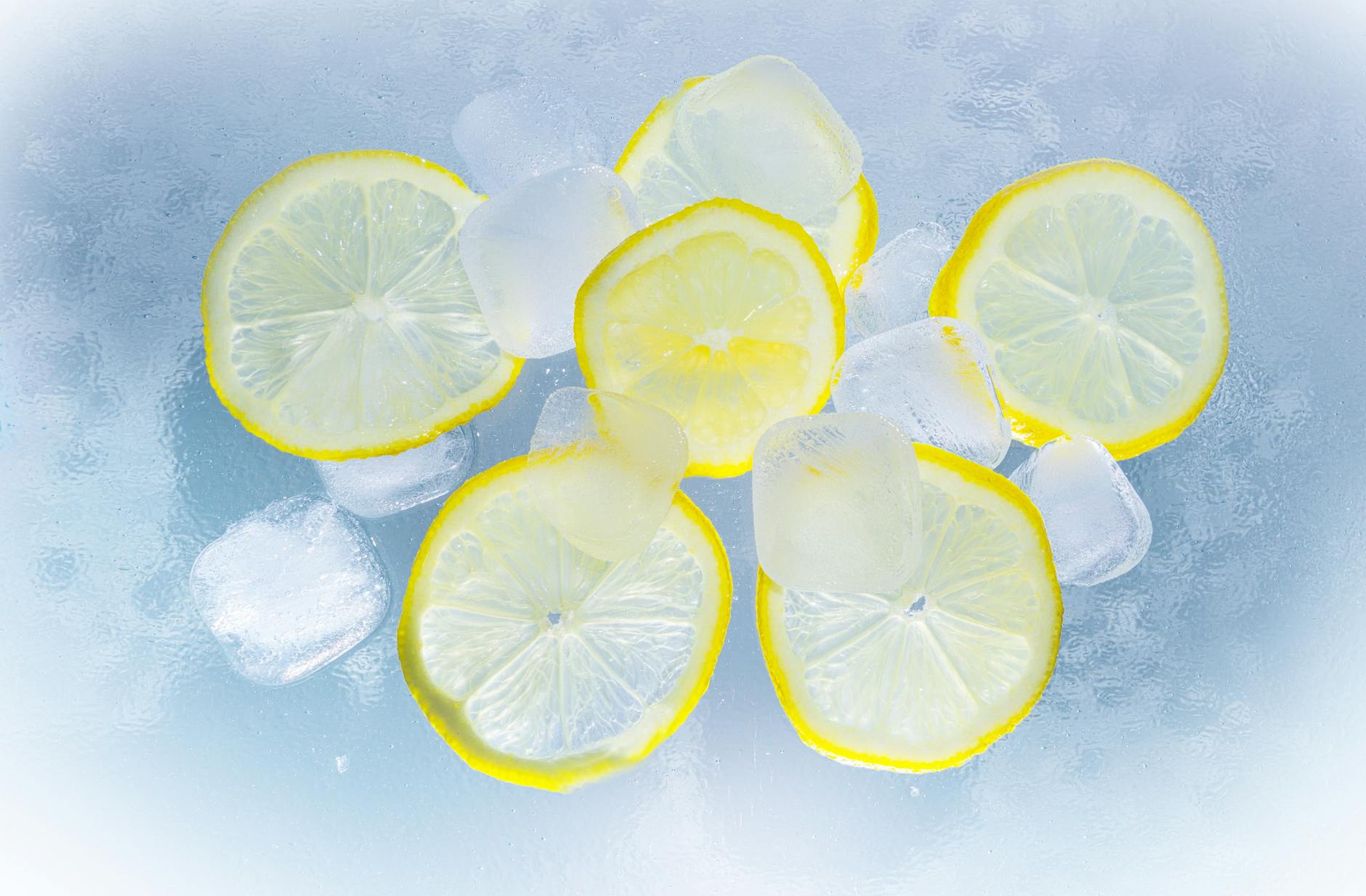
Drop about two cups of ice cubes and a tablespoon of rock salt or coarse kosher salt into the disposal. Plain table salt works in a pinch, but the coarser grain scrubs harder.
-
2
Turn on cold water and run the disposal for thirty to sixty seconds, until the grinding sound goes quiet. The ice knocks loose residue clinging to the blades; the salt adds abrasion.
-
3
Follow with a few citrus peels — lemon, lime, or orange — run through with the water still going. It won't clean anything new, but it leaves the chamber smelling like citrus instead of neutral, which is the closest a garbage disposal ever gets to smelling intentional.
Keep the water cold through this whole process, not hot. Cold water solidifies any grease clinging to the walls so the blades can actually grind it into pieces small enough to flush; hot water melts it back into a liquid that just coats the pipes further down and waits to become someone else's problem.
Our Recommended Deep Clean: Gentle Sen HOCl Tablets
Ice and citrus clean what the blades can reach. They don't do much for the recesses further up the chamber, or the underside of the splash guard, which is usually where a lingering smell is actually coming from.
-
1
Dissolve one Gentle Sen tablet in 20 fl. oz. of lukewarm water, our standard ratio, about 200 ppm.
-
2
With the disposal and water both off, pour about half the solution slowly down the drain, letting it coat the chamber walls on the way down instead of flushing straight through.
-
3
Let it sit for ten minutes. That dwell time is what reaches into the seams and up under the splash guard that a thirty-second ice scrub never touches.
-
4
Pour the rest of the solution down, run cold water, and flip the disposal on for fifteen seconds to flush everything through.
Why we default to this:
It goes after the smell at its source instead of layering citrus on top of it, and there's no scrubbing involved — the ten minutes does the work. Gentle Sen tablets are fragrance-free and non-toxic, and the dissolved solution works out to roughly $0.50 per 20 fl. oz., without the shipping weight of a pre-mixed bottle taking up space under the sink.
We use the same tablets on the rest of the kitchen — see our full list of ways to use Gentle Sen tablets for ratios on everything from dishwashers to countertops.
No Tablets on Hand? Baking Soda and Vinegar
The pantry method still works. It just needs more patience than a ten-minute soak.
-
1
Sprinkle half a cup of baking soda into the disposal, followed by a cup of white vinegar.
-
2
Let the mixture fizz and sit for ten to fifteen minutes. This is the reaction doing the loosening, so resist the urge to rinse it early.
-
3
Flush with hot water for a minute or two to carry the loosened residue the rest of the way down.
Never combine bleach with vinegar or baking soda, down the disposal or anywhere else. Mixing bleach with an acidic or oxidizing cleaner can release chlorine gas, and a cramped space directly under your sink is about the worst place to find that out.
Why Your Disposal Smells Bad in the First Place
A disposal that smells even after a rinse usually isn't dirty in the way a countertop is dirty. Food particles that never fully wash through settle into the seams of the grinding chamber and the underside of the rubber splash guard, where they sit damp and mostly undisturbed. Bacteria feeding on that residue produce sulfur compounds as a byproduct — the same chemistry behind a lot of "rotten egg" kitchen smells — and a quick blast of water down the middle of the chamber doesn't reach the spots where that's actually happening.
That's the gap ice and citrus can't close on their own. They clean the surfaces the blades physically touch, which is most of the chamber, but not the folds of the splash guard or the lip where the chamber meets the sink flange.

Don't Skip the Splash Guard (Or the Foods It's Begging You to Avoid)
The black rubber flaps sitting at the top of the disposal, right where the sink drain meets the chamber, are the single most skipped spot in this entire process. Food splashes up onto the underside of them constantly and almost nobody ever looks under there.
Wearing a glove, lift each flap and scrub the underside with an old toothbrush loaded with dish soap and a little baking soda. It takes about two minutes and it's often the single biggest smell improvement in this whole guide — bigger than anything you pour down the drain.
A few foods make the splash guard's job — and yours — harder than it needs to be: fibrous vegetables like celery and corn husks that wrap around the blades instead of grinding, coffee grounds and eggshells that pack into sludge rather than breaking down, grease and fat that solidify in the pipes below, and pasta or rice, which keep absorbing water and expanding well after they've left the plate. None of these will destroy a disposal outright, but all of them turn a five-minute weekly clean into a fifteen-minute monthly excavation.
We've got a longer guide to cleaning a dishwasher if that's next on the list — the door seal follows the exact same "small spot, big smell" pattern as the splash guard does here.
When It's Not a Cleaning Problem
Every method above assumes the disposal is running fine and just needs a wash. Sometimes it isn't fine, and no amount of ice, vinegar, or tablets will fix what's actually wrong.
The motor hums but the blades don't spin. That's almost always a jam, not a smell problem. Turn off the power at the switch or breaker first — never reach in with the disposal plugged in — then use the hex key that usually comes with the unit (or fits the reset hole underneath) to manually turn the blades free before trying it again.
Nothing happens at all, not even a hum. Check the red reset button on the underside of the unit before assuming the worst — it trips like a breaker and often just needs a press. If that doesn't fix it, check the breaker itself. Most disposal "emergencies" end at one of those two buttons, which is a little anticlimactic but very good for your Saturday.
Standing water backs up into the sink. That's usually a clog somewhere past the disposal, in the trap or the drain line, not inside the unit itself. More cleaning solution poured into standing water just sits there — this is a job for a plumber, not another round of baking soda.
A burning smell, ever. Unplug it and call a professional. That's a motor issue, and it's the one scenario on this list where we'd genuinely tell you to stop trying to fix it yourself.
A Clean Disposal Is a Boring Disposal
Ice and salt handle the blades. A tablet or a vinegar soak handles the smell. The splash guard handles the part everyone forgets, and it's usually doing more work than the rest of this list combined.
Do the thirty-second version after use and the real clean once a week, and this stops being something you dread reaching for.
Shop the Gentle Sen HOCl Tablet Kits →Frequently Asked Questions
Why does my garbage disposal smell bad?
Food particles that don't fully wash through settle into the seams of the grinding chamber and the underside of the rubber splash guard, where bacteria break them down and release sulfur-smelling compounds. A surface rinse doesn't reach those spots, which is why the smell tends to come back even after the disposal looks and sounds clean.
How do I clean a garbage disposal with baking soda and vinegar?
Sprinkle half a cup of baking soda into the disposal, add a cup of white vinegar, and let it fizz undisturbed for ten to fifteen minutes. Flush with hot water for a minute or two afterward to carry the loosened residue the rest of the way down.
Can I use ice to clean my garbage disposal?
Yes. Drop about two cups of ice cubes and a tablespoon of rock salt into the disposal, run cold water, and let it grind for thirty to sixty seconds. The ice knocks loose residue on the blades while the salt adds extra scrubbing power.
How often should you clean a garbage disposal?
Run cold water for a few seconds before and after every use as standard operation. Beyond that, a full clean once a week is enough for daily use, or once every two to three weeks for lighter households. The splash guard should get its own wipe-down on the same schedule.
What should you never put down a garbage disposal?
Fibrous vegetables like celery and corn husks, coffee grounds, eggshells, grease and fat, and starchy foods like pasta or rice that keep expanding in water. None of these will break a disposal outright, but all of them make clogs and odor far more likely.
Is it safe to clean a garbage disposal with Gentle Sen HOCl tablets?
Yes. Dissolve one tablet in 20 fl. oz. of lukewarm water, pour about half down the drain with the disposal off, let it sit ten minutes, then pour the rest and flush with cold water while running the disposal for fifteen seconds. The dwell time reaches the recesses and splash guard that a quick rinse misses.
Why does my garbage disposal still smell after I clean it?
The splash guard is the most commonly skipped spot. Lift each rubber flap and scrub the underside with an old toothbrush, dish soap, and a little baking soda — that's often a bigger improvement than anything poured down the drain.
When should I call a plumber instead of cleaning my disposal myself?
If the motor hums but the blades won't spin after a manual reset, if standing water backs up into the sink, or if you notice a burning smell, that's a mechanical or plumbing issue rather than a buildup issue, and no amount of cleaning solution will fix it. A burning smell in particular means unplug it and call a professional right away.
Sources
- How to Clean Your Garbage Disposal — WebMD
- 8 Tips on How to Clean a Garbage Disposal — American Home Shield
- Maintaining Your Septic System — University of Maryland Extension
This article is for informational purposes only and does not constitute professional appliance-repair or plumbing advice. Gentle Sen products are general-purpose cleaners and are not intended to diagnose, treat, or prevent any condition.
0 comments