


Hypochlorous acid vs alcohol comes down to a genuine trade-off, not a clear winner: alcohol acts fast and evaporates clean, but it strips oils and dries out skin with repeated use. Hypochlorous acid (HOCl) is gentler on skin and doesn't sting on broken skin, but it's less concentrated, breaks down faster once mixed, and isn't the right tool for every job.
Neither one is objectively "better" — they're built differently, and the right choice depends on what you're actually using it for. Here's an honest, non-salesy breakdown of how they compare.
The short version
Alcohol denatures proteins fast and evaporates within seconds — good for a quick hand rub, hard on skin with daily use. Hypochlorous acid is a mild, pH-matched molecule your body already makes, gentle enough for daily use on skin, wounds, and around kids and pets, but it needs longer contact time and degrades faster once it's mixed. For skin that's already dry, cracked, or reactive, HOCl is usually the more comfortable option. For a fast rub-in on the go, alcohol still has its place.
In this guide
The Quick Comparison
Side by side, before the details:
| Factor | Alcohol (60–90%) | Hypochlorous Acid |
|---|---|---|
| How it acts | Denatures proteins on contact, fast | Disrupts pathogen cell structure, slightly slower |
| pH | Neutral, but strips skin's oil barrier | ~5–6, close to skin's natural pH |
| Feel on skin | Stings on cuts, dries with repeated use | Generally doesn't sting, non-drying |
| Dry time | Seconds | Roughly 30–60 seconds |
| Flammable | Yes | No |
| Shelf life once opened | Long — evaporation is the main loss | Shorter — degrades with light and time |
| Safe on broken skin | No — stings and can slow healing | Generally yes, at typical concentrations |
| Best for | Quick hand rubs, fast-evaporating jobs | Skin, wounds, daily use, sensitive users |
How Each One Actually Works
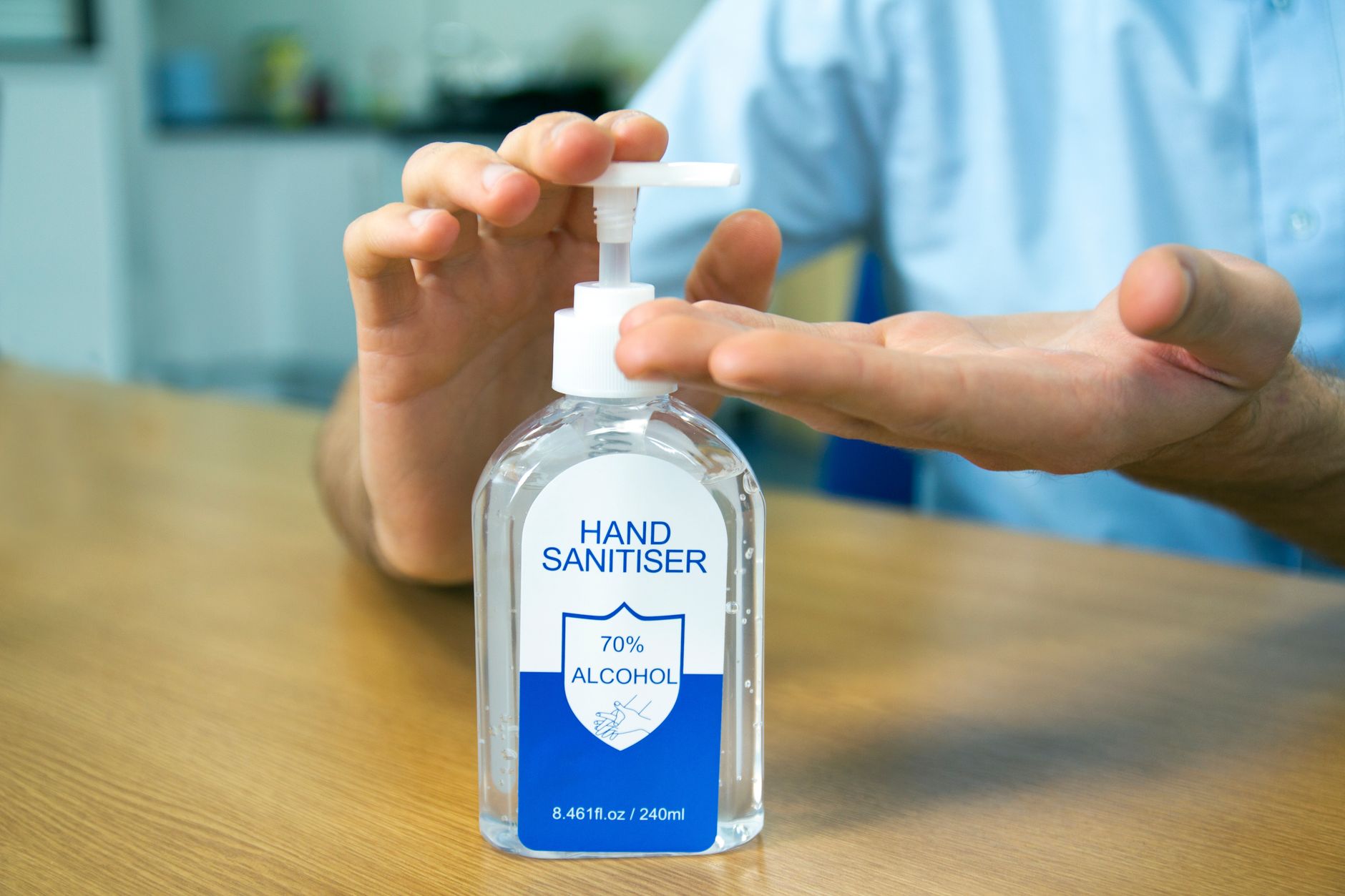
Alcohol works by denaturing proteins — it unfolds the structural proteins that make up a pathogen almost on contact, which is why alcohol sanitizer works so fast. That speed comes at a cost: the same protein-denaturing action that disrupts germs also strips the natural oils and proteins in your skin's outer layer. That's the actual mechanism behind "alcohol hands," not just a dry-feeling myth.
Hypochlorous acid is the molecule your own white blood cells produce as part of your immune response. It disrupts pathogen cell walls and then breaks down into salt and water — no protein-stripping side effect on your skin, because it isn't the mechanism doing the work. That's the entire reason it's used in wound care and post-surgical prep, environments where alcohol would be actively counterproductive.
Why Alcohol Stings and HOCl Usually Doesn't
Alcohol on a paper cut is a familiar kind of pain, and it's not your imagination — alcohol irritates exposed nerve endings and damaged tissue directly. On intact skin it's just drying; on broken skin it actively stings and can slow the healing process by damaging the new tissue trying to form.
Hypochlorous acid at typical concentrations (100–200 ppm) generally doesn't sting, even on cuts, scrapes, or compromised skin. It's part of why it shows up in eyelid cleansers for blepharitis and styes — a product that stings isn't going near anyone's eye area, regardless of how well it works.
With frequent use, the difference compounds. People who use alcohol sanitizer several times a day often develop cracked, dry, sometimes eczema-like skin on their hands. That doesn't happen with HOCl at standard concentrations — it doesn't accumulate or sensitize skin with repeated daily use.
Is Hypochlorous Acid as Effective as Alcohol?

It depends on what "effective" means for the job. Alcohol at 60–90% is fast against a broad range of pathogens and is a longtime clinical standard for a reason. Research on hypochlorous acid shows it's effective against a wide range of pathogens too, including some non-enveloped viruses that alcohol struggles with, but it needs slightly longer contact time to do its work — you can't just splash it on and wipe it off a second later the way people often do with alcohol.
In practice, this means alcohol wins on raw speed for a quick surface pass, and HOCl wins on gentleness for anything that touches skin repeatedly or sits on broken skin. Neither is a registered disinfectant claim from us — we're describing the properties of the molecules generally, not making a claim about Gentle Sen specifically.
When to Reach for Which One

Reach for HOCl when: skin is already dry, cracked, or sensitive; you're treating a cut, scrape, or post-workout skin; you're spraying around kids, pets, or anyone with reactive skin; or you're using something daily and can't afford the cumulative drying effect.
Reach for alcohol when: you need something that dries in seconds with zero setup; you're in a setting (a hospital, a lab) that specifically calls for alcohol's speed and long shelf stability; or you just need one quick pass on intact skin and won't be repeating it ten times an hour.
A lot of people end up using both — alcohol for the quick grab-and-go moments, HOCl for anything that touches skin often enough that the drying effect starts to matter. That's not indecision. That's just matching the tool to the job.
Where Alcohol Still Wins
We make an HOCl product, so it would be easy to pretend alcohol has no place in the conversation. It does.
Shelf stability. A bottle of alcohol sanitizer sitting in a car for a year still works. HOCl solutions degrade with light and time — a mixed batch that's been sitting for months is much weaker than the label suggests.
Speed when speed is the whole point. If you need something to dry in two seconds before touching a keyboard or a steering wheel, alcohol still does that better than anything gentler.
Clinical settings that specifically require it. Some protocols call for alcohol by name. That's not a place to freelance with a substitute, gentle or not.
Frequently Asked Questions
Is hypochlorous acid safer for sensitive skin than alcohol?
Generally, yes. HOCl is close to skin's natural pH and doesn't strip oils the way alcohol does, so it's typically better tolerated on sensitive, reactive, or already-dry skin. Everyone's skin is different, so patch-test anything new if you're not sure.
Why does alcohol sanitizer dry out my hands?
Alcohol denatures proteins to neutralize pathogens, and that same action strips the natural oils and proteins in your skin's outer layer. With occasional use it's a minor annoyance; with several uses a day it adds up to genuinely dry, cracked skin.
Can hypochlorous acid replace hand sanitizer completely?
For most everyday situations, yes — it's gentle enough for frequent use and doesn't have the drying downside. For settings that specifically call for alcohol's speed and shelf stability, alcohol still has an edge. Many people keep both on hand for different situations.
Does hypochlorous acid sting on cuts the way alcohol does?
No, generally not. This is one of the more consistently reported differences — HOCl at typical concentrations doesn't sting on broken skin, which is part of why it's used in wound care and eyelid cleansers, settings where a stinging product simply isn't usable.
Is hypochlorous acid as effective as alcohol at killing germs?
Both have solid track records against a broad range of pathogens, with different strengths — alcohol acts faster on contact, HOCl covers some non-enveloped viruses alcohol struggles with but needs longer contact time. Neither product marketed without EPA registration, including Gentle Sen, can legally make a specific kill claim.
Which one should I use every day?
If daily use is the plan, HOCl is usually the more comfortable long-term option since it doesn't have alcohol's cumulative drying effect. Save alcohol for situations where its fast dry time and long shelf life genuinely matter more than gentleness.
Does hypochlorous acid contain alcohol?
No. HOCl is a completely different compound, formed from chlorine and water rather than from ethanol or isopropanol. It's alcohol-free, which is why it doesn't carry alcohol's drying or flammability properties.
Not a rivalry — a trade-off
Alcohol earns its place with speed and shelf life. Hypochlorous acid earns its place by not costing you anything on the way out — no sting, no drying, no cumulative damage from daily use. Most households end up using both for different jobs, and that's a perfectly reasonable place to land.
If the drying effect of alcohol has become the actual problem you're solving for, a Gentle Sen HOCl tablet dissolved in water makes a fresh, gentle batch for less than 50 cents a bottle.
Shop Gentle Sen HOCl TabletsSources
- Hypo Source. Hypochlorous Acid Versus Alcohol as a Disinfectant.
- Honeydew Labs. Hypochlorous Acid vs Alcohol Hand Sanitizer: Which Feels Gentler on Skin.
- Wikipedia. Hypochlorous Acid.
Images from Pexels photo library under the Pexels License. This post is for informational purposes only and does not constitute medical advice. Gentle Sen is a multi-purpose cleaner and deodorizer, not a registered disinfectant. Consult a qualified healthcare provider for medical concerns.
0 comments