


Your dishwasher filter traps the food debris that would otherwise recirculate over your dishes during every wash cycle. When it's clean, dishes come out clean. When it's blocked — and most people don't clean it nearly often enough — dishes come out with a white film, a faint smell, or that quietly unsatisfying feeling that they've been washed in slightly grey water. (Which, technically, they have.) Dishwasher filter cleaning takes about five minutes. Most filters haven't seen a faucet in years.
The short version
Turn the upper filter counterclockwise to remove it, lift out the lower mesh filter beneath it. Our method: dissolve one Gentle Sen HOCl tablet in a bowl of water and soak both pieces for 5–10 minutes, then a light scrub with a soft brush and a rinse before reinstalling. No tablets on hand? Warm water and dish soap works too. Clean monthly if you run 4 or more loads per week; every 2–3 months for lighter use. Not every dishwasher has a manual filter — older models have a self-cleaning grinder instead. Check your manual before pulling anything out.
In this guide
Two types of dishwasher filters — only one needs manual cleaning
Before you start pulling components out of the bottom of your dishwasher, it's worth knowing which type you have.
Manual filters are standard in most dishwashers made after roughly 2010. They're removable, require monthly or quarterly cleaning by hand, and are the subject of this guide. They're quieter than the alternative and more energy efficient, which is why manufacturers switched to them.
Self-cleaning filters (also called grinder filters) are common in older models and some commercial-grade machines. These use an internal food grinder to pulverize debris during the cycle — you'll hear a low grinding or humming sound. They don't need manual cleaning and aren't designed to be removed. Attempting to disassemble one can cause damage that voids any remaining warranty.
To confirm which type you have: check your model number against the manufacturer's documentation, or simply look at the bottom of the tub. A removable cylindrical component with visible mesh = manual filter. A flat drain plate without a clear twist-out component = self-cleaning. If you're still unsure, the manual's maintenance section — usually one page at the back — will specify.
Where the filter lives and how to remove it
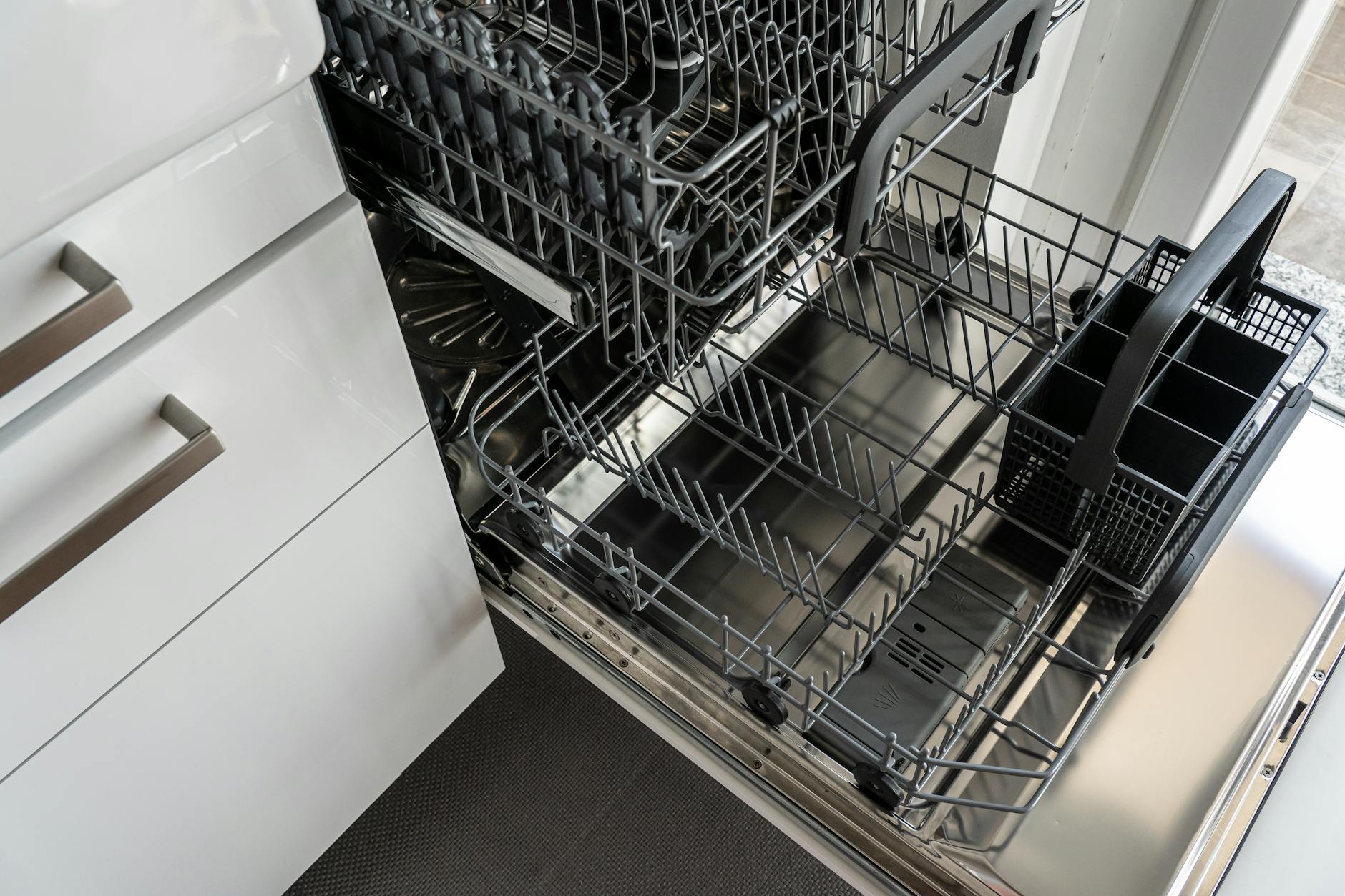
Pull the bottom dish rack out completely and set it aside. Look at the floor of the dishwasher tub — toward the center or rear, you'll see a cylindrical assembly. It typically has two parts: a coarser outer mesh cylinder (the lower filter) sitting beneath a finer-mesh upper filter that locks into it from the top.
To remove: grip the upper filter and rotate it counterclockwise — most models need about a quarter turn — then lift it straight out. The lower filter usually lifts out directly after that, though some models have a slight forward-tilt motion to free it from tabs. Don't force it; if there's resistance, check for a tab or a secondary lock.
How to clean the dishwasher filter — step by step
The supplies for our method: warm water, a Gentle Sen HOCl tablet, and a soft-bristle brush. If you'd rather use what's already in the kitchen, dish soap works as an alternative — we'll note where it swaps in.
-
1
Rinse both filter pieces under warm running water. Hold them under the faucet and let the water flush through the mesh. This removes loose food particles before you start soaking or scrubbing, so you're not just pushing debris around.
-
2
Dissolve one Gentle Sen HOCl tablet in about half a gallon of water — a mixing bowl's worth — and submerge both filter pieces for 5 to 10 minutes. That's the same ratio we use for general kitchenware soaks, and it loosens embedded food debris and mineral film in one pass. No tablets on hand? A splash of white vinegar in warm water works for mineral deposits, or a small amount of dish soap for general grime.
-
3
Scrub gently with a soft brush. An old toothbrush is ideal — it reaches the mesh pores without tearing them. Work in small circular motions. Focus on areas where debris has embedded in the fine mesh of the upper filter. Don't use wire brushes, steel wool, or abrasive pads; they permanently damage the mesh and create gaps that let debris pass through.
-
4
Rinse thoroughly until the water runs clear. The Gentle Sen solution doesn't foam the way dish soap does, so this step is quick — but give it a final rinse regardless of which method you used before reinstalling.
-
5
Reinstall in reverse order. Lower filter goes back first — seat it flat in the tub. Upper filter drops in on top and turns clockwise until it locks. Give it a gentle upward tug to confirm it's seated before running a cycle. A filter that isn't properly locked can rattle loose during the wash, which is the kind of excitement nobody wants from an appliance.
Why we default to this:
One dissolved tablet handles the soak and skips the leftover-suds problem — dish soap that isn't fully rinsed can foam in the next wash cycle, which is exactly the kind of thing you don't notice until dishes come out streaky. Gentle Sen tablets are fragrance-free and non-toxic, so there's nothing left behind to rinse extra carefully for.
We use the same tablets for the rest of the kitchen too — see our full list of ways to use Gentle Sen tablets for ratios on everything from coffee makers to produce washing.

How often to clean it — and the signs you've waited too long
The standard guidance: once a month for households running four or more loads per week, especially if you don't rinse dishes before loading. Every 2–3 months for lighter use with pre-rinsing. Both of these assume you're actually going to do it — which most people don't, which is why most dishwashers underperform.
The signs your filter is overdue:
- Dishes have a white film or cloudy residue after a cycle. Food particles are recirculating.
- A musty or food-adjacent smell when you open the door. Organic debris is sitting in the filter and decomposing between cycles. (It smells exactly as good as that sounds.)
- Gritty texture on dishes or glassware. Debris is getting through or around the filter.
- The dishwasher sounds different — louder or straining — during the wash phase. Restricted water flow from a blocked filter makes the pump work harder.
If cleaning the filter doesn't resolve the smell or film, also check the spray arm nozzles — small food particles can block the holes and are cleared easily with a toothpick or thin wire. The filter is the most common culprit, but it's not the only one.
Keeping the whole dishwasher fresh — not just the filter
The filter handles food debris. A complete monthly routine covers a few more things that the filter can't reach.
- Spray arm nozzles. Once every 1–2 months, pull out the spray arms (most lift straight off their mount) and check the small holes for blockages. A toothpick or thin wire clears most of them in under a minute. Replace the spray arm before running the next cycle.
- Door gasket. The rubber seal around the door collects food residue and moisture in its folds — exactly the conditions mold likes. Wipe it down with a damp cloth monthly. For stubborn buildup in the ridges, an old toothbrush gets into the folds without damaging the rubber.
- Interior mineral buildup. Once a month, place one to two Gentle Sen HOCl tablets directly in the detergent dispenser and run a hot cleaning cycle with the dishwasher empty. The dissolved solution circulates through the wash water the same way vinegar would, cutting mineral film and neutralizing odor without a chemical smell left behind. No tablets on hand? A dishwasher-safe cup of white vinegar on the top rack during an empty hot cycle does something similar.
- Exterior and control panel. Wipe down with a damp cloth after the interior work. Gentle Sen HOCl tablets dissolve in water into a fragrance-free, non-toxic spray that handles fingerprints and splatter on stainless steel, plastic panels, and the door handle without streaking or leaving residue — and no fumes while the machine is still warm.

Straight answers (FAQ)
How do I know if my dishwasher has a manual filter or a self-cleaning filter?
Look at the bottom of the dishwasher tub with the lower rack removed. A removable cylindrical component with visible mesh is a manual filter. A flat drain plate without a clear twist-out assembly usually indicates a self-cleaning grinder. If you're unsure, check your model number against the manufacturer's documentation — it will specify filter type and cleaning instructions.
Can I use Gentle Sen HOCl tablets to clean my dishwasher filter?
Yes — that's our recommended method. Dissolve one tablet in about half a gallon of water and soak both filter pieces for 5 to 10 minutes before a light scrub with a soft brush. It's the same ratio we recommend for general kitchenware soaks, and it skips the dish-soap-residue rinse since the solution doesn't foam.
Can I use vinegar to clean my dishwasher filter?
Yes, and it works well for calcium and mineral deposits. Soak the filter in warm water with a splash of white vinegar for 5–10 minutes before scrubbing. Avoid soaking for extended periods (more than 30 minutes) as prolonged acid exposure can stress the mesh on some filter materials. For routine cleaning, warm water and dish soap is sufficient.
What happens if I never clean my dishwasher filter?
Over time: cloudy dishes, food odor, gritty residue on glassware, and reduced wash performance as the blocked filter restricts water flow and makes the pump work harder. Long-term, a severely clogged filter can contribute to premature pump wear. The short version: it's worth the five minutes.
Can I put the dishwasher filter in the dishwasher to clean it?
This is a popular idea that doesn't work well. The wash cycle won't clear debris embedded in the fine mesh, and repeated heat and detergent exposure can degrade the filter material faster than hand cleaning. Rinse and soft-brush under the faucet takes the same amount of time and does a much better job.
Why are my dishes still cloudy after I cleaned the filter?
Check the spray arm nozzles — food can block the small holes and prevent water from reaching all areas of the tub. Also check whether you're using the correct amount of detergent (too much causes a white film just as much as too little), and whether your rinse aid dispenser is full. Hard water can also cause a mineral film independent of the filter.
How do I clean a filter with heavy grease or stubborn deposits?
Soak in warm water with a few drops of dish soap for 10–15 minutes to loosen grease, then scrub with a soft brush. For calcium deposits, add white vinegar to the soaking water. For very heavy buildup, a second soak-and-scrub cycle usually clears what the first round loosened. If the mesh is visibly torn or warped, the filter needs replacing rather than cleaning.
Is it safe to run the dishwasher if the filter isn't reinstalled properly?
No. An incorrectly seated filter can rattle loose during the cycle, allowing debris to reach the pump and potentially causing pump damage. Always give the reinstalled filter a firm upward tug to confirm it's locked before running a cycle.
How do I know when the filter needs replacing rather than just cleaning?
Inspect the mesh when you clean it. Small tears, holes, or warped sections mean the filter is no longer catching debris effectively — cleaning won't fix structural damage. Replacement filters are available directly from the dishwasher manufacturer using your model number, and typically cost $15–40.
The bottom line
Dishwasher filter cleaning is the most ignored five-minute maintenance task in most kitchens, and it directly explains why so many dishwashers underperform. Clean it once and the improvement is immediate. Make it monthly and you'll likely never deal with cloudy dishes, food odor, or straining wash cycles again.
The filter, the spray arms, the door gasket, and a monthly interior refresh cover everything the machine needs to stay in good working order for years longer than a neglected appliance would manage. We do all of it with one dissolved Gentle Sen tablet instead of switching between dish soap, vinegar, and a separate surface spray — though the pantry alternatives above work fine if that's what you've got on hand.
If you're building out the rest of your kitchen cleaning routine to match — surfaces, appliance exteriors, counters — our guide to non-toxic all-purpose cleaners covers the surface cleaning side, and our full dishwasher cleaning guide covers the tub, door seal, and drain beyond just the filter.
Shop the Gentle Sen HOCl Tablet Kits →Sources and further reading
- U.S. Department of Energy — ENERGY STAR Dishwashers — efficiency guidelines and appliance maintenance
- American Cleaning Institute — household cleaning product guidance and best practices
- University of Minnesota Extension — Home and Garden — home appliance and kitchen maintenance resources
Disclaimer: This article is for general informational purposes only. Dishwasher models vary — always consult your appliance manual before removing or cleaning internal components. Gentle Sen products are multi-purpose surface cleaners and are not intended for internal appliance cleaning.
0 comments